 |
| Place of Origin: | China |
| Brand Name: | Golden Grain |
| Certification: | ISO9001, COA,SDS |
| Model Number: | GLMA-01771 |
| Minimum Order Quantity: | 1300kg |
|---|---|
| Price: | USD500/MT FOB QINGDAO - USD700/MT FOB QINGDAO |
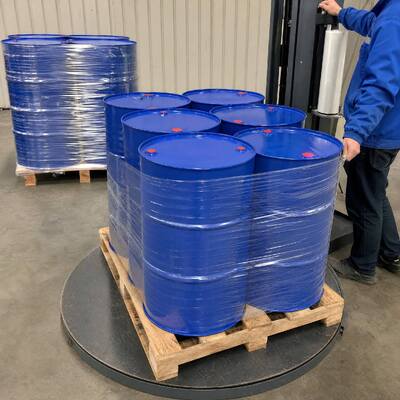
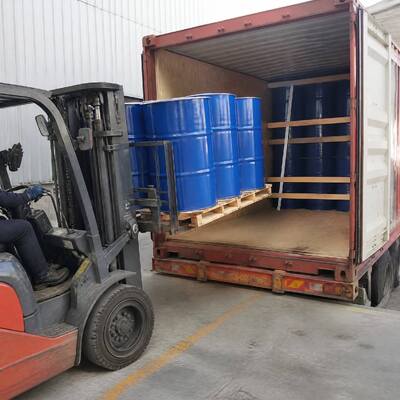
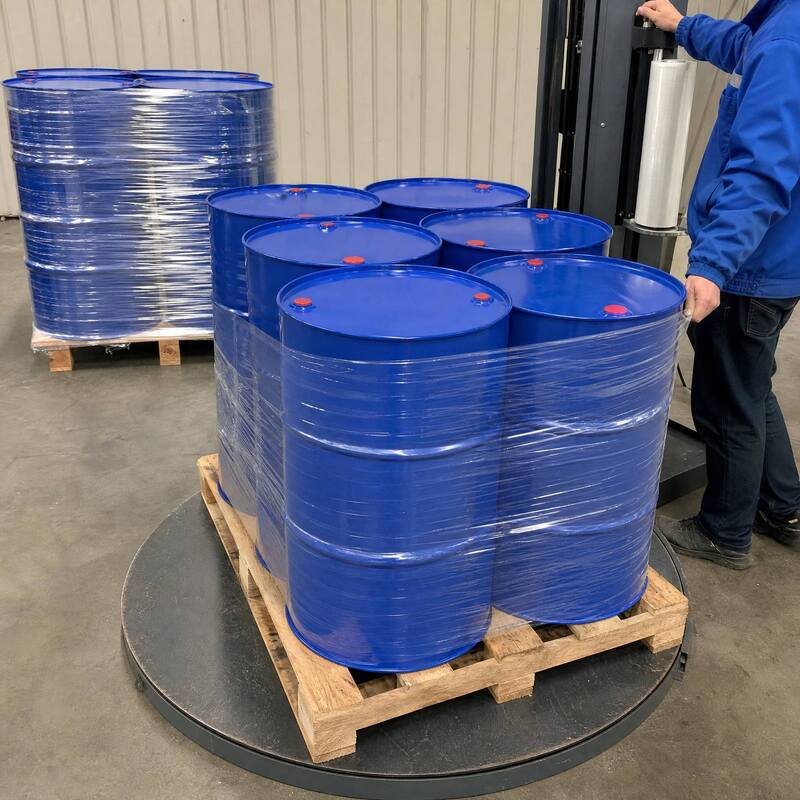
| Packaging Details: | 250kg/drum, 270kg/drum, 275kg/drum with new plastic drum, 1300kg IBC drum, flexible bag |
| Delivery Time: | 7 - 10 working days |
| Payment Terms: | L/C, T/T, D/P, D/A |
| Supply Ability: | 1000MT per month |
| Storage Condition: | Store In A Cool, Dry Place | Chemical Formula: | C6H14O6 |
|---|---|---|---|
| Flash Point: | Non-flammable | Sorbitol Content: | 68‑72% |
| Concentration: | 70% | Chemical Name: | Sorbitol |
| Shelf Life: | 2 Years | Hazard Classification: | Non-hazardous |
| Active Ingredient: | Sorbitol | Physical: | Liquid |
| Applications: | Food Industry, Cosmetics, Pharmaceutical Raw Material |
Sorbitol Solution 70% is the liquid form of sorbitol — the polyol (sugar alcohol) also called D-glucitol, D-sorbitol or simply sorbitol syrup — supplied as a clear, colourless syrup at a 70% dry-substance concentration. Where a powder must be weighed, dissolved and dispersed, this syrup is pumped, metered or poured straight into the batch. For anyone building a syrup, a liquid filling, a toothpaste paste or a beverage base, that one change removes a production step and takes the dust out of the plant.
What the syrup actually contributes is four functions at once:
Sweetening
Humectancy
Body and texture
Freezing-point control
Sorbitol is also non-cariogenic (it does not promote tooth decay) and does not cause a sharp glucose spike, which is why it is a standard ingredient in sugar-free, reduced-calorie and diabetic-friendly products around the world. It has been safely used in processed foods for almost half a century, is affirmed GRAS (Generally Recognized As Safe) by the U.S. FDA, and is approved for use in the European Union and in many countries including Australia, Canada and Japan.
Identifiers

The product is offered in two grades. Both are food and pharmaceutical qualified; the difference is the sorbitol/mannitol balance and the crystallisation behaviour.
Crystalline Grade — conforms to BP / USP / EP
| Item | Specification |
| Appearance | Colourless, syrupy liquid |
| Dry Substance % | ≥ 70 |
| Water Content % | ≤ 30 |
| Refractive Index (20 °C) | ≥ 1.4575 |
| Specific Gravity (20 °C), g/ml | ≥ 1.290 |
| D-Sorbitol % | ≥ 68.0 |
| D-Mannitol % | ≤ 1.5 |
| Total Sugar % | ≤ 0.20 |
| Reducing Sugar % | ≤ 0.03 |
| Resistivity, µS/cm | ≤ 20 |
| Specific Rotatory Power [α]D20 (20 °C) | ≤ +5.3° |
| Sulphated Ash % | ≤ 0.10 |
| Chloride mg/kg | ≤ 10 |
| Sulphate mg/kg | ≤ 20 |
| Iron mg/kg | ≤ 1.0 |
| Nickel mg/kg | ≤ 1.0 |
| Heavy Metals (as Pb) mg/kg | ≤ 1.0 |
| Arsenic (as As2O3) mg/kg | ≤ 1.0 |
Non-Crystalline Grade — conforms to BP / USP
| Item | Specification |
| Appearance | Colourless, syrupy liquid |
| Dry Substance % | ≥ 70 |
| Water Content % | ≤ 30 |
| Refractive Index (20 °C) | ≥ 1.4575 |
| Specific Gravity (20 °C), g/ml | 1.285 - 1.315 |
| D-Sorbitol % | ≥ 50 (as dry substance) |
| D-Mannitol % | ≤ 6.0 (as dry substance) |
| Total Sugars % | ≤ 8.0 |
| Reducing Sugars % | ≤ 0.30 |
| Resistivity, µS/cm | ≤ 10 |
| pH (50% solution) | 5.0 - 7.0 |
| Sulphated Ash % | ≤ 0.10 |
| Chloride mg/kg | ≤ 10 |
| Sulphate mg/kg | ≤ 20 |
| Iron mg/kg | ≤ 1.0 |
| Nickel mg/kg | ≤ 1.0 |
| Heavy Metals (as Pb) mg/kg | ≤ 1.0 |
| Arsenic (as As2O3) mg/kg | ≤ 1.0 |
| Fungus Count, cfu/ml | ≤ 100 |
| Crystallisation Resistance | 18 °C / 48 h, non-crystallising |
Actual batch results for the Non-Crystalline grade, so you can judge the material on real numbers rather than limits alone:
| No. | Item | Specification | Typical Result |
| 1 | Appearance | Colourless, syrupy liquid | Conforms |
| 2 | Dry Substance % | ≥ 70 | 70.61 |
| 3 | Water Content % | ≤ 30 | 29.2 |
| 4 | Total Sugars % | ≤ 8.0 | 4.1 |
| 5 | Reducing Sugars % | ≤ 0.30 | 0.13 |
| 6 | D-Sorbitol % | ≥ 50 (as dry substance) | 66.67 |
| 7 | D-Mannitol % | ≤ 6.0 (as dry substance) | 4.40 |
| 8 | Resistivity, µS/cm | ≤ 10 | 6.4 |
| 9 | Refractive Index (20 °C) | ≥ 1.4575 | 1.4605 |
| 10 | Specific Gravity (20 °C), g/ml | 1.285 - 1.315 | 1.304 |
| 11 | Chloride mg/kg | ≤ 10 | < 10 |
| 12 | Iron mg/kg | ≤ 1.0 | < 1.0 |
| 13 | Nickel mg/kg | ≤ 1.0 | < 1.00 |
| 14 | Arsenic (as As2O3) mg/kg | ≤ 1.0 | < 1.0 |
| 15 | Sulphated Ash % | ≤ 0.10 | < 0.10 |
| 16 | Sulphate mg/kg | ≤ 20 | < 20 |
| 17 | pH (50%) | 5.0 - 7.0 | 5.5 |
| 18 | Fungus Count, cfu/ml | ≤ 100 | Conforms |
| 19 | Heavy Metals (as Pb) mg/kg | ≤ 1.0 | < 1.0 |
| 20 | Crystallisation Resistance | 18 °C / 48 h, non-crystallising | Conforms |
| — | Conclusion | Conforms to specification | Conforms |
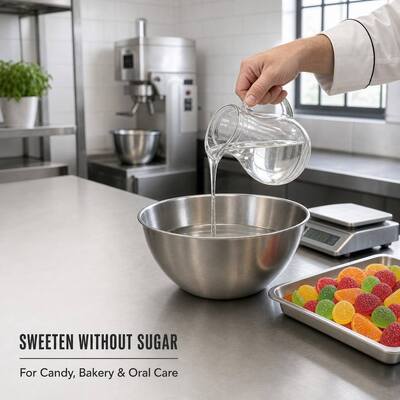
Sweetening without sugar. At about 60% of sucrose sweetness and roughly one-third fewer calories, it lets a product be labelled sugar-free while keeping a rounded, natural sweetness — and it softens the harsh edges of high-intensity sweeteners such as stevia or sucralose.
Moisture retention (humectancy). Sorbitol holds water in the matrix, so candy does not dry out and harden, baked goods stay tender, and creams and lotions do not shrink or crack. This is the single most common reason the liquid form is specified over the powder.
Body, texture and mouthfeel. It builds viscosity and body, giving sugar-free products the "full" mouthfeel that reduced-sugar recipes otherwise lose.
Crystallisation control. In the Non-Crystalline grade the mannitol/polyol balance keeps the syrup liquid and helps suppress unwanted sugar crystallisation in candy and syrup systems.
Freezing-point control. In frozen desserts and ice cream it depresses the freezing point, keeping the product soft and scoopable straight from the freezer.
Non-cariogenic sweetening. It does not feed the bacteria that cause tooth decay — the reason it is the default sweetener base in toothpaste, mouthwash and sugar-free gum.
Carrier and dosing convenience. As a 70% solution it is a ready-to-use liquid carrier: no dust, no lumping, no dissolution step, and easy in-line metering.
Sugar-free confectionery & chewing gum — hard candy, soft candy, gummies, pastilles, lozenges and chewing gum; the standard sugar-free candy base syrup and a softness keeper for gum.
Bakery & biscuits — sugar-free and reduced-sugar cakes, cookies, biscuits and pastries, where it keeps texture and slows staling.
Beverages & liquid concentrates — sugar-free soft drinks, fruit syrups, cordials, liquid concentrates and liquid nutritional products.
Ice cream & frozen desserts — sugar-free and low-calorie ice cream, frozen yogurt and frozen desserts.
Jams, fillings, sauces & dressings — body and moisture retention in reduced-sugar recipes.
Pharmaceutical — an excipient and sweetening vehicle for syrups, oral solutions, suspensions, cough syrups and sugar-free liquid medicines; the Crystalline grade's higher D-sorbitol content suits higher-purity pharmaceutical work.
Oral care — the classic toothpaste and mouthwash humectant and non-cariogenic sweetener.
Cosmetics & personal care — humectant and texture agent in creams, lotions, cleansers, toners, gels and shower products.
Industrial & intermediate — a raw material for sorbitan fatty acid esters and other non-ionic surfactants, for polyurethane polyols, and for a range of chemical intermediates where a 70% liquid is easier to dose than a powder.
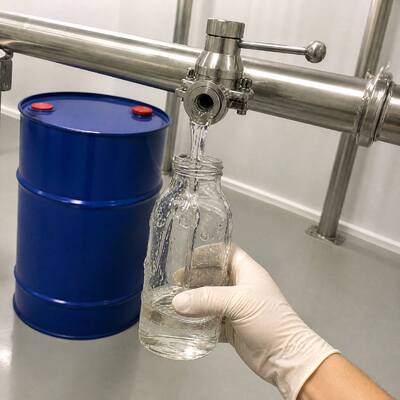
Every drum we ship is drawn from a batch that has been tested and released against the specification above. The checks that matter to a food, oral-care or pharmaceutical buyer are all covered:
| Control point | What is checked |
| Standards | Crystalline grade to BP / USP / EP; Non-Crystalline grade to BP / USP — both food and pharmaceutical qualified |
| Concentration | Dry substance ≥ 70% and water content ≤ 30% |
| Identity | Refractive index, specific gravity, and (Crystalline grade) specific rotatory power ≤ +5.3° |
| Purity | Sulphated ash / residue on ignition ≤ 0.10%; resistivity ≤ 10 µS/cm (Non-Crystalline) / ≤ 20 µS/cm (Crystalline) |
| Trace elements | Heavy metals (as Pb) ≤ 1.0 mg/kg, nickel ≤ 1.0 mg/kg, iron ≤ 1.0 mg/kg, arsenic (as As2O3) ≤ 1.0 mg/kg |
| Microbiology | Fungus count ≤ 100 cfu/ml |
| Stability | Crystallisation-resistance test: 18 °C / 48 h, non-crystallising (Non-Crystalline grade) |
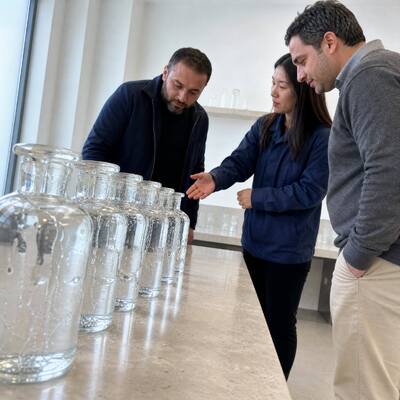
| Documentation | Certificate of Analysis (COA) issued per batch; specification and MSDS available on request |
Safety standing. Sorbitol has been safely used in processed foods for almost half a century. It is affirmed GRAS (Generally Recognized As Safe) by the U.S. Food Administration and is approved for use in the European Union and in many countries including Australia, Canada and Japan. In labelling terms it is INS 420 / E 420.
Why it fits "clean label" work. Sorbitol is a single, well-characterised polyol: non-cariogenic, suitable for sugar-free and reduced-calorie products, and — at the trace-metal and microbial limits shown above — comfortable in food, oral-care and pharmaceutical use.
We are reliable China bulk supplier for food‑grade polyol sweeteners including maltitol syrup, liquid glucose, sorbitol solution. We supply consistent‑quality bulk liquid sweetener for food and pharma manufacturers globally.
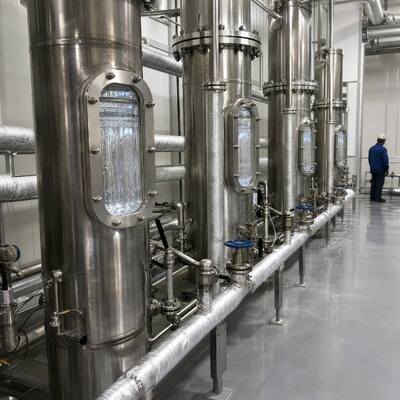
Qingdao Golden Grain Chemical Co., Ltd, invested by Golden Grain Group Limited, one professional manufacturer and exporter since 2000, is devoted to supplying products and solutions to food & beverage, medicine, animal feed & nutrition, personal care & household, construction, agriculture.
Golden Grain Group Limited have professional staff, advanced production lines and complete lab equipment, pass GMP, HACCP, ISO, HALAL, KOSHER, BRC, GMP-Free, and other necessary certificates, which ensure our quality to be international standard. For many years' experience, we are exporting our products to more than 60 countries in the world.
"Quality Products", "Efficient Service", Golden Grain Group Limited hope to enter good business cooperation with customers at home and abroad for long.