 |
| Place of Origin: | China |
| Brand Name: | Golden Grain |
| Certification: | ISO9001, COA,SDS |
| Model Number: | GLMA-01771 |
| Minimum Order Quantity: | 1300kg |
|---|---|
| Price: | USD500/MT FOB QINGDAO - USD700/MT FOB QINGDAO |
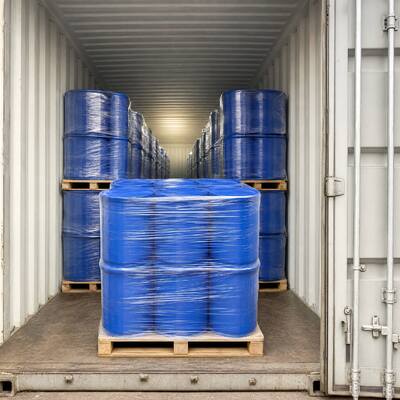
| Packaging Details: | 250kg/drum, 270kg/drum, 275kg/drum with new plastic drum, 1300kg IBC drum, flexible bag |
| Delivery Time: | 7 - 10 working days |
| Payment Terms: | L/C, T/T, D/P, D/A |
| Supply Ability: | 1000MT per month |
| Refractive Index: | 1.455‑1.465 (25℃) | Appearance: | Clear, Colorless To Pale Yellow Liquid |
|---|---|---|---|
| Freezingpoint: | Approximately -4°C | Usage: | Toothpaste, Cosmetics |
| Chemicalformula: | C6H14O6 | Purity: | ≥ 70% |
| Hazard Classification: | Non-hazardous | Package: | 250kg ,270kg ,275kg Drum |
| Physical: | Liquid | Safetyinformation: | Non-toxic, Non-irritant, Avoid Ingestion In Large Quantities |
| Storage Condition: | Store In A Cool, Dry Place | Sorbitol Content: | 68‑72% |
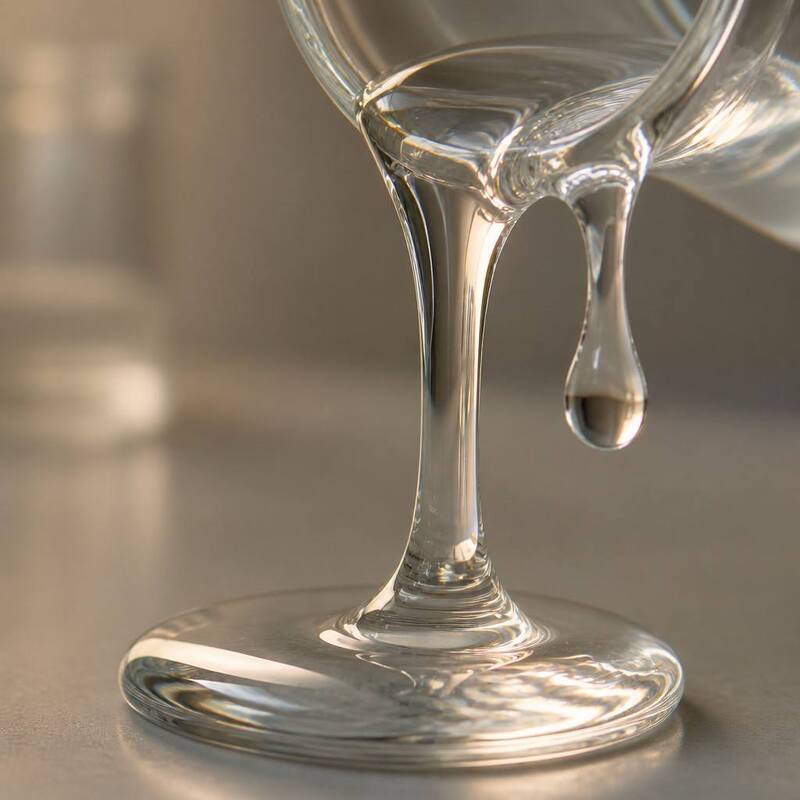
Sorbitol Solution 70% is a polyol — a sugar alcohol — and a bulk sweetener used in foods, oral care and personal care. It is supplied as a clear, colourless, syrupy liquid with a smooth mouthfeel and a sweet, cool, pleasant taste, identified as CAS No. 50-70-4 and INS No. 420 and declared under H.S. Code 29054400.
Buying it as a liquid at 70% solids changes what your plant has to do. Nothing has to be dissolved, so there is no dissolving vessel tied up and no clearing time between batches. Nothing is handled as a powder, so there is no dust to control on the line. Nothing arrives in a bag, so there is no caking to break up after a humid month in the warehouse and no bag to empty by hand. The solution is pumped, metered and blended straight into the process, and because it carries only 30% water you add very little water of your own when you charge a batch.

Below is the complete acceptance specification, with the typical values recorded on the certificate of analysis alongside it. A specification is the one thing on a product page that should never be paraphrased, so it is set out in full.
Non-Crystalline Grade — BP / USP
| No. | Item | Specification | Typical result |
| 1 | Appearance | Colourless, syrupy liquid | Conforms |
| 2 | Dry substance, % | ≥ 70 | 70.61 |
| 3 | Water content, % | ≤ 30 | 29.2 |
| 4 | Total sugars, % | ≤ 8.0 | 4.1 |
| 5 | Reducing sugars, % | ≤ 0.30 | 0.13 |
| 6 | D-Sorbitol, % | ≥ 50 (as dry substance) | 66.67 |
| 7 | D-Mannitol, % | ≤ 6.0 (as dry substance) | 4.40 |
| 8 | Resistivity, µS/cm | ≤ 10 | 6.4 |
| 9 | Refractive index (20 °C) | ≥ 1.4575 | 1.4605 |
| 10 | Specific gravity (20 °C), g/ml | 1.285 – 1.315 | 1.304 |
| 11 | Chloride, mg/kg | ≤ 10 | < 10 |
| 12 | Iron, mg/kg | ≤ 1.0 | < 1.0 |
| 13 | Nickel, mg/kg | ≤ 1.0 | < 1.00 |
| 14 | Arsenic (as As₂O₃), mg/kg | ≤ 1.0 | < 1.0 |
| 15 | Sulphated ash, % | ≤ 0.10 | < 0.10 |
| 16 | Sulphate, mg/kg | ≤ 20 | < 20 |
| 17 | pH (50% solution) | 5.0 – 7.0 | 5.5 |
| 18 | Fungus numbers, cfu/ml | ≤ 100 | Conforms |
| 19 | Heavy metals (as Pb), mg/kg | ≤ 1.0 | < 1.0 |
| 20 | Resist experiment | 18 °C for 48 h, non-crystal | Conforms |
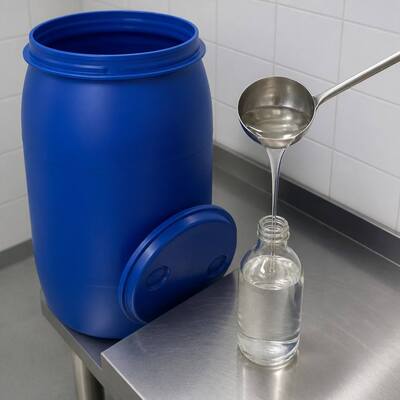
Packed 250 kg per drum in a new plastic drum.
Dry substance and water. The grade is specified at ≥ 70% dry substance with water content ≤ 30%, which is the band that makes a liquid sweetener economical to move: less water in the drum means more usable polyol per kilogram shipped, and less water added to your own batch.
D-Sorbitol. Specified at ≥ 50% on a dry-substance basis and recorded at 66.67%. This is the active polyol content, and it is the figure a label claim or a recipe sheet usually hangs on. Note that it is expressed on a dry-substance basis, so read it together with the dry substance figure rather than on its own.
D-Mannitol. Limited to ≤ 6.0% on a dry-substance basis, recorded at 4.40%. Mannitol is the component that most readily crystallises out of a sorbitol solution, so on a high-purity grade it would be driven as low as possible. Here it is allowed a wider band because the grade is instead validated by the resist experiment — and a manufacturer who understands both numbers can see that 4.40% sitting comfortably inside a ≤ 6.0% limit is a deliberately set margin, not a loose one.
Sugars. Total sugars are limited to ≤ 8.0% and reducing sugars to ≤ 0.30%, recorded at 4.1% and 0.13%. These are wide limits. If your finished product needs to stay colour-stable, or if reducing sugars carry into a flavour you have to control, say so and we will tell you whether this grade is still the right choice or whether a tighter grade should be quoted instead.
Resistivity. Limited to ≤ 10 µS/cm, recorded at 6.4 µS/cm. Resistivity measures how much dissolved ionic material the solution carries — the reciprocal of conductivity. Low values matter in oral care, cosmetics and anywhere dissolved salts interfere with a formulation.
Refractive index and specific gravity. Refractive index is specified at ≥ 1.4575 (recorded at 1.4605) and specific gravity in the band 1.285 – 1.315 g/ml (recorded at 1.304). Together these let your goods-inward team confirm a delivery with a refractometer and a hydrometer rather than waiting for a full assay.
pH. Specified at 5.0 – 7.0 on a 50% solution, recorded at 5.5. Near-neutral, so it will not drag the pH of your finished formulation around while you balance the rest of the recipe.
Salts and ash. Chloride ≤ 10 mg/kg, sulphate ≤ 20 mg/kg, sulphated ash ≤ 0.10% — the inorganic residue limits that most finished-goods specifications inherit.
Trace metals. Nickel and iron are each held at ≤ 1.0 mg/kg, heavy metals as Pb at ≤ 1.0 mg/kg and arsenic as As₂O₃ at ≤ 1.0 mg/kg. These are the residues that come with the hydrogenation route, kept at ppm level, and they are worth checking against your own market's limits before you commit.
Microbiological control. Fungus numbers are limited to ≤ 100 cfu/ml. For a product that is pumped, stored and decanted rather than sealed as a dry powder, that limit is a practical control on a real handling risk rather than a formality.
The resist experiment. 18 °C for 48 hours, non-crystalline. Read it as the headline of this grade: it is the only line on the certificate that speaks directly to what happens to the solution after it leaves us, in your warehouse, in your customer's cabinet.
This grade is chosen wherever a sorbitol solution has to survive low temperature without throwing crystals, and wherever a wider sugar and mannitol band is an acceptable trade for that stability.
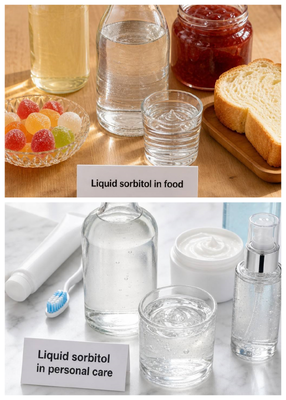
Ice cream, gelato, sorbets and frozen desserts
Jams, jellies, marmalades, fruit sauces and fillings
Cold-stored syrups and drink bases
Gummy and soft candy
Sugar-free and reduced-sugar confectionery
Candied and dried fruit
Bakery
Oral care and personal care
Sorbitol is about 60 percent as sweet as sucrose, with a smooth mouthfeel and a sweet, cool, pleasant taste. Being less sweet than sucrose is an advantage in formulation rather than a limitation: you can build the sweetness in stages and land on a target with a blend, which is usually how a reduced-sugar recipe keeps the body of the original. The clean, cool finish is what makes it work in confectionery, chewing gum, oral care and beverages.
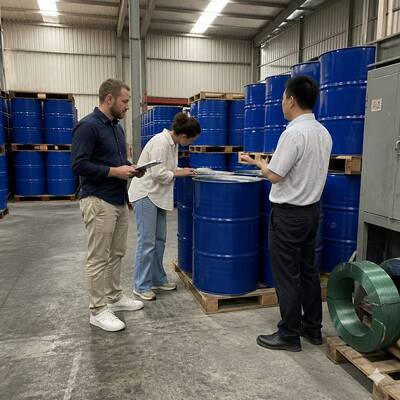
This grade ships at 250 kg per drum in a new plastic drum. If your plant works in different units, other drum sizes and bulk formats can be discussed against your requirement — tell us how you unload, pump and store and we will confirm the most practical arrangement rather than assume one.
Store in a cool, dry, ventilated environment and keep containers closed when not in use. The solution is supplied ready to use, with nothing to prepare before it is charged to the process. Shelf life is 24 months from the date of manufacture.
This grade is specified to Non-Crystalline BP / USP. The product is identified as CAS No. 50-70-4 and INS No. 420, and is declared under H.S. Code 29054400.
Sorbitol has been affirmed as GRAS — Generally Recognized As Safe — by the U.S. Food Administration, and is approved for use by the European Union and by numerous countries around the world, including Australia, Canada and Japan. If your market needs a particular regulatory statement or a specific labelling format, tell us the destination market and we will confirm what can be provided against it.
Every shipment goes out with the batch certificate of analysis, covering all 20 items for the grade supplied, together with the product specification sheet. The drum carries the batch number so the paperwork and the container always match.
The single most expensive thing that can happen to a sorbitol solution after it leaves our gate is that it crystallises — in a cold warehouse, in a chilled cabinet, or in a finished product that sits at low temperature for months. Once crystals form, the drum is no longer pumpable, the batch is no longer homogeneous, and the product that was clear on delivery is not the product your line receives.
The Non-Crystalline Grade is specified around that risk. It is supplied as a clear, colourless, syrupy liquid and is held to Non-Crystalline BP / USP, with a functional test written into the specification rather than left to chance: the resist experiment, in which the solution is held at 18 °C for 48 hours and must remain non-crystalline. That test is the reason this grade exists, and it is the first line to look for on the certificate of analysis.
Because the grade is validated functionally, its chemical limits are deliberately set wider than a high-purity crystalline grade would carry. D-Sorbitol is specified at ≥ 50% on a dry-substance basis, D-mannitol at ≤ 6.0% on a dry-substance basis, and total sugars at ≤ 8.0%. If your product lives in a cold chain, that trade is the point of the grade. If your specification instead hinges on a very low mannitol or sugar figure, tell us — that is a different grade, and we will point you at it rather than sell you the wrong drum.
If you are unsure whether your product needs this grade, send us your end product, how it is stored and where it is sold, and we will answer in writing.
What does "non-crystalline" actually mean? It means the grade is specified and tested so that the solution does not crystallise at low temperature. The evidence is the resist experiment on the certificate: the product is held at 18 °C for 48 hours and must remain non-crystalline. The name describes what the grade is built to do, not the form it is supplied in — it is always a liquid.
Is this a liquid or a powder? A liquid. It is a clear, colourless, syrupy 70% solution, ready to pump or meter.
Will it crystallise in my cold warehouse? That is precisely what this grade is specified for. The resist experiment — 18 °C for 48 hours, non-crystalline — is the line to look for on the certificate of analysis.
How sweet is it compared with sugar? About 60 percent as sweet as sucrose, with a smooth mouthfeel and a sweet, cool, pleasant taste.
What is the sorbitol content? D-Sorbitol is specified at ≥ 50% on a dry-substance basis and was recorded at 66.67%, against dry substance ≥ 70% and water ≤ 30%.
Why is the mannitol limit wider than on a high-purity grade? Because crystallisation is controlled functionally on this grade rather than by driving mannitol as low as possible. If your specification needs a very low mannitol figure, tell us — that is a different grade and we will quote it instead.
Do I need a dissolving tank? No. It arrives already in solution at 70% solids, so it can be pumped or metered straight into the batch. There is no powder to dissolve, no dust on the line and no bag to empty.
How long does it keep, and how should I store it? 24 months from the date of manufacture, stored in a cool, dry, ventilated environment with containers closed when not in use.
How is it packed, and can I order in bulk? 250 kg per drum in a new plastic drum as standard. Other drum sizes and bulk formats can be discussed against your requirement.
What documents come with a shipment? The batch certificate of analysis covering all 20 items, plus the product specification sheet. Each certificate is signed by an analyst, a checker and a supervisor.
Which markets can use this product? Sorbitol has been affirmed as GRAS by the U.S. Food Administration and is approved for use by the European Union and numerous countries including Australia, Canada and Japan.
What is the HS code? 29054400.
What should I send you to get a quote? Your quantity, destination port and market, packaging preference, end use and how the product will be stored, plus any documentation or labelling requirement. With those points we can quote accurately the first time, without a round of questions.
Qingdao Golden Grain Chemical Co., Ltd, invested by Golden Grain Group Limited, one professional manufacturer and exporter since 2000, is devoted to supplying products and solutions to food & beverage, medicine, animal feed & nutrition, personal care & household, construction, agriculture.
Golden Grain Group Limited have professional staff, advanced production lines and complete lab equipment, pass GMP, HACCP, ISO, HALAL, KOSHER, BRC, GMP-Free, and other necessary certificates, which ensure our quality to be international standard. For many years' experience, we are exporting our products to more than 60 countries in the world.
"Quality Products", "Efficient Service", Golden Grain Group Limited hope to enter good business cooperation with customers at home and abroad for long.