 |
| Place of Origin: | China |
| Brand Name: | Golden Grain |
| Certification: | ISO9001, COA,SDS |
| Model Number: | GLMA-01771 |
| Minimum Order Quantity: | 1300kg |
|---|---|
| Price: | USD500/MT FOB QINGDAO - USD700/MT FOB QINGDAO |
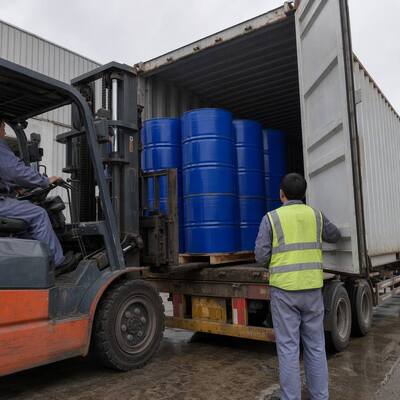
| Packaging Details: | 250kg/drum, 270kg/drum, 275kg/drum with new plastic drum, 1300kg IBC drum, flexible bag |
| Delivery Time: | 7 - 10 working days |
| Payment Terms: | L/C, T/T, D/P, D/A |
| Supply Ability: | 1000MT per month |
| Sorbitol Content: | 68‑72% | Molecular Weight: | 182.17 G/mol |
|---|---|---|---|
| Solubility: | Miscible With Water | Boilingpoint: | Not Applicable (aqueous Solution) |
| Flash Point: | Not Flammable / Flash Point >100℃ | Usage: | Used As A Humectant, Sweetener, And Stabilizer In Food And Pharmaceutical Products |
| Physical: | Liquid | Chemical Name: | Sorbitol |
| Storage Condition: | Store In A Cool, Dry Place | Standard: | BP, USP, EP, FCC |
| Activeingredient: | Sorbitol |
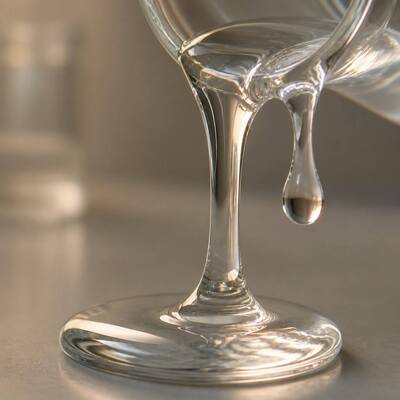
Sorbitol Solution 70% is a clear, colourless, syrupy liquid built from a single hydrogenation step: D-glucose is hydrogenated until the carbonyl group is closed, and the resulting polyol (sugar alcohol) is concentrated to the 70% dry-substance band. The bulk of the molecule is D-sorbitol; the remainder is made up of closely related glycitols — mannitol, iditol and hydrogenated saccharides — whose proportions depend on the grade of the incoming glucose. That composition is what gives each grade its behaviour, and it is the reason a buyer should compare grades on a full panel rather than on a single headline number.
This page covers the crystalline grade, released against BP / USP / EP monographs. In this grade the D-sorbitol share is held high and the mannitol share low, so the solution behaves predictably in high-solids formulations — which is precisely why it is chosen wherever a formulator needs moisture held in place, a body without added bulk sugar, or a plasticising effect that survives storage.

Sorbitol is roughly 60% as sweet as sucrose with about one-third fewer calories, and it carries a smooth mouthfeel with a sweet, cool and pleasant taste rather than a sharp sugar peak. Its practical value to a formulator is in four places:
Humectancy.
Body and mouthfeel.
Plasticity and film formation.
Crystallisation control.
Confectionery, bakery and beverage manufacturers; chewing-gum and oral-care producers; cosmetics and personal-care formulators; pharmaceutical manufacturers using it as an excipient; and industrial processors who use it as a humectant, plasticiser or as an intermediate for sorbitan esters, polysorbate-type surfactants and polyurethane polyols.
| Item | Detail |
| Product name | Sorbitol Solution 70% |
| Chemical name | D-glucitol |
| Synonyms | D-sorbitol, sorbitol syrup |
| CAS No. | 50-70-4 |
| E number | E 420 (Sorbitol Syrup, E 420 (ii)) |
| INS No. | 420 |
| Chemical formula | C6H14O6 |
| Molecular weight | 182.2 |
| EINECS | 270-337-8 (sorbitol syrup) |
| Description | Clear, colourless aqueous solution; colourless syrupy liquid |
| Solubility | Miscible with water, with glycerol and with propane-1,2-diol |
| Supplied as | Bulk liquid in new drums, 250 kg / 270 kg / 275 kg |
Sorbitol for food and technical use is made by hydrogenating D-glucose. Whatever is not D-sorbitol is made up of related substances — mannitol, iditol and maltitol on the monomer side, hydrogenated oligosaccharides where a glucose syrup feedstock is used. A crystalline grade is produced so that the D-sorbitol share stays high and the mannitol share stays low; that balance is visible in the panel on this page, and it is the difference a formulator feels when crystallisation or mouthfeel is the constraint.
| No. | Item | Limit | Basis |
| 1 | Appearance | Colourless, syrupy liquid | Visual |
| 2 | Dry substance | ≥ 70 % | — |
| 3 | Water content | ≤ 30 % | — |
| 4 | Refractive index (20 °C) | ≥ 1.4575 | 20 °C |
| 5 | Specific rotatory power [α] D20 (20 °C) | ≤ +5.3° | 20 °C |
| 6 | Specific gravity (20 °C) | ≥ 1.290 g/ml | 20 °C |
| 7 | Sorbitol | ≥ 93.0 % | Dry basis |
| 8 | Mannitol | ≤ 2.0 % | — |
| 9 | Resistivity | ≤ 20 µS/cm | — |
| 10 | Reducing sugars | ≤ 0.10 % | — |
| 11 | Total sugar | ≤ 0.20 % | — |
| 12 | Nickel | ≤ 1.0 mg/kg | — |
| 13 | Iron | ≤ 1.0 mg/kg | — |
| 14 | Chloride | ≤ 10 mg/kg | — |
| 15 | Sulphate | ≤ 20 mg/kg | — |
| 16 | Heavy metals (as Pb) | ≤ 1.0 mg/kg | — |
| 17 | Arsenic (as As2O3) | ≤ 1.0 mg/kg | — |
| 18 | Sulphated ash | ≤ 0.10 % | — |
Reading the table in the order a formulator actually cares about it:
Indicative values per 100 g of sorbitol solution, for finished-product label calculations.
| Nutrient | Per 100 g |
| Total calories | 182 kcal |
| Calories from fat | 0 kcal |
| Total fat | 0 g |
| Saturated fat | 0 g |
| Trans fat | 0 g |
| Cholesterol | 0 mg |
| Sodium | 0.2 mg |
| Potassium | 0.04 mg |
| Total carbohydrate | 70 g |
| Dietary fibre | 0 g |
| Sugars | 0 g |
| Sugar alcohol | 70 g |
| Protein | 0 g |
Each lot leaves against the 18-point panel; the values below are the reported results for a representative released batch of the crystalline grade. They are reproduced here in the certificate's own reporting order so a buyer can line them up against the panel above without transposing rows.
| No. | Item | Result |
| 1 | Appearance | Colourless, syrupy liquid |
| 2 | Dry substance | 71.0 % |
| 3 | Water content | 27.0 % |
| 4 | Total sugars | 0.20 % |
| 5 | Reducing sugars | 0.07 % |
| 6 | D-Sorbitol (dry basis) | 98.88 % |
| 7 | D-Mannitol | 0.51 % |
| 8 | Resistivity | 0.07 µS/cm |
| 9 | Refractive index (20 °C) | 1.4653 |
| 10 | Specific gravity (20 °C) | 1.311 g/ml |
| 11 | Chloride | < 10 mg/kg |
| 12 | Iron | < 1.0 mg/kg |
| 13 | Nickel | < 1.00 mg/kg |
| 14 | Arsenic (as As2O3) | < 1.0 mg/kg |
| 15 | Sulphated ash | < 0.10 % |
| 16 | Sulphate | < 20 mg/kg |
| 17 | Heavy metals (as Pb) | < 1.0 mg/kg |
| 18 | Specific rotation (20 °C) | +4.70° |
Conclusion on the certificate: the results conform to the specification.
What the numbers say about the lot, in plain terms:
D-Sorbitol at 98.88% on dry basis with D-mannitol at 0.51%
Resistivity at 0.07 µS/cm against a ≤20 µS/cm limit
Refractive index 1.4653 and specific gravity 1.311
Reducing sugars at 0.07% and total sugars at 0.20%
Specific rotation at +4.70° against a ≤ +5.3° ceiling
The same 70% solution serves several industries, but it does a different job in each. The notes below are written by application, because that is how a formulator decides whether this grade fits.
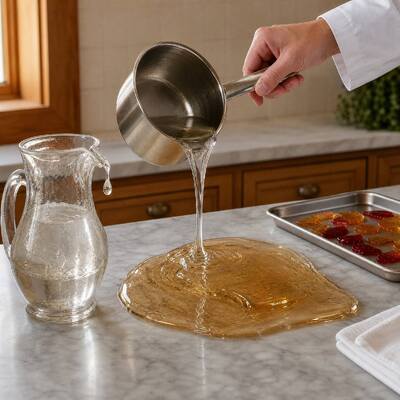
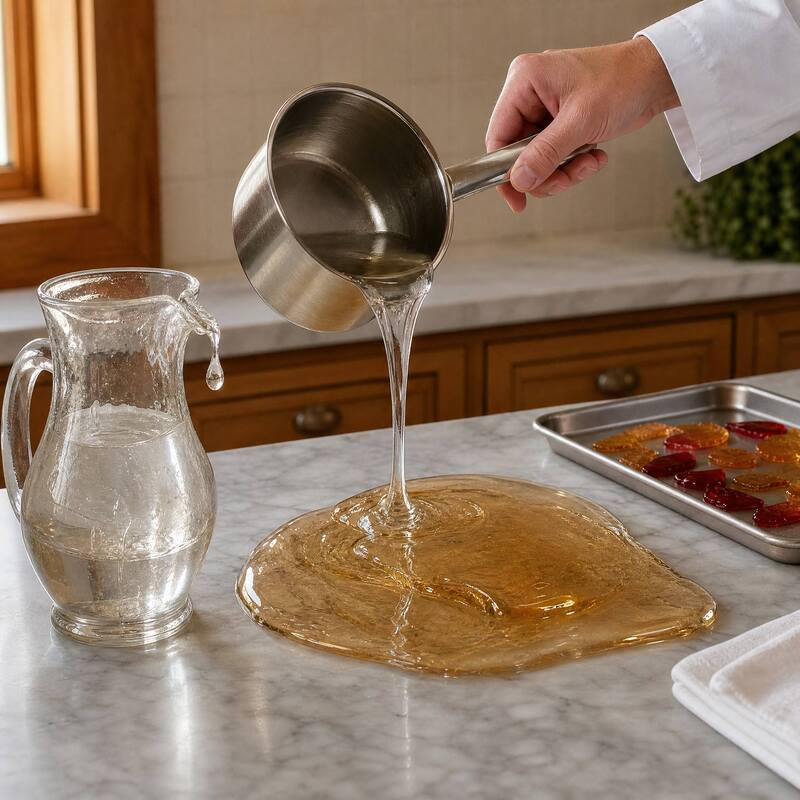
Sorbitol solution is used as a humectant and crystallisation-control agent. In starch-moulded and gelatin-based soft candy it holds moisture through the shelf life so the piece stays soft instead of hardening at the surface. In chewing gum it contributes to the gum base's softness and to a long-lasting cool sweetness. In fillings and fondants it interrupts sucrose crystallisation, which is what keeps the texture smooth rather than grainy.
Added to cake, biscuit and pastry systems, it slows staling by holding water in the crumb. Because it does not bring the browning behaviour of a reducing sugar, it is also used where a formulator wants to hold moisture without pushing colour development.
In syrups, concentrates and ready-to-drink systems it supplies mouthfeel and body with a cool rather than cloying sweetness, and it acts as a carrier and stabiliser for flavours and colours in the liquid phase.
Used in dairy and frozen-dessert formulations, it limits ice-crystal growth so that texture stays fine across freeze–thaw cycles, and it keeps the product from becoming excessively hard.
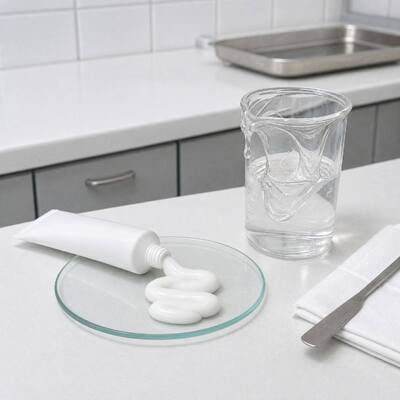
Sorbitol solution is a standard humectant and sweetener in toothpaste. It keeps the paste from drying or hardening in the tube, contributes to a smooth rheology, and provides sweetness without sucrose. It is equally used in mouthwash and other oral-care liquids, where clarity and low colour are the requirements.
In creams, lotions, toners and gels it is a humectant; in films, masks and solid sticks it acts as a plasticiser. Being miscible with water, glycerol and propane-1,2-diol, it drops into existing humectant blends without compatibility work.
In oral liquid and solid dosage forms, sorbitol solution is used as a sweetener, humectant, diluent and plasticiser, and as a vehicle component where a non-sucrose base is needed. The crystalline grade on this page is released against BP/USP/EP monographs, and the batch certificate is available to support a buyer's own incoming-material qualification.
Outside food and personal care, the same liquid is used as a humectant in adhesives and tobacco processing, as a plasticiser and stabiliser, and as a starting material for sorbitan esters and polysorbate-type surfactants and for polyurethane polyol systems. In these routes the ionic-cleanliness and sugar-content limits on the panel are the parameters that decide whether the material runs cleanly in the downstream reaction.
Quality is handled as a release gate rather than a marketing statement. Three points matter to a buyer auditing this product.
Each batch certificate carries a full 18-point result set — appearance, dry substance, water, total and reducing sugars, sorbitol and mannitol, resistivity, refractive index, specific gravity, chloride, iron, nickel, arsenic, sulphated ash, sulphate, heavy metals and specific rotation. The certificate is signed off at three levels on the manufacturer's side: analyst, checker and supervisor. A lot is not released on a partial panel, and the result values are reported per parameter, not summarised into a single pass/fail line.
The specification on this page is not written to the legal minimum. Compared with the EU permitted maxima for sorbitol syrup (E 420 (ii)) and, where relevant, the sorbitol monograph (E 420 (i)), the released limits are deliberately more demanding:
| Parameter | EU permitted maximum | Specification on this page |
| Water content | ≤ 31 % | ≤ 30 % |
| Reducing sugars | ≤ 0.3 % | ≤ 0.10 % |
| Total sugars | ≤ 1 % (E 420 (i) monograph) | ≤ 0.20 % |
| Nickel | ≤ 2 mg/kg | ≤ 1.0 mg/kg |
| Arsenic | ≤ 3 mg/kg | ≤ 1.0 mg/kg |
| Heavy metals (as Pb) | ≤ 1 mg/kg (lead) | ≤ 1.0 mg/kg |
For a food, oral-care or excipient buyer, that gap is the practical difference between a material that passes a regulatory audit and a material that passes an internal specification with margin left over.
Note on the ionic-load parameter: the EU monograph expresses this property as conductivity ≤ 10 µS/cm on the product as such at 20 °C, while the specification on this page expresses the same property as resistivity ≤ 20 µS/cm. The two are not numerically interchangeable, and buyers running ion-sensitive processes should ask for the residual-ionic data in the form their own specification uses.
Each shipment is accompanied by the specification sheet, the technical data sheet and the certificate of analysis for the batch supplied. Additional statements required for a buyer's own vendor qualification are issued on request.
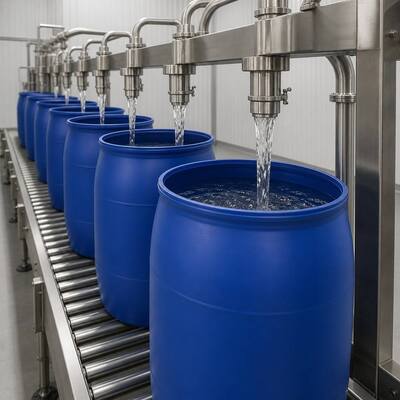
The product is supplied as a bulk liquid in new drums, in three drum sizes:
| Drum size | With |
| 250 kg / drum | New plastic drum or steel drum |
| 270 kg / drum | New plastic drum or steel drum |
| 275 kg / drum | New plastic drum or steel drum |
Points worth noting at order stage:
Three drum sizes, one product.
New drums on every lot.
Drummed liquid logistics.
Lot quantum.
Storage conditions.
Keep the drums closed.
Protect from direct sunlight and heat.
Use first in, first out.
Avoid contamination.
Shelf life.
We are reliable China bulk supplier for food‑grade polyol sweeteners including maltitol syrup, liquid glucose, sorbitol solution. We supply consistent‑quality bulk liquid sweetener for food and pharma manufacturers globally.
Qingdao Golden Grain Chemical Co., Ltd, invested by Golden Grain Group Limited, one professional manufacturer and exporter since 2000, is devoted to supplying products and solutions to food & beverage, medicine, animal feed & nutrition, personal care & household, construction, agriculture.
Golden Grain Group Limited have professional staff, advanced production lines and complete lab equipment, pass GMP, HACCP, ISO, HALAL, KOSHER, BRC, GMP-Free, and other necessary certificates, which ensure our quality to be international standard. For many years' experience, we are exporting our products to more than 60 countries in the world.
"Quality Products", "Efficient Service", Golden Grain Group Limited hope to enter good business cooperation with customers at home and abroad for long.