 |
| Place of Origin: | China |
| Brand Name: | Golden Grain |
| Certification: | ISO9001, COA,SDS |
| Model Number: | GLMA-01771 |
| Minimum Order Quantity: | 1300kg |
|---|---|
| Price: | USD500/MT FOB QINGDAO - USD700/MT FOB QINGDAO |
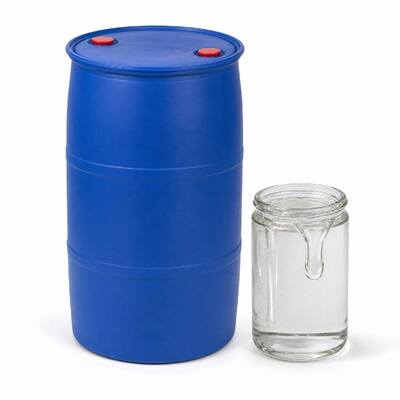
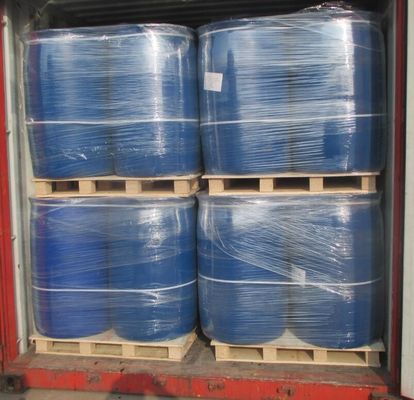
| Packaging Details: | 250kg/drum, 270kg/drum, 275kg/drum with new plastic drum, 1300kg IBC drum, flexible bag |
| Delivery Time: | 7 - 10 working days |
| Payment Terms: | L/C, T/T, D/P, D/A |
| Supply Ability: | 1000MT per month |
| Activeingredient: | Sorbitol | Solubility: | Miscible With Water |
|---|---|---|---|
| Ph: | 5.0 - 7.0 (10% Solution) | Standard: | BP, USP, EP, FCC |
| Concentration: | 70% | Casnumber: | 50-70-4 |
| Hazardclassification: | Non-hazardous | Package: | 250kg ,270kg ,275kg Drum |
| Storage Condition: | Store In A Cool, Dry Place | Chemicalname: | Sorbitol |
| Chemicalformula: | C6H14O6 | Boilingpoint: | Not Applicable (aqueous Solution) |
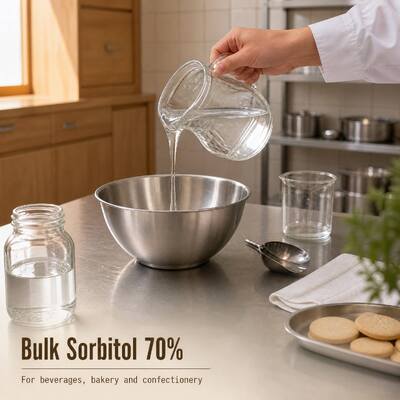
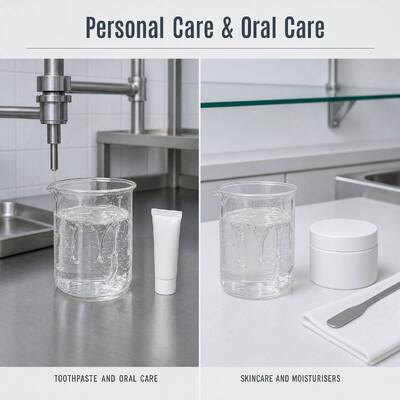
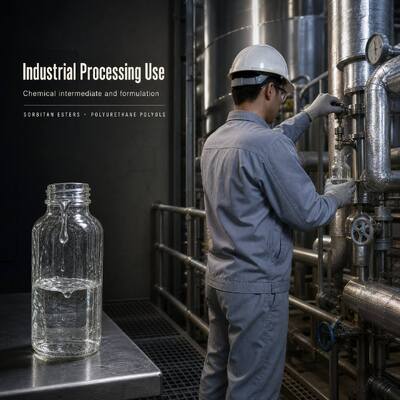
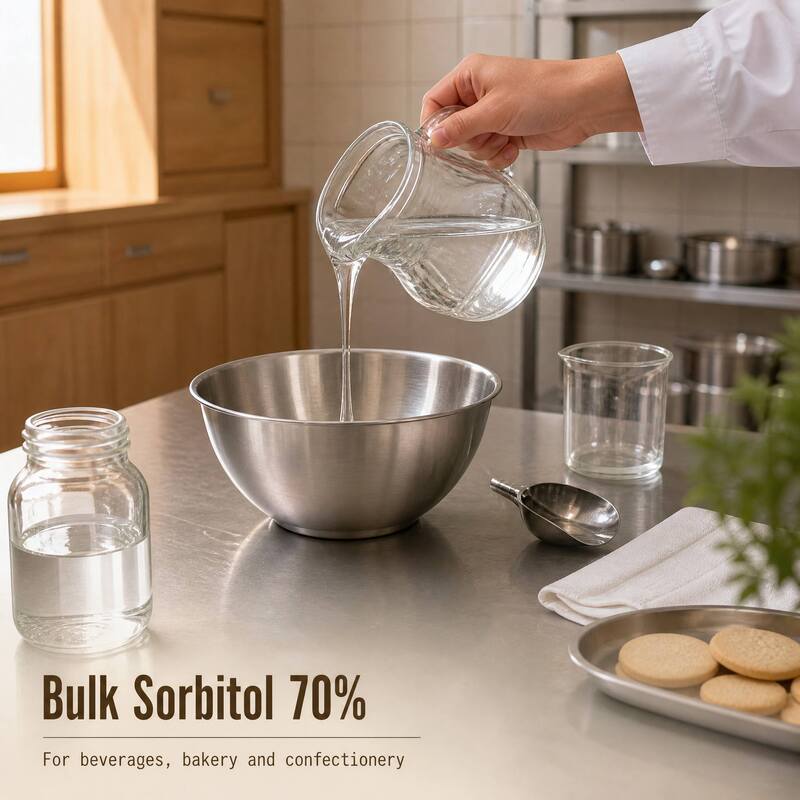
Sorbitol Solution 70% is a clear, colourless, syrupy liquid that mixes with water in every proportion. Chemically it is D-glucitol (D-sorbitol), a polyol — a sugar alcohol — used as a bulk sweetener and humectant. It is identified as CAS No. 50-70-4, EINECS No. 200-061-5, INS No. 420 (E420), and is declared under H.S. Code 38246000.
Two things make this material easy to live with on a production line. The first is that it arrives as a liquid at 70% solids: it is pumped, metered or poured straight into the batch, so nothing has to be dissolved, there is no powder dust around the weigh-out, and no caked material is waiting in the store after a humid season. The second is that it is specified against cold conditions rather than left to chance — the resist experiment holds the solution at −18 °C for 48 hours and it must come back non-crystalline, which is what protects a shipment through winter transit, cold storage and slow-moving inventory.
The product is specified to Non-Crystalline BP / USP / EP, and identity is not taken on trust: every batch is identified by HPLC against a reference peak, by angle of rotation and by characters before it is released, so the material in the drum is the material the certificate describes.
Sorbitol is about 60 percent as sweet as sucrose, with a smooth mouthfeel and a sweet, cool, pleasant taste. Because the same molecule also holds moisture in a finished product rather than releasing it, one material serves both the sweetening and the texture side of a recipe — a useful simplification when a formula is being trimmed.
Sorbitol has been affirmed as GRAS (Generally Recognized As Safe) by the U.S. Food Administration and is approved for use by the European Union and by numerous countries worldwide, including Australia, Canada and Japan. A certificate of analysis and the product specification sheet accompany every shipment.

Non-Crystalline Grade — BP / USP / EP
| No. | Item | Specification |
| 01 | Appearance | Clear, colourless, syrupy liquid, miscible with water |
| 02 | Identification A: HPLC | The principal peak is similar to the reference |
| Identification B: Angle of rotation | +1.5° – +3.5° | |
| Identification C: Characters | Clear, syrupy liquid | |
| 03 | Conductivity | ≤ 10 µS/cm |
| 04 | Reducing sugars | ≤ 0.20% |
| 05 | Reducing sugars after hydrolysis | ≤ 9.3% |
| 06 | Lead | ≤ 0.5 ppm |
| 07 | Nickel | ≤ 1.0 ppm |
| 08 | Dry substance | 68.0% – 72.0% |
| 09 | Water content | 28.0% – 32.0% |
| 10 | D-Glucitol (D-Sorbitol) | 72% – 92% |
| 11 | Total plate count | ≤ 100 cfu/ml |
| 12 | Mold and yeast | ≤ 100 cfu/ml |
| 13 | Staphylococcus aureus | Negative |
| 14 | Specific gravity (20 °C) | ≥ 1.290 g/ml |
| 15 | Sulphated ash | ≤ 0.10% |
| 16 | Chlorides | ≤ 10 ppm |
| 17 | Sulphate | ≤ 20 ppm |
| 18 | Resist experiment | −18 °C / 48 h, non-crystal |
Limits and results are those printed on a batch certificate of analysis. A certificate is issued for the batch actually shipped, and that certificate governs that batch.
| Item | Specification | Result |
| Appearance | Colourless, syrupy liquid | Conforms |
| Dry substance | ≥ 67.5% | 73.1% |
| Moisture content | ≤ 32.5% | 26.9% |
| Refractive index (20 °C) | ≥ 1.4575 | 1.4646 |
| Specific rotatory power [α] D20 (20 °C) | ≤ +5.3° | +4.55° |
| Specific gravity (20 °C) | ≥ 1.290 g/ml | 1.313 g/ml |
| Sorbitol | ≥ 68.0% | 72.31% |
| Mannitol | ≤ 2.0% | 0.35% |
| Resistivity | ≤ 20 µS/cm | 1.32 µS/cm |
| Reducing sugars | ≤ 0.05% | 0.04% |
| Total sugars | ≤ 0.30% | 0.16% |
| Nickel | ≤ 1.0 mg/kg | < 1.0 mg/kg |
| Iron | ≤ 1.0 mg/kg | < 1.0 mg/kg |
| Chlorides | ≤ 10 mg/kg | < 10 mg/kg |
| Sulphates | ≤ 20 mg/kg | < 20 mg/kg |
| Heavy metals (as Pb) | ≤ 1.0 mg/kg | < 1.0 mg/kg |
| Arsenic (as As₂O₃) | ≤ 1.0 mg/kg | < 1.0 mg/kg |
| Sulphated ash | ≤ 0.10% | < 0.10% |
Release is both an analytical step and a documentary one. Identity is confirmed three ways — the HPLC principal peak against a reference, the angle of rotation, and the characters of the material — so an identity problem is caught at the plant rather than at your goods-in bay.
Microbiological control is written into the specification rather than assumed: total plate count ≤ 100 cfu/ml, mold and yeast ≤ 100 cfu/ml, and a negative requirement for Staphylococcus aureus. For a product that is pumped, stored and decanted instead of sealed as a dry solid, that is a practical control on a real handling risk.
Trace metals are held at ppm level — lead ≤ 0.5 ppm and nickel ≤ 1.0 ppm, with iron, chloride, sulphate, sulphated ash, heavy metals as Pb and arsenic as As₂O₃ all individually limited. These are the residues that come with the hydrogenation route, and they are worth checking against your own market's limits before you commit.
Two lines let your goods-in team verify a delivery without a laboratory: refractive index (≥ 1.4575) and specific gravity (≥ 1.290 g/ml) can both be confirmed on the spot with a refractometer and a hydrometer. Every certificate carries the batch number and is signed by an analyst, a checker and a supervisor, and the batch number travels on the drum — so a container on your dock can always be traced back through its certificate to the release record behind it.
| Package Type | Net Weight |
| New plastic drum (standard) | 250 kg / 270 kg / 275 kg per drum |
| IBC drum | 1,300 kg per drum |
| Flexible bag | 20 MT / 23 MT / 24 MT |
| ISO tank | bulk option |
H.S. Code:38246000
Store in a cool, dry, ventilated environment and keep containers closed when they are not in use. Bring drums to a stable temperature before pumping, so the viscosity you meter is the viscosity you planned. Avoid prolonged direct sunlight, heat sources and strong oxidising agents.
Shelf life. 24 months from the date of manufacture, with the expiry date stated on the batch certificate of analysis.
We are reliable China bulk supplier for food‑grade polyol sweeteners including maltitol syrup, liquid glucose, sorbitol solution. We supply consistent‑quality bulk liquid sweetener for food and pharma manufacturers globally.
Qingdao Golden Grain Chemical Co., Ltd, invested by Golden Grain Group Limited, one professional manufacturer and exporter since 2000, is devoted to supplying products and solutions to food & beverage, medicine, animal feed & nutrition, personal care & household, construction, agriculture.
Golden Grain Group Limited have professional staff, advanced production lines and complete lab equipment, pass GMP, HACCP, ISO, HALAL, KOSHER, BRC, GMP-Free, and other necessary certificates, which ensure our quality to be international standard. For many years' experience, we are exporting our products to more than 60 countries in the world.
"Quality Products", "Efficient Service", Golden Grain Group Limited hope to enter good business cooperation with customers at home and abroad for long.