 |
| Place of Origin: | China |
| Brand Name: | Golden Grain |
| Certification: | ISO9001, ISO22000, HALAL, KOSHER, COA, SDS |
| Model Number: | GLMAS-03 |
| Minimum Order Quantity: | 1300kg |
|---|---|
| Price: | USD500/MT FOB QINGDAO - USD700/MT FOB QINGDAO |
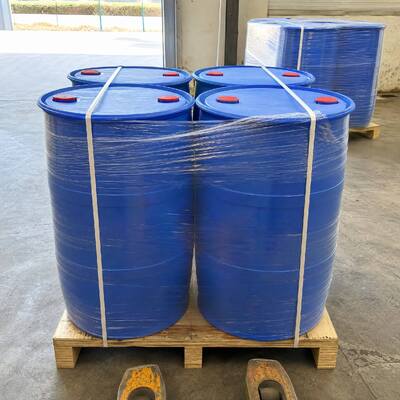
| Packaging Details: | 275kg new HDPE drum (standard); 250kg / 270kg new HDPE drum; 1000kg IBC with bottom discharge valve; 1300kg IBC tote; flexitank on request |
| Delivery Time: | 7 - 10 working days |
| Payment Terms: | L/C, T/T, D/P, D/A |
| Supply Ability: | 1000MT per month |
| Product Name: | Maltitol Syrup (Liquid Maltitol, Hydrogenated Starch Hydrolysate HSH) | CAS No.: | 585-88-6 |
|---|---|---|---|
| E-Number / INS No.: | E965 (INS 965), E965(ii) | HS Code: | 38249099 |
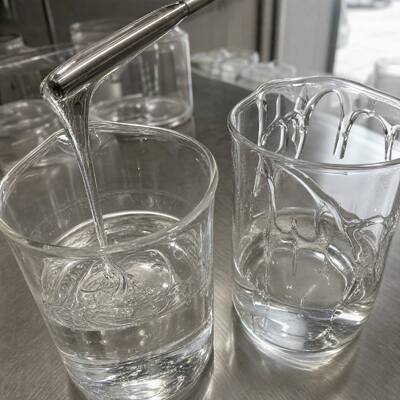
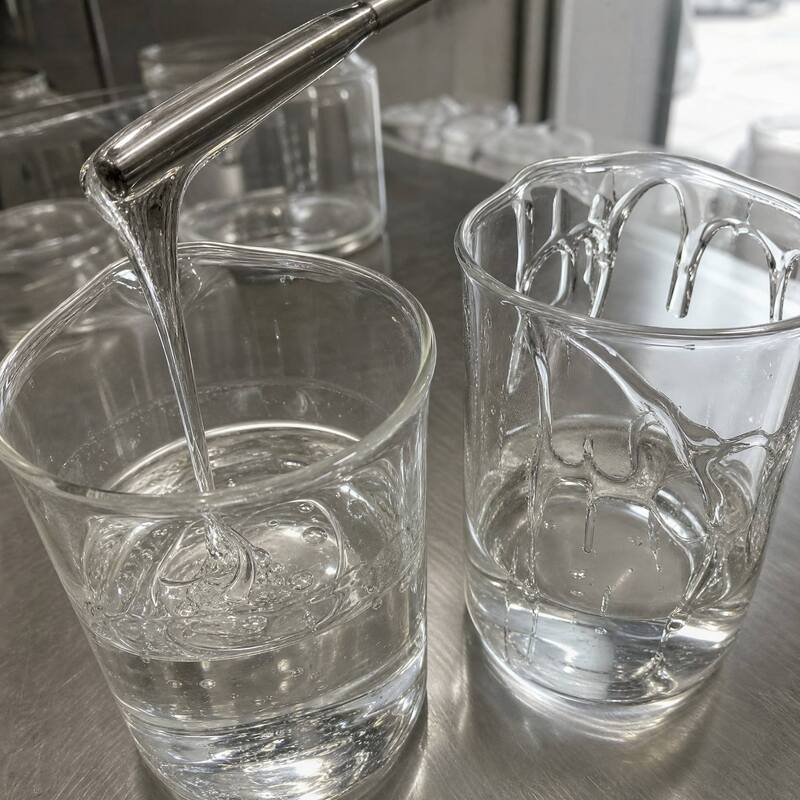
| Appearance: | Colourless, Transparent, Viscous Liquid | Grade: | Food Grade, FCC, Non-GMO |
| Dry Substance: | 75% Min (75/50); 80% (80/55); 85% (85/55) | Maltitol Content (dry Basis): | 50% Min (75/50); 55% Min (80/55, 85/55) |
| Sorbitol Content (dry Basis): | 6% Max | Reducing Sugars (dry Basis): | 0.3% Max |
| PH (50% Solution): | 5.0 - 7.0 | Sweetness: | About 75% Of Sucrose |
| Energy Value: | About 2.1 Kcal/g | Heavy Metals (as Pb): | 5 Ppm Max |
| Function: | Bulk Sweetener, Humectant, Sugar Replacer, Anti-Crystallizing Agent | Application: | Sugar-Free Candy, Chewy Candy, Hard Candy, Gummy, Bakery Filling, Chocolate, Ice Cream, Beverage |
| Alternative To: | Glucose Syrup, Sucrose, Sorbitol Syrup | Shelf Life: | 24 Months, Unopened, Above 5 °C |
Maltitol liquid — E965, CAS 585-88-6 — is what you put in the kettle when the brief says sugar-free but the process was built around glucose syrup. Same handling, same pumping, same dosing skid. Different chemistry on three points that matter: it does not crystallise, it carries almost no reducing sugars, and it is a polyol, so the sugar-free claim survives the label review.
Available in three solids grades — 75/50, 80/55, 85/55 — from one line, so moving a formula between them changes the water balance, not the supplier.
| Product | Maltitol Syrup / Liquid Maltitol (Hydrogenated Starch Hydrolysate, HSH) |
| E-number / CAS | E965 (INS 965) / 585-88-6 |
| Grades | 75/50 · 80/55 · 85/55 (dry substance / maltitol on dry basis) |
| Appearance | Colourless, transparent, viscous liquid |
| Sweetness / energy | ≈75% of sucrose · ≈2.1 kcal/g |
| Standard pack | 275 kg new HDPE drum |
| MOQ / lead time | 1,300 kg · 7–10 working days, FOB Qingdao |
| Certification | ISO 9001, ISO 22000, Halal, Kosher · non-GMO · FCC grade |

Most reformulation failures with maltitol liquid are not chemistry failures — they are bookkeeping failures. Four things move, and all four are predictable:
1. Reducing sugars collapse. Glucose syrup is a reducing-sugar stream by definition; this syrup is specified at 0.3% max on dry basis, typically 0.06%. In candy that means far less colour pickup during the cook and far less drift during storage. In bakery it means a filling or a biscuit dough that browns because you baked it, not because the syrup caramelised ahead of schedule.
2. Crystallisation stops being a risk. Graining in chewy candy, white streaks in a deposited hard candy, a filling that turns gritty on the shelf — those are sucrose and glucose crystals doing what they are supposed to do. The polyol blend here resists crystallisation in the drum and in the finished piece, so the failure mode disappears rather than being managed.
3. The sugar-free claim becomes available. Sucrose-free and sugar-free labelling is a formulation and jurisdiction question, not a slogan — but it starts with what is in the kettle. Because the sweetener here is a polyol rather than an invert or a glucose stream, a no-added-sugar or sugar-reduced claim is on the table, along with the tooth-friendly and lower-glycemic positioning that buyers now ask for by name.
4. Water and solids shift — and this is the one people miss. The syrup arrives at 75% solids, so it brings three quarters of its own weight as solids and a quarter as water. Where your old formula counted a glucose syrup at a different dry substance, the balance of the batch changes. Fix the solids line first, then sweetness. Get that order wrong and you will blame the ingredient for a texture problem you created.
| Glucose syrup | Maltitol liquid 75/50 | What it does on your line | |
| Reducing sugars | Reducing stream by nature | 0.3% max, typically 0.06% | Less browning in the cook, in the oven and on the shelf |
| Crystallisation | Can seed graining with sucrose | Non-crystallising | No graining, no streaks, no gritty filling |
| Sweetener class | Nutritive saccharide | Polyol (sugar alcohol) | Opens sugar-free / no-added-sugar / reduced-sugar claims |
| Glycemic response | High | Lower than sucrose | Supports diabetic-friendly and keto-friendly positioning |
| Tooth friendliness | Cariogenic | Non-cariogenic | Tooth-friendly claim on the pack |
| Sweetness | Varies with DE and supplier | ≈75% of sucrose, consistent | Dose by sweetness target, not by weight |
| Humectancy | Moderate | Strong water binding | Softer chew, lower water activity, longer shelf |
| Handling | Pumped, heated | Pumped at ambient | Existing drum and pump setup works |
Chewy candy, toffee and nougat. The syrup keeps the chew supple for the whole shelf period and holds water where you want it, so the piece does not go waxy or dry at the surface of the wrap. Pair it with the fat phase and the texture modifier rather than treating it as a one-for-one sucrose swap — the chew body comes from the polyol blend, the snap comes from the fat.
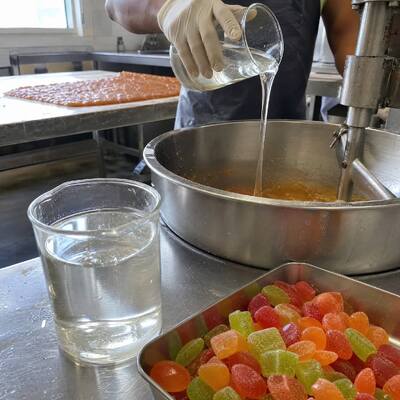
Hard candy and deposited sweets. A melt that resists crystallisation can go from the cooker to the cooling belt, through the batch roller and the rope sizer, and into the mould without white streaks. For small cavities, 75/50 fills more cleanly than the higher-solids cuts because it is the thinner of the three at working temperature; for a piece that needs less added water in the formula, step up to 80/55 or 85/55.
Gummy and soft gelatin pieces. Here the syrup works as much as a plasticiser as a sweetener: it keeps the gel network from tightening over time, so the piece stays soft in the bag instead of going leathery at the surface. This is also the grade used as a plasticiser in soft capsule shells on the oral-dose side of the same plant.
Sugar-free jelly and fruit preparation. Humectant plus bulking sweetener, with the water activity control that keeps a fruit piece from weeping into the surrounding gel.
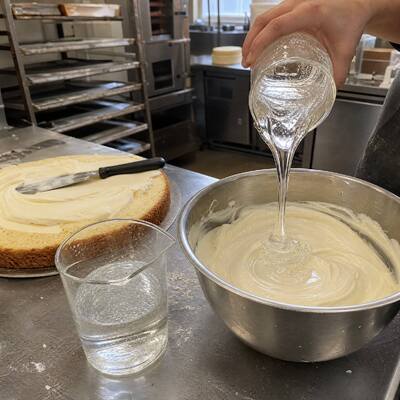
Fillings and cream layers. A filling has to stay soft in a cold chain, not express water into a sponge, and not brown where it touches the bake. This syrup holds water in the filling, keeps it spreadable at refrigerator temperature, and contributes almost no reducing sugars, so the colour at the interface stays where the baker put it.
Biscuits, cookies and baked goods. Used at partial replacement, it improves machinability of the dough and keeps the crumb from staling as fast, because the polyol holds moisture in the crumb structure rather than letting it migrate to the surface.
Glazes, icings and toppings. Non-crystallising means a glaze stays glossy and does not go dull or sugar-bloomed on the shelf — the same property that stops graining in candy, applied to a coating.
Bakery fillings with a sugar claim. Where the finished product carries a no-added-sugar or reduced-sugar claim, the sweetener has to be a polyol end to end. Mixing a polyol sweetener with a glucose-based bulking agent reintroduces exactly the sugars the claim was supposed to exclude.
Match sweetness, not weight.
Subtract the water.
Re-check the freezing point.
Expect a softer set.
Flavour reads cleaner.
Cook temperature may drop.
| Grade | Dry substance / maltitol | Choose it when |
| 75/50 | 75% / 50% min | Candy cooks and bakery fillings that need the lowest viscosity and easiest pumping; a formula that is already close to its water limit |
| 80/55 | 80% / 55% min | Chewier pieces, softer gels, and fillings where you want more sweetness and humectancy per kilo with less added water |
| 85/55 | 85% / 55% min | Low-moisture systems, capsule shells, and any formula that cannot afford the water a lower-solids grade brings |
All three run on the same hydrogenation and evaporation line, so a formula can move between them without re-qualifying a supplier or changing the COA format.
| Parameter | Specification |
| Product name | Maltitol Syrup (Hydrogenated Starch Hydrolysate, HSH) |
| Chemical identity | D-Maltitol with sorbitol and hydrogenated oligosaccharides |
| CAS / E-number | 585-88-6 / E965 (INS 965) |
| Molecular formula / weight | C12H24O11 / 344.31 |
| Appearance | Colourless, transparent, viscous liquid |
| Dry substance | 75% min (75/50 grade) |
| Maltitol content (dry basis) | 50% min |
| Sorbitol content (dry basis) | 6% max |
| Reducing sugars (dry basis) | 0.3% max |
| Water content | 25% max |
| pH (50% solution) | 5.0 – 7.0 |
| Sweetness | ≈75% of sucrose |
| Energy | ≈2.1 kcal/g |
| Sulphated ash | 0.1% max |
| Chloride | 50 ppm max |
| Heavy metals (as Pb) | 5 ppm max |
| Arsenic (as As) | 0.5 mg/kg max |
| Lead (Pb) | 0.5 ppm max |
| Nickel (Ni) | 2 ppm max |
| Grade | Food grade, FCC |
| GMO status | Non-GMO starch source |
| Shelf life | 24 months, unopened, above 5 °C |
| HS code | 38249099 |
Every lot is released against a batch-specific COA that prints the measured result next to the limit, so incoming inspection can be checked line by line rather than against a generic datasheet. Typical results on the 75/50 grade: dry substance 75.3%, maltitol 52.4% on dry basis, sorbitol 4.6%, pH 6.1, water 24.7%, reducing sugars 0.06%, conductivity ash 0.02%.
The lot code on the drum repeats on the pallet label and on the certificate, which is what makes a drum in your warehouse traceable back to its evaporation run.
| Document | When it is issued |
| Specification sheet | At quotation |
| MSDS | At quotation |
| Sample COA (previous batch) | At quotation, so QA can approve before pricing is agreed |
| Batch COA | With every shipment |
| Halal / Kosher certificates | On request, with issuing body and validity dates |
| Non-GMO and allergen statement | On request |
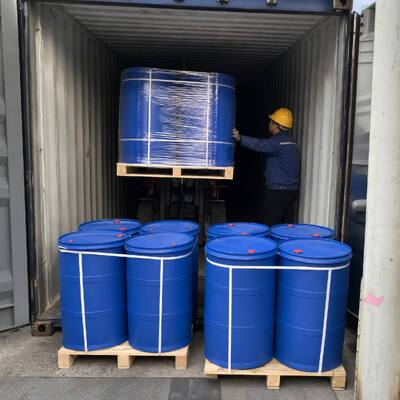
| Standard pack | 275 kg new HDPE drum, sealed lid |
| Alternative packs | 250 kg and 270 kg new HDPE drums · 1,000 kg IBC with bottom discharge valve · 1,300 kg IBC tote · flexible bulk |
| MOQ | 1,300 kg |
| Lead time | 7–10 working days from order confirmation |
| Loading | Palletised, shrink-wrapped, strapped; a 20 ft container is loaded by weight, so drum count depends on your booking weight and the destination road limit |
| Port / terms | FOB Qingdao · L/C, T/T, D/P, D/A |
| Supply capacity | 1,000 MT per month |
If your line draws from an IBC rather than a drum, say so at quotation stage — the valve type and discharge height have to match your pump, and that is cheaper to specify before loading than after.
Store sealed, in a cool, dry, ventilated warehouse, away from direct sunlight and heat, above 5 °C. Shelf life is 24 months unopened. Do not freeze: freezing separates the solids from the water phase in a way that does not fully reverse on thawing.
If a drum has been stored cold, let it come to ambient and roll or stir before drawing off, so the solids are uniform. Keep drums closed between draws, rotate stock FIFO, and keep the material away from strong odours — it will pick them up and carry them into a bland bakery filling.
Can I replace glucose syrup one for one? By solids, not by weight. Glucose syrups vary in dry substance and sweetness, so the honest answer is: recalculate the solids balance, then match the sweetness target, then adjust water. Once those three are set, the rest of the process usually transfers unchanged.
Will it crystallise in the drum or in the finished piece? No. Non-crystallising is a property of the grade, not a handling instruction. Any crystallisation found in a drum should be treated as a temperature excursion in transit.
Does it support a sugar-free claim? It is a polyol, so it does not count as a sugar in the nutrition declaration in most markets — but the claim depends on the whole formula and on the destination market's rules. Confirm the declaration with your regulatory team against the finished recipe.
Why is it less sweet than sucrose? About 75% of sucrose sweetness. That is a dosing fact, not a defect: match sweetness by weight and the flavour profile comes back.
What does it cost, and how do I start? Indicative pricing is USD500–700/MT FOB Qingdao and depends on grade, pack and volume — confirm against a live quotation. For a first order, most buyers take a 1,300 kg pallet, run one trial batch, and approve the material against the sample COA before booking a full container.
Is the material non-GMO and allergen-free? Yes — non-GMO starch source, and none of the ingredients on the EC allergen list. No animal-derived processing aids are used in hydrogenation, ion exchange or evaporation.