 |
| Place of Origin: | China |
| Brand Name: | Golden Grain |
| Certification: | ISO9001, COA,SDS |
| Model Number: | GLMA-ae1 |
| Minimum Order Quantity: | 1300kg |
|---|---|
| Price: | USD500/MT FOB QINGDAO - USD700/MT FOB QINGDAO |
| Packaging Details: | 275kg/drum (standard), 250kg/drum, 270kg/drum with new plastic drum, 1300kg IBC drum, flexible bag |
| Delivery Time: | 7 - 10 working days |
| Payment Terms: | L/C, T/T, D/P, D/A |
| Supply Ability: | 40000MT per month |
| Grade: | Food Grade / E965 / INS 965 | Application / End Use: | Protein Bar, Granola, Cereal Bar, Meal Replacement Bar, Chewy Bar, Nutrition Bar, Bakery Filling |
|---|---|---|---|
| Function: | Bar Binder, Humectant, Anti-Graining Agent, Bulk Sweetener, Sugar Substitute, Texture Modifier | Properties: | Non-Crystallizing, Low Glycemic, Non-Cariogenic, Low Calorie, Heat Stable, Non-GMO, Sugar-Free Formulation Compatible |
| Form & Appearance: | Clear Colourless Viscous Liquid | Concentration: | HSH 80/55 — Dry Substance 80% Min, Maltitol 55% Min On Dry Basis |
| Synonyms / Other Names: | Maltitol Syrup, Liquid Maltitol, Maltitol Solution, Hydrogenated Starch Hydrolysate, HSH | CAS No. / E-Number: | 585-88-6 / E965 |
| Packaging: | 275kg Drum (Standard); 250kg / 270kg Drum, 1000kg IBC, Flexible Bag | Dry Substance / Solids: | 80% Min |
| Maltitol Content (Dry Basis): | 55% Min | Reducing Sugars: | 0.3% Max |
| PH (50% Solution): | 5.0 – 7.5 | Application Form: | Liquid, Pumpable, Warm Dosing |
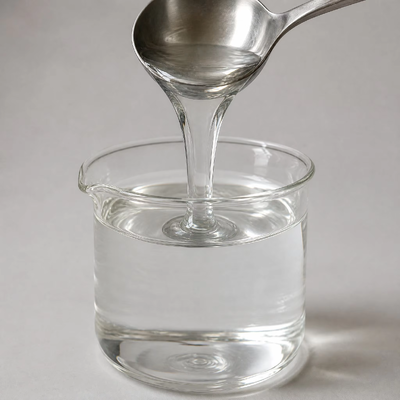
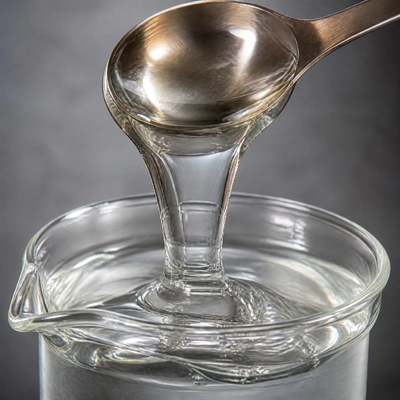
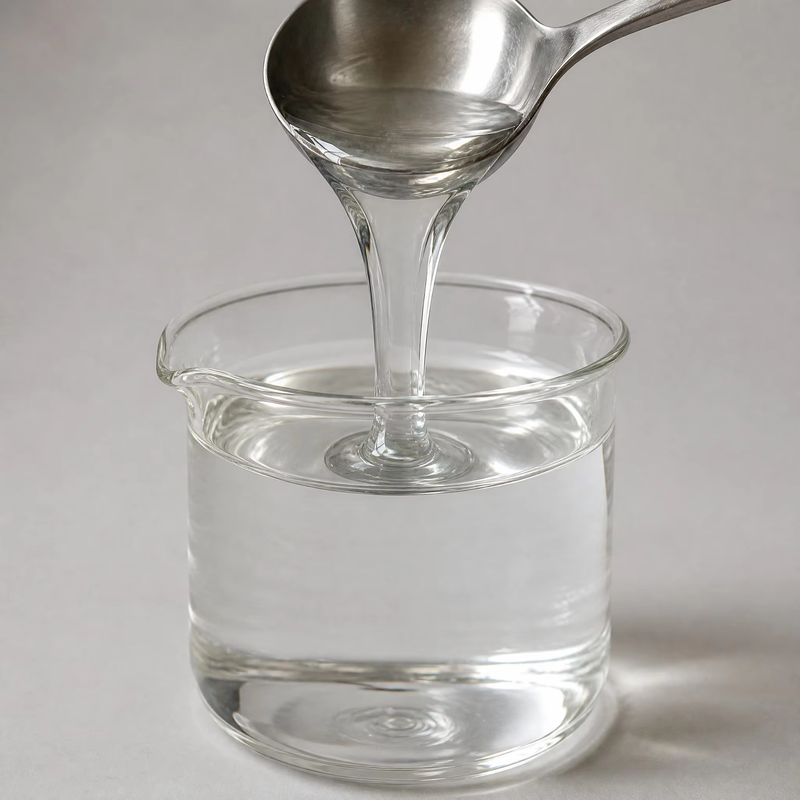
Maltitol Syrup 80/55, also called hydrogenated starch hydrolysate (HSH, E965, CAS 585-88-6), is the liquid polyol we recommend when the binder has to hold a bar soft, keep it from graining, and stay light in colour through shelf life. It is a clear, colourless, viscous liquid carrying 80% dry substance and a minimum 55% D-maltitol on dry basis, with the remainder made up of sorbitol and hydrogenated oligosaccharides. That polyol distribution is what keeps the syrup non-crystallising: it does not seed crystals in the bar body, in a cluster coating, or in a filling that sits next to it.
A protein bar that eats well on day one can be chalky and brittle by the sixth month. The usual cause is not the protein — it is the binder. Glucose syrup and plain sorbitol both migrate moisture out of the bar matrix, and the reducing sugars they carry push Maillard browning along while the bar firms up in the wrapper.
As a manufacturer we run the hydrogenation, deionisation and evaporation ourselves and fill from that stream, so the dry substance and maltitol figures on the certificate are release values from the lot you receive, not a catalogue average. Every lot is analysed for dry substance, maltitol, sorbitol, water, pH, reducing sugars, ash, heavy metals and microbiological counts before the container is closed.
For a bar line the practical advantage is simple: the syrup arrives as a pumpable liquid at a fixed solids level, so the water it contributes to your matrix is predictable from delivery to delivery. Formulators can build a target water activity and a target texture on a number they can actually calculate, instead of adjusting on every new drum.

| Parameter | Specification |
| Product name | Maltitol Syrup (hydrogenated starch hydrolysate, HSH) |
| Chemical name | D-Maltitol with sorbitol and hydrogenated oligosaccharides |
| CAS number / E number | 585-88-6 / E965 |
| Molecular formula / weight | C12H24O11 / 344.31 |
| Appearance | Colourless, transparent, viscous liquid |
| Dry substance | 80% min |
| Maltitol content (dry basis) | 55% min |
| Sorbitol content (dry basis) | 4-6% typical |
| pH (50% solution) | 5.0-7.5 |
| Water | 20% max |
| Reducing sugars | 0.3% max |
| Conductivity ash | 0.05% max |
| Grade | Food Grade / E965 |
| Function in application | Bar binder, humectant, anti-graining agent, bulk sweetener |
| Packing | 275kg drum (standard) / 250kg drum, 1000kg IBC, flexible bag |
| Shelf life | 24 months in sealed packing |
The certificate of analysis issued for each shipment is the governing document.
| Test item | Typical result | Method |
| Dry substance | 80.2% | Refractometry |
| Maltitol (dry basis) | 55.9% | HPLC, refractive index |
| Sorbitol (dry basis) | 4.6% | HPLC, refractive index |
| pH (50% solution) | 6.3 | pH meter |
| Water | 19.8% | Karl Fischer |
| Reducing sugars | 0.05% | Titrimetric |
| Conductivity ash | 0.02% | Conductometry |
| Total heavy metals (as Pb) | < 5 mg/kg | ICP-MS |
| Arsenic (as As) | < 1 mg/kg | ICP-MS |
| Total plate count | < 100 cfu/g | Plate count |
| Yeast and mould | < 10 cfu/g | Plate count |
A lot-specific certificate is issued with each drum or IBC, and a safety data sheet is available for customs and customer audit files.
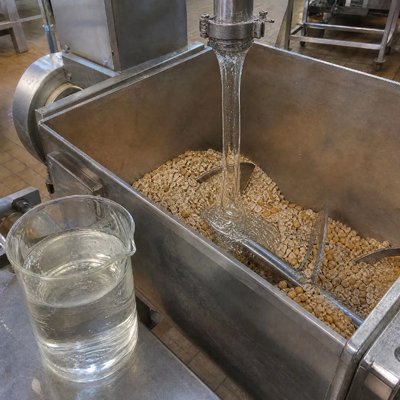
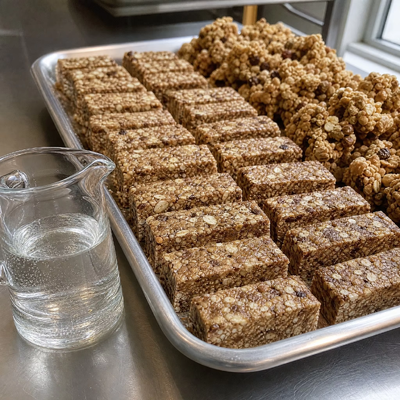
Protein and meal-replacement bars — the bar matrix itself. This is where the grade earns its place. The syrup is metered warm into the mixer with the protein blend, crisps and fibres, and on cooling it forms the continuous phase that binds the particulates into a sliceable, chewy body. Because it holds water rather than releasing it, the matrix gives up less moisture to the protein fraction over time, which is the mechanism behind the gradual hardening most bar formulators fight. Inclusion level is set by your target texture and by the water activity you need to reach — our technical team will run the ratio through with you rather than quote a fixed figure.
Granola and cereal clusters. Clusters need a binder that wets evenly, sets without becoming glassy, and does not grain white on the surface. At 80% solids the syrup coats oat and grain pieces with a thin, tacky film that pulls the cluster together in the cooling tunnel and keeps it intact in the bag.
Chewy cereal bars and nougat-style bars. Where the bar has to be cut clean on a guillotine, the binder must stay plastic rather than brittle. The non-crystallising polyol blend keeps the cut face smooth and stops the sugar bloom that shows up as a dull grey haze on stored bars.
Reduced-sugar baked bars and bar coatings. Low reducing sugar content (typically 0.05%) means very little Maillard substrate, so a bar body or a compound coating stays close to its original colour instead of darkening in the oven or in a warm warehouse. The mild sweetness sits close to sucrose without the cooling note that heavier sorbitol loads bring.
Bars carrying a sugar-free or reduced-sugar claim. Maltitol is a polyol and not classified as sugar, which is why formulators use it as the bulk sweetener in no-added-sugar lines. Whether your finished bar can carry a sugar-free claim depends on the whole recipe and on the labelling rules of your market — we supply specification, certificate and MSDS so your regulatory team can assess it, and we do not make that claim on your behalf.
Syrup or powder? Where the recipe has water to spare and the bar body needs binding plus humectancy, the syrup is the simpler route: no dissolving step, no dust, no lumping, and one fewer water addition to account for. Where the formulation is dry-blended or the moisture budget is already tight, the powdered grade is the better fit. We manufacture both, so the choice can be made on your process rather than on what a supplier happens to stock.
Process notes. Warm the container before drawing so the syrup flows and meters cleanly, dose by mass rather than by volume, and add it after the dry powders are blended so the binder coats the particles instead of hydrating the fibre. A closed transfer line from drum to mixer keeps a hygroscopic syrup away from humid room air, which matters most in summer production.
Each lot is released on dry substance, maltitol and sorbitol content, water, pH and reducing sugars, with ash, metals and microbiological counts completed before the container is sealed. Because the water figure drives both texture and water activity in a bar, we report solids and water separately on the certificate rather than as a single combined number, so your own calculation starts from real values.
Lot codes link the container to its evaporation run and to the retained sample we keep in the laboratory. If a batch of bars behaves differently from the trial, the syrup that went into it can be re-tested without opening a new drum. Reducing sugars are held at 0.3% or below at release, which is the parameter that governs colour development in a baked or warm-stored bar.
We operate under ISO 9001 and ISO 22000 with HACCP-based process control, and hold Halal and Kosher certification. Certificates and specifications can be issued in the buyer's name for audit and import clearance.
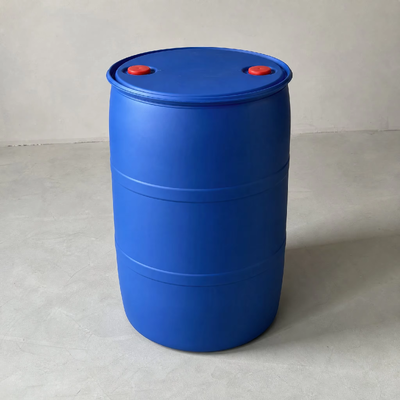
Standard packing is a 275kg food-grade drum, lacquered inside, filled warm and sealed with a clamped lid over a liner. Buyers running a continuous line can take 1000kg IBCs with a bottom valve, or flexible bags where the receiving area has its own transfer pump. 250kg drums are available on request.
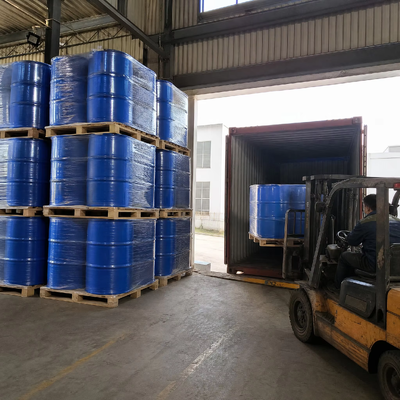
Drums are palletised and strapped for the voyage; a 20ft container takes around 80 drums, and IBC loads run 18-20 units depending on the destination weight limit. Neutral labelling is available if the goods are being sold on to your own customers, and buyer-labelled packing can be arranged for repeat programmes.
Standard lead time is 7-10 working days from order confirmation. L/C, T/T and D/P terms are accepted. Full container and LCL shipments are both supported, and mixed loads with our other polyols can be consolidated on request.
Store sealed containers under cover at 15-30°C, away from strong odours — the syrup can pick these up through the bung or valve. Warm a cold drum to around 40°C and roll or circulate it before use so the solids are uniform, then reseal immediately after drawing.
Never let water into the container. Dilution lowers the solids and raises the water activity of the binder, which changes both the texture and the shelf behaviour of the bar made from it. Drain transfer lines after use to avoid a heel that can crystallise and block the line.
Under these conditions sealed product holds its specification for 24 months.
Built for bar texture, not just sweetness.
No graining in the matrix.
Low reducing sugars for colour stability.
Manufacturer, not a repacker.
Traceable deliveries.
Both grades under one roof.
Application support.