 |
| Place of Origin: | Shandong, China |
| Brand Name: | Golden Grain |
| Certification: | ISO 9001, ISO 22000, HACCP, Halal, Kosher |
| Model Number: | GLMA-O152 |
| Minimum Order Quantity: | 1300kg (about 5 drums); trial quantities on request |
|---|---|
| Price: | USD500/MT FOB QINGDAO - USD700/MT FOB QINGDAO |
| Packaging Details: | 275kg Drum (Standard); 250kg / 270kg Drum, 1300kg IBC, Flexible Bag |
| Delivery Time: | 7-10 Working Days after Order Confirmation |
| Payment Terms: | L/C, T/T, D/P, D/A |
| Supply Ability: | 1,000 MT per Month |
| Product Type: | Sugar Alcohol Syrup / Polyol Syrup | Synonyms: | Liquid Maltitol, Maltitol Liquid, Maltitol Solution, Hydrogenated Starch Hydrolysate, HSH, Maltitol Syrup 75/50 |
|---|---|---|---|
| Chemical Name: | D-Maltitol With Sorbitol And Hydrogenated Oligosaccharides | CAS No.: | 585-88-6 |
| E-Number / INS No.: | E 965(ii) / INS 965(ii) | HS Code: | 38249099 |
| Molecular Formula / Weight: | C12H24O11 / 344.31 | Appearance: | Clear Colourless Viscous Liquid |
| Grade: | Food Grade / E 965(ii) / FCC | Concentration: | HSH 75/50 - 75% Dry Substance / 50% Maltitol Min On Dry Basis |
| Brix: | 75 Brix | Dry Substance: | 75% Min |
| Maltitol Content: | 50% Min On Dry Basis | Sorbitol Content: | 4-6% On Dry Basis (typical 4.7%) |
| PH (50% Solution): | 5.0 - 7.5 | Reducing Sugars: | 0.3% Max |
| Sweetness: | About 75% Of Sucrose | Energy: | 2.1 Kcal/g |
| Application: | Sugar-Free Ice Cream, Frozen Dessert, Gelato, Sorbet, Water Ice, Frozen Yogurt, Ice Cream Ripple | Function: | Bulk Sweetener, Humectant, Freezing Point Depressant, Anti-Recrystallization Agent, Bodying Agent |
| Properties: | Non-Crystallizing, Low Glycemic, Non-Cariogenic, Heat Stable, High Transparency, Sugar-Free Formulation Compatible | Taste Profile: | Clean Sweetness, Close To Sucrose, No Cooling Effect, No Aftertaste |
| Shelf Life: | 24 Months, Unopened, 15-30 °C | Trade Terms: | FOB Qingdao, CIF, CFR |
| Documents: | COA, SDS, Specification Sheet, Halal Certificate, Kosher Certificate, Non-GMO Statement, Allergen Statement, Certificate Of Origin |
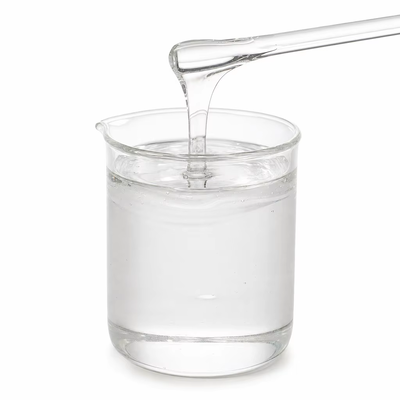
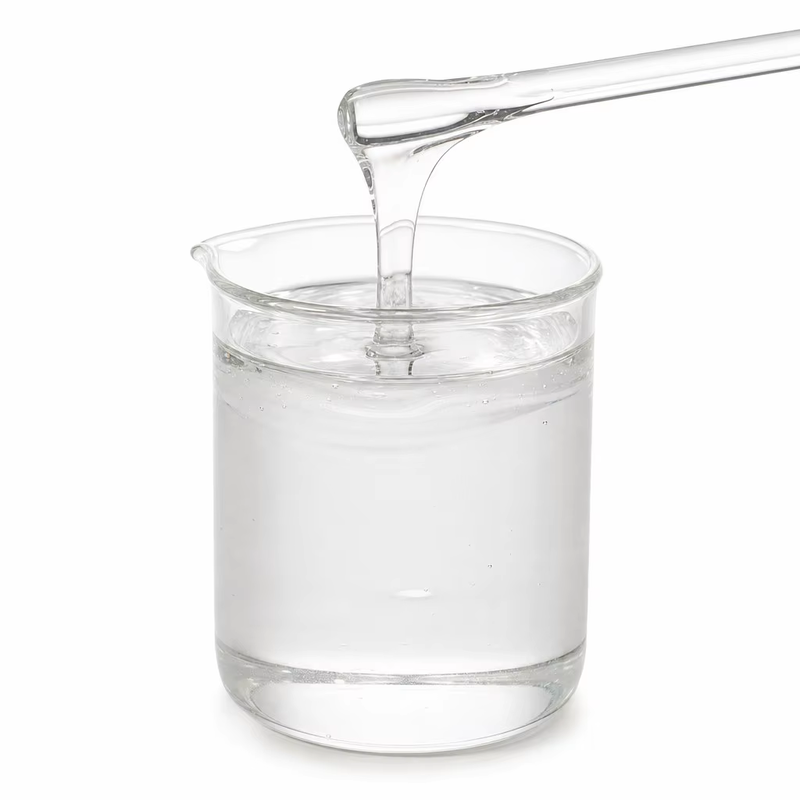
Maltitol Syrup 75/50 is a food-grade liquid bulk sweetener: a clear, colourless, viscous hydrogenated starch hydrolysate (HSH) supplied at 75% dry substance — 75 Brix — with a minimum 50% D-maltitol on dry basis, the balance being sorbitol and hydrogenated oligosaccharides. It is declared as E 965(ii) in the EU additive list and INS 965(ii) under Codex, CAS number 585-88-6.
In a frozen dessert the syrup does one job that sugar alone cannot: it keeps water from organising itself into ice. Every ice cream problem a buyer writes to us about — a mix that freezes glass-hard at −18 °C, a surface that turns to white frost in the display cabinet, a product that is smooth on day one and gritty after a month of temperature swings — is a water-and-crystal problem before it is a flavour problem. A non-crystallizing polyol syrup addresses it at the source.
What the syrup brings to a mix is not one function but three at once. It is a bulk solid, so it carries body and reduces the water load per litre of mix. It is a humectant, so it holds that water in the unfrozen phase instead of letting it migrate. And because its polyol distribution does not seed crystals, it suppresses growth of the ice crystals that form and re-form during storage and distribution.
At 75 Brix most of the solids arrive already in solution, so a mix plant adds a pourable ingredient with a dry substance figure that is fixed on the delivery note rather than one that drifts between drums. The syrup pumps warm, meters cleanly by mass into a batching tank, and dissolves into the mix without a separate slurry step.
Because there is no sucrose in the syrup there is nothing to invert in the pasteuriser, and reducing sugars are held at 0.3% maximum — typically around 0.05%. A vanilla or a milk-based mix keeps its clean white tone through UHT treatment and through a warm warehouse, with very little Maillard substrate available to brown it.
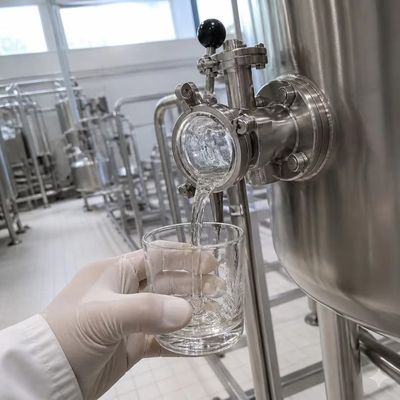
We hydrogenate, deionise and evaporate on our own line and fill from that stream, so the dry substance and maltitol figures on the certificate are release values from the lot you receive, not a catalogue average. Every lot is analysed for dry substance, maltitol, sorbitol, water, pH, reducing sugars, ash, heavy metals and microbiological counts before the drum is closed.
At a glance

| Parameter | Specification |
| Product name | Maltitol Syrup (hydrogenated starch hydrolysate, HSH) |
| Chemical name | D-Maltitol with sorbitol and hydrogenated oligosaccharides |
| CAS number / E number | 585-88-6 / E 965(ii) — INS 965(ii) |
| Molecular formula / weight | C12H24O11 / 344.31 |
| HS code | 38249099 |
| Appearance | Colourless, transparent, viscous liquid |
| Dry substance | 75% min (75 Brix) |
| Maltitol content (dry basis) | 50% min |
| Sorbitol content (dry basis) | 4-6% typical |
| Water | 25% max |
| pH (50% solution) | 5.0-7.5 |
| Reducing sugars | 0.3% max |
| Conductivity ash | 0.05% max |
| Sweetness | About 75% of sucrose on a solids basis |
| Energy | 2.1 kcal/g as published in our specification |
| Grade | Food Grade / E 965(ii) / FCC |
| Function in frozen dessert | Bulk sweetener, humectant, freezing point depressant, anti-recrystallization agent, bodying agent |
| Packing | 275kg drum (standard); 250kg / 270kg drum and 1300kg IBC on request |
| Shelf life | 24 months in sealed packing, 15-30 °C |
The certificate of analysis issued for each shipment is the governing document. Energy conversion factors differ between markets — confirm the figure your labelling rules require.
| Test item | Typical result | Method |
| Dry substance | 75.2% | Refractometry |
| Maltitol (dry basis) | 52.5% | HPLC, refractive index |
| Sorbitol (dry basis) | 4.7% | HPLC, refractive index |
| pH (50% solution) | 6.2 | pH meter |
| Water | 24.8% | Karl Fischer |
| Reducing sugars | 0.05% | Titrimetric |
| Conductivity ash | 0.02% | Conductometry |
| Total heavy metals (as Pb) | < 5 mg/kg | ICP-MS |
| Arsenic (as As) | < 1 mg/kg | ICP-MS |
| Total plate count | < 100 cfu/g | Plate count |
| Yeast and mould | < 10 cfu/g | Plate count |
A lot-specific certificate is issued with each drum or IBC. A safety data sheet accompanies the shipment for customs and customer audit files.
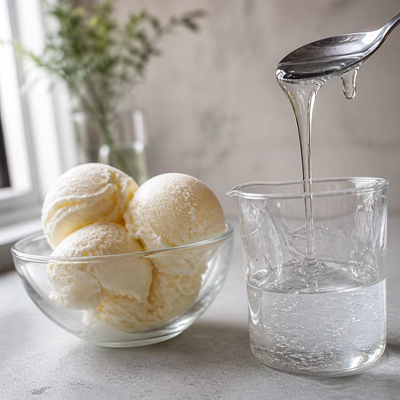
Ice cream and frozen dessert mix. The syrup is added to the mix as part of the sweetener solids, replacing a proportion of sucrose and glucose syrup. It lowers the freezing point of the unfrozen phase, so the product stays scoopable at cabinet temperature instead of setting to a hard block, and it holds water in the matrix rather than letting it migrate to the ice phase. Because it does not crystallize, it also limits the growth of large crystals when the product is stored or when the cold chain fluctuates.
Gelato and reduced-sugar frozen dessert. A reduced-sugar mix built only on sucrose and maltodextrin tends to freeze hard and read thin on the palate. The syrup restores body and a round mouthfeel while adding less sweetness per unit of solids, which is what allows the solids level to be kept high enough for texture without pushing the product past the sweetness a buyer expects.
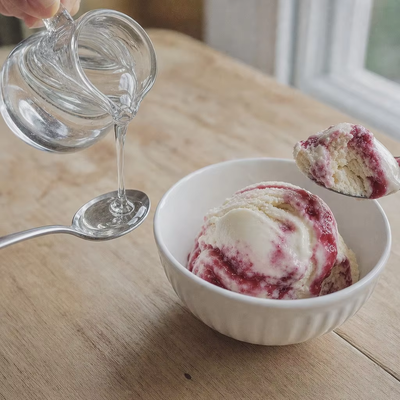
Sorbet, water ice and fruit-based frozen products. In a fruit system the syrup carries bulk and humectancy without masking the fruit, and it keeps the colour clean because it contributes almost no browning substrate. It is equally at home in an ice cream ripple or a fruit preparation layered into a frozen dessert, where a preparation held at 60-65 Brix must not grain at the surface.
Frozen yogurt and cultured frozen dessert. The syrup buffers the sweetness of a cultured base and holds water against syneresis during frozen storage, which keeps the surface from showing free moisture after tempering.
Where this grade fits. 75/50 is the general-purpose frozen-dessert grade: enough maltitol to suppress crystallisation and depress the freezing point, enough water to stay pourable at 40-50 °C, and a solids level that lets the mix plant batch by mass without a re-dilution step. Where a formula needs higher solids, a firmer body or a shorter boil-off, the 80/55 and 85/55 grades run on the same line.
Freezing point is set by the whole sweetener system. The syrup shifts the freezing curve, but the curve is the sum of every solute in the mix — sucrose, glucose syrup, the polyol, milk solids and stabiliser. Adjust the polyol fraction and re-check the frozen hardness at your target draw temperature rather than assuming the curve moves proportionally.
Replace solids, then rebalance water. On a solids basis the syrup can replace glucose syrup close to 1:1, but at 75 Brix it carries less water than a 42 DE glucose syrup, so the mix water has to be recalculated. Sweetness is about 75% of sucrose on a solids basis, so a straight sucrose replacement needs roughly 1.3 times the solids mass to hold the same sweetness — most frozen-dessert formulas take part of that back by accepting a slightly less sweet profile.
Total polyol load and labelling. The syrup is a polyol. EU food information rules require a food with more than 10% added polyols to state "contains polyols", with the laxative-effect warning where that threshold is crossed. Both depend on the complete recipe, so the threshold should be checked against the finished formula, not against this ingredient alone.
Process order. Add the syrup warm with the liquid phase and keep it below 50 °C until it is dispersed, so it does not sit as a viscous heel in the tank. It tolerates the pasteurisation and UHT regimes a mix plant normally runs, and it does not need a separate holding step.
Inclusion level is set by your target hardness, the overrun you run, the water activity you need to reach and the labelling claim you intend to make. Our technical team will run the ratio through with you before you commit to a container.
Release testing covers dry substance, the maltitol and sorbitol fractions, water, pH, reducing sugars, conductivity ash, heavy metals and microbiological counts. Because frozen-dessert hardness and ice crystal behaviour both follow from the solids actually delivered, dry substance is confirmed by refractometry and by Karl Fischer rather than a single method, so a two-point shift cannot pass on one reading.
The maltitol fraction is quantified by HPLC on every lot rather than inferred from the solids. For a formulator building a reduced-sugar or low-glycemic calculation, that is the number that has to be defensible.
Lot codes link the drum to its evaporation run and to the retained sample kept in our laboratory. If a mix freezes harder than the pilot batch did, the syrup that went into it can be re-tested without opening a new drum.
We operate under ISO 9001 and ISO 22000 with HACCP-based process control, and hold Halal and Kosher certification. Certificates and specifications can be issued in the buyer's name for audit and import clearance.
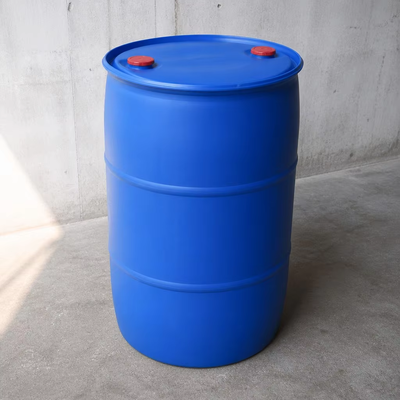
Standard packing is a 275kg food-grade HDPE drum with two sealed bungs, filled warm and closed under a liner. Buyers running a continuous mix line can take 1300kg IBCs with a bottom valve, or flexible bags where the receiving area has its own transfer pump. 250kg and 270kg drums are available on request.
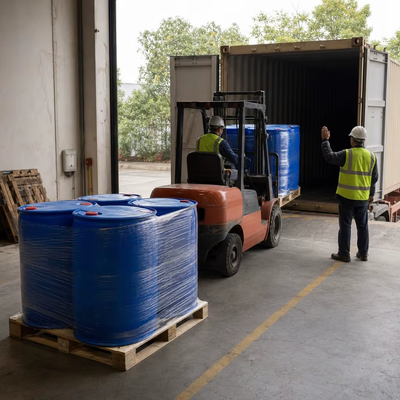
Drums are palletised and strapped for the voyage; a 20ft container takes around 80 drums subject to the destination weight limit, and IBC loads run 18-20 units. Neutral labelling is available if the goods are being sold on to your own customers, and buyer-labelled packing can be arranged for repeat programmes.
| Term | Detail |
| Minimum order | 1300kg (about 5 drums); trial quantities on request |
| Price basis | USD500/MT - USD700/MT FOB Qingdao |
| Packaging | 275kg drum standard; 250kg / 270kg drum, 1300kg IBC, flexible bag |
| Delivery time | 7-10 working days after order confirmation |
| Payment terms | L/C, T/T, D/P, D/A |
| Supply ability | 40,000 MT per month |
Store sealed containers under cover at 15-30 °C, away from strong odours — the syrup picks these up through the bung, and a dairy mix has nowhere to hide a foreign note. Warm a cold drum to 40-45 °C and roll or circulate it before use so the solids are uniform, then reseal immediately after drawing.
Never let water into the container. Dilution lowers the solids and raises the water activity of the finished frozen dessert, which changes both its frozen hardness and its shelf behaviour, and neither can be corrected downstream.
Drain transfer lines after use to avoid a heel that can crystallise and block the line. Stack no more than two pallets high. Sealed product holds its specification for 24 months.
Identity. E 965(ii) is the additive identity for maltitol syrup in the EU additive list; INS 965(ii) is the corresponding Codex identity; the CAS number is 585-88-6. The (ii) suffix matters: E 965(i) is maltitol as such, E 965(ii) is the syrup. Use the identity that matches the ingredient you are declaring.
Labelling. Ingredient declaration is normally "maltitol syrup", or "maltitol syrup (E 965(ii))" where the additive number is required. Maltitol syrup is a polyol, and EU food information rules require a food with more than 10% added polyols to state "contains polyols", with the laxative-effect warning where that threshold is crossed. Both statements depend on the whole recipe, not on this ingredient alone — your regulatory team should confirm which apply in your market.
Sugar-free and reduced-sugar claims. Maltitol is a polyol and is not classified as a sugar. Whether a finished ice cream or frozen dessert can carry a sugar-free or reduced-sugar claim depends on the complete recipe and on the labelling rules of the destination market. We supply specification, certificate and safety data sheet so your regulatory team can assess it; we do not make that claim on your behalf.
Genetically modified material. The syrup is produced from corn starch. A non-GMO statement is available for your import file.
Allergens. The product is a single-ingredient polyol syrup. A full allergen statement is issued with each shipment.
Certification. ISO 9001, ISO 22000, HACCP, Halal and Kosher. Certificates are available for audit and can be issued in the buyer's name.
Tell us at order stage which documents your customs broker or QA team needs, and they travel with the shipping documents rather than after arrival.
Is the syrup suitable for a UHT or high-temperature short-time pasteurised mix? Yes. It is heat stable across the regimes a mix plant runs and does not darken in the pasteuriser, because reducing sugars are held at 0.3% maximum.
What is the difference between 75/50, 80/55 and 85/55? All three run on the same line. 75/50 carries the most water and is the easiest to pump and batch; 80/55 and 85/55 deliver higher solids and a firmer body where a formula needs them. For a standard ice cream mix, 75/50 is the usual starting point.
How much of the sucrose can it replace? There is no fixed figure — it depends on the hardness, overrun and sweetness you are targeting. Send us your current mix formula and the profile you want, and we will work the substitution through with you.
Can I have a sample before committing to a container? Trial quantities are available on request, with specification, COA and SDS supplied alongside.
How is the product shipped? 275kg drums as standard, palletised and strapped, with 1300kg IBCs for continuous lines. Lead time is 7-10 working days from order confirmation, FOB Qingdao, CIF or CFR as required.