 |
| Place of Origin: | China |
| Brand Name: | Golden Grain |
| Certification: | ISO9001, COA,SDS |
| Model Number: | GLMA-9954 |
| Minimum Order Quantity: | 1300kg |
|---|---|
| Price: | USD450-USD550/MT FOB QINGDAO, CHINA |
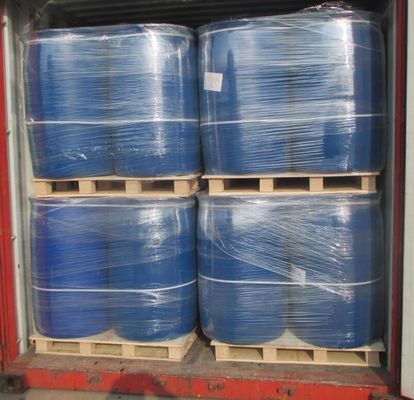
| Packaging Details: | 250kg/drum, 270kg/drum, 275kg/drum with new plastic drum, 1300kg IBC drum, flexible bag |
| Delivery Time: | 7 - 10 working days |
| Payment Terms: | L/C, T/T, D/P, D/A |
| Supply Ability: | 1,000 MT per Month |
| Grade: | Cosmetic Grade / Oral Care Grade / Food Grade | Application / End Use: | Toothpaste, Mouthwash, Shampoo, Conditioner, Body Lotion, Face Cream, Serum, Lip Balm |
|---|---|---|---|
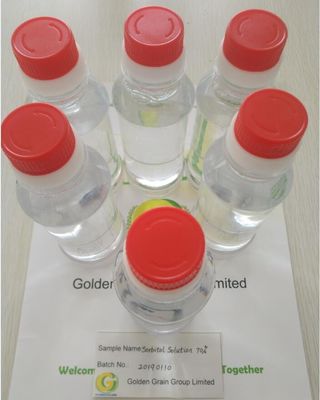
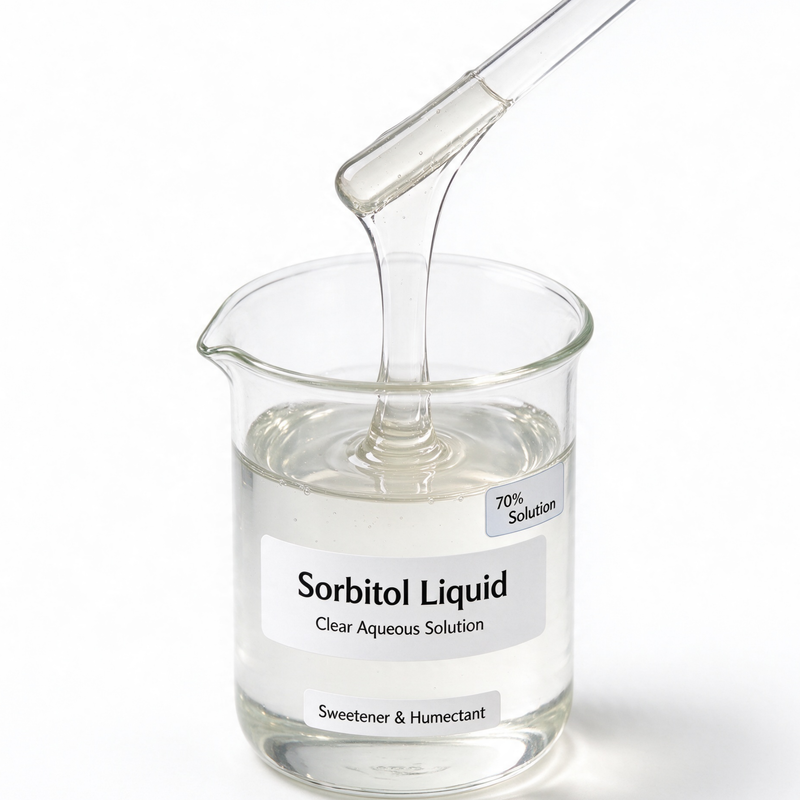
| Function: | Humectant, Moisturizer, Glycerin Substitute, Skin Conditioning Agent, Sweetener, Crystallization Inhibitor | Form & Appearance: | Clear Colorless Syrupy Liquid |
| Concentration: | 70% Dry Solids (Sorbitol 69-71%) | Synonyms / Other Names: | Sorbitol Solution, D-Glucitol, Glucitol, Sorbitol Syrup, Sugar Alcohol, Polyol |
| CAS No. / E-Number: | 50-70-4 / E420 (INS 420) | INCI Name: | Sorbitol |
| Solubility: | Fully Miscible With Water, Glycerin And Propylene Glycol | PH: | 5.0 - 7.5 |
| Dry Substance: | 70.0% Min | Water Content: | 30.0% Max |
| Reducing Sugars: | 0.2% Max | Heavy Metals: | Pb 1 Mg/kg Max; As 1 Mg/kg Max; Ni 1 Mg/kg Max |
| Packaging: | 275kg HDPE Drum; 1300kg IBC; Flexible Bag | Shelf Life: | 24 Months |
| Storage: | 15-30 C, Sealed, Away From Sunlight And Strong Odours | HS Code: | 38246000 |
| Certification: | ISO 9001, ISO 22000, Halal, Kosher | OEM / ODM: | Private Label And Custom Packing Available |
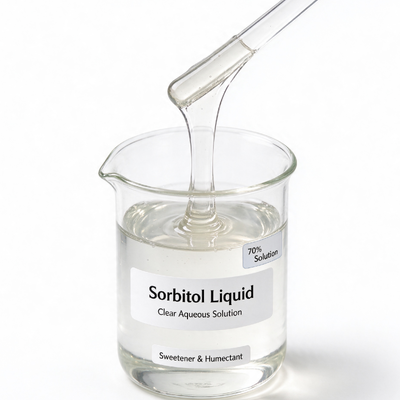
Sorbitol Solution 70% (D-Glucitol, CAS 50-70-4, E420 / INS 420, INCI: Sorbitol) is a clear, colourless, syrupy liquid supplied ready to use at 70% dry substance. It is produced by the catalytic hydrogenation of glucose derived from corn starch, and it is fully miscible with water, glycerol and propylene glycol — which is what makes it usable as a direct substitute for glycerin in an existing formula rather than as a new raw material that has to be designed around.
Why formulators replace part of the glycerin load with it. Glycerin and sorbitol are both sugar-alcohol-type polyols that bind water through the same mechanism, so a sorbitol solution can take over part of the humectant duty in a formula without changing what the product does on skin, hair or in the mouth. Three practical differences drive the decision:
Cost per unit of humectant.
Viscosity and handling.
After-feel.
What has to be adjusted when you substitute. A sorbitol solution is not a drop-in kilogram-for-kilogram swap for glycerin, and three things must be recalculated:
Dose on dry solids.
1. The solution is 70% solids and 30% water, so the quantity required to deliver the same humectant solids is higher than the glycerin figure being replaced.
Water balance.
2. The 30% water the solution brings into the batch counts toward the formula's total water. It is normally taken out of the water addition, and water activity and preservative efficacy should be re-checked on the trial batch rather than assumed to carry over.
Binder and rheology.
3. In toothpaste and emulsion systems, thickener level (silica, CMC, gums) is re-tuned to hold the same finished viscosity once the water and polyol balance changes.
Formulators generally introduce it stepwise — replacing a share of the glycerin load, measuring viscosity, water activity and sensory, then moving the ratio — rather than converting a formula in a single pass.
Grades and documents. The product is available in Food Grade, Cosmetic Grade and Industrial Grade, produced on the same line to the same specification; what differs between them is the label and the document set released with the lot. For toothpaste, shampoo and skin care, the Cosmetic Grade document set is the one to request. Food use is covered by E420 (INS 420) and the FCC monograph.
The material is supplied as a food, cosmetic and industrial raw material. It is not offered as a pharmacopoeial grade and not for injection use. The certificate of analysis issued for each shipment is the governing document.

| Parameter | Specification |
| Product name | Sorbitol Solution 70% |
| Chemical name | D-Glucitol |
| Synonyms | Sorbitol Syrup, Sorbitol Solution, Liquid Sorbitol, D-Glucitol, Glucitol |
| INCI name | Sorbitol |
| CAS number | 50-70-4 |
| E number / INS number | E420 / INS 420 |
| HS code | 38246000 |
| Molecular formula | C6H14O6 |
| Appearance | Clear, colourless, syrupy liquid; free from visible impurities |
| Odour and taste | Odourless; faint sweet taste |
| Dry substance | 70.0 % min |
| Sorbitol content | 69.0 % – 71.0 % |
| Water content | 30.0 % max |
| pH | 5.0 – 7.5 |
| Reducing sugars | 0.2 % max |
| Nickel | 1 mg/kg max |
| Heavy metals (as Pb) | 1 mg/kg max |
| Arsenic (as As) | 1 mg/kg max |
| Total aerobic microbial count | < 100 cfu/g |
| Solubility | Fully miscible with water, glycerol and propylene glycol |
| Packing | 250 kg / 270 kg / 275 kg HDPE drum; 1300 kg IBC or flexible bag |
| Shelf life | 24 months in unopened drums under the stated storage conditions |
| Test item | Typical result | Method |
| Identification | Conforms | Infrared and retention time |
| Sorbitol content | 70.4 % | HPLC |
| Water | 29.6 % | Karl Fischer |
| Reducing sugars | 0.05 % | Titrimetric |
| Residue on ignition | 0.02 % | Gravimetric |
| Total heavy metals (as Pb) | < 1 mg/kg | Colorimetric |
| Arsenic (as As) | < 1 mg/kg | AAS |
| Nickel | < 0.2 mg/kg | ICP-MS |
| Conductivity | 8 µS/cm | Conductometric |
| UV absorbance, 270 to 350 nm | 0.03 | Spectrophotometric |
| Total aerobic microbial count | < 100 cfu/g | Plate count |
Each line reports the result, the limit in the cited specification and the method used, so the document can be filed without further interpretation. Typical values represent routine production and are not a release commitment; the lot certificate prevails.
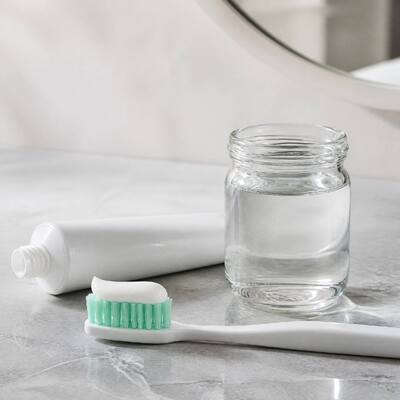
Toothpaste and oral care. Sorbitol is the standard humectant and sweetener in toothpaste, where it keeps the paste from hardening in the tube, gives a clean sweetness without the cariogenic load of sugar, and partners glycerin so the finished paste does not feel tacky. It also carries sweetness in mouthwash and mouth rinse, and gives chewing gum its plasticity and slow sweetness release. Typical use is a partial replacement of the glycerin load, with water and thickener re-balanced.
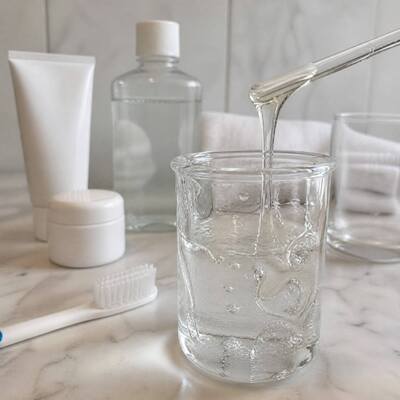
Shampoo, conditioner and body wash. In rinse-off hair care it binds water at the hair surface, improves wet combing and reduces the tight, dry feel after drying. Because it is thinner than glycerin, it is easier to incorporate into a surfactant base at ambient temperature, and it does not depress foam the way an oil-based emollient would.
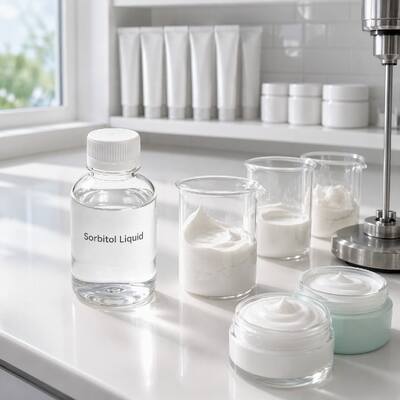
Skin care. Lotions, creams, gels, hand creams and lip balms, where it holds water in the film, improves rub-out and spreadability, and reduces the tacky after-feel of a high-glycerin formula. It is compatible with anionic, nonionic and amphoteric systems and with common preservative systems, provided water activity is re-checked after the substitution.
Adjacent uses in the same plant. Shaving foam, hand soap, wet wipes, hair mask, and denture care. Buyers running both oral care and personal care lines normally consolidate to a single sorbitol source rather than qualifying two polyols.
Industrial chemistry (Industrial Grade). A polyol raw material and chemical intermediate for sorbitan esters, Span and Tween surfactants, vitamin C synthesis, polyurethane polyols and resins; also used for moisture control in detergents and cleaning products, as a softener in adhesives, and as a moisture conditioning aid in paper and textile processing.
Release follows a fixed test set: identification by infrared and retention time, sorbitol content by HPLC, water by Karl Fischer, reducing sugars, residue on ignition, heavy metals, arsenic, nickel by ICP-MS, conductivity, UV absorbance across the stated range, and microbial limits.
Every lot is released against a written specification that names the standard and the method applied to each line. Retained samples are kept from each fill so that a customer's own laboratory can cross-check a delivered lot, and any out-of-specification result is investigated before the lot is released or rejected. The company operates under ISO 9001 and ISO 22000, and the plant is Halal and Kosher certified; certificates are issued with the shipment or on request. For cosmetic use, the document set can be issued in the format your regulatory or safety assessment requires.
Standard packing is 250 kg, 270 kg or 275 kg net in new HDPE drums with tamper-evident closures, palletised and stretch-wrapped. For larger volumes the material is supplied in 1300 kg IBC containers or flexible bags. Minimum order is 1300 kg, which allows a full pallet or a single IBC as a trial quantity before moving to contract volumes.
Each shipment travels with the lot certificate of analysis, the safety data sheet and the packing list. Label format, certificate template and closure requirements agreed in a customer quality agreement are built into the packing instruction before filling, so documents are issued before dispatch rather than assembled afterwards.
Store between 15 °C and 30 °C in a closed, dry area away from sunlight and away from strong odours, since the solution picks up foreign smells. Keep drums sealed until use, draw samples with clean equipment and reseal immediately afterwards. Do not store against a heated wall and do not allow the drum to freeze.
Because the material is a 70% solution rather than a solid, it stays clear in the drum and in a holding tank and does not need a dissolving or melting step before use — the batch can be metered straight into the process. The material is non-hazardous; a full safety data sheet is supplied with each shipment and is available in advance for assessment.
Purity reported as numbers, not as a statement. Nickel is tested by ICP-MS against a 1 mg/kg limit, and conductivity and UV absorbance are released as measured values. The residue that matters for a hydrogenated polyol is the catalyst metal, and naming the figure lets your laboratory compare one lot against another instead of trusting a line that says "conforms".
Non-crystallising in storage. The solution is formulated to stay clear in the drum and in a holding tank, which takes a crystallisation deviation out of stored batches — a failure that typically appears months after delivery in syrup-based lines.
Retained samples from every fill. Your laboratory can cross-check a delivered lot against the sample held from the same filling, which shortens the path to resolution if a result is ever questioned.
Ready to meter, no dissolving step. No dust, no incomplete hydration, lower viscosity than glycerin — the solution pumps straight into pastes, emulsions and surfactant bases.
Trial quantity before contract volume. Minimum order 1300 kg — one IBC or a full pallet — so a formulation can be validated on your production equipment before a volume commitment. Monthly capacity of 40,000 MT supports repeat and contract orders.
Certificates travel with the goods. ISO 9001, ISO 22000, Halal and Kosher certificates, the lot certificate of analysis, the safety data sheet and the packing list are issued with the shipment, and a complete document set can be sent in advance for supplier approval.
Packing built to your quality agreement. Label format, certificate template and closure requirements are agreed before filling, so documents are ready at dispatch rather than assembled afterwards.