 |
| Place of Origin: | China |
| Brand Name: | Golden Grain |
| Certification: | ISO9001, COA,SDS |
| Model Number: | GLMA-01771 |
| Minimum Order Quantity: | 100kg |
|---|---|
| Price: | USD850-USD950/MT FOB QINGDAO, CHINA |
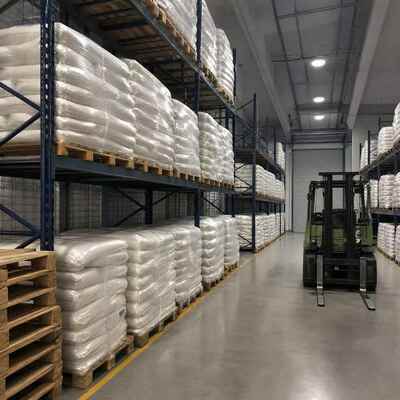
| Packaging Details: | 25kg/Bag with Paper Drum and PE Inner |
| Delivery Time: | 7 - 10 working days |
| Payment Terms: | L/C, T/T, D/P, D/A |
| Supply Ability: | 1000MT per month |
| Origin: | China | Molecular Formula: | C₆H₁₄O₆ |
|---|---|---|---|
| Type: | Pharmaceutical Grade, BP, USP, EP | Meltingpoint: | 95-100°C |
| Moisturecontent: | 0.5% Max | Storageconditions: | Store In A Cool, Dry And Sealed Place, Protect From Moisture |
| Apperance: | White Crystalline Powder Or Granules | Chemical Name: | D-Sorbitol |
| Food Additive: | Humectant | Bulk Density: | 0.8-1.0 G/cm³ |
| Particlesize: | 100 Mesh | Ph Value: | 5.0-7.0 (10% Solution) |
Sorbitol Powder (D-Glucitol) is a white crystalline polyol (sugar alcohol) obtained by the catalytic hydrogenation of glucose from hydrolysed and refined starch, followed by refining, concentration, crystallisation, drying and sieving. It is the same substance listed in the Chinese national food safety standard GB 1886.187 and in the EU food-additive specification E 420 (i); its international additive numbers are INS 420 / E 420 (i) and its CAS number is 50-70-4.
This listing covers our fine particle-size grade, 40–120 mesh — a free-flowing white crystalline powder intended for systems where the powder has to dissolve quickly, disperse evenly and leave no gritty residue. Against a coarse granule, a fine cut offers more surface area per gram, so it wets and dissolves faster in water and blends more uniformly into dry premixes and pastes.
Sorbitol is about 50–70% as sweet as sucrose and very soluble in water (about 1 g in 0.45 mL). It is not a reducing sugar, so it does not take part in Maillard browning, and it is stable towards acid and heat. In formulation it acts in four roles at once: bulk sweetener, humectant, texturising agent (anti-staling) and chelating agent.
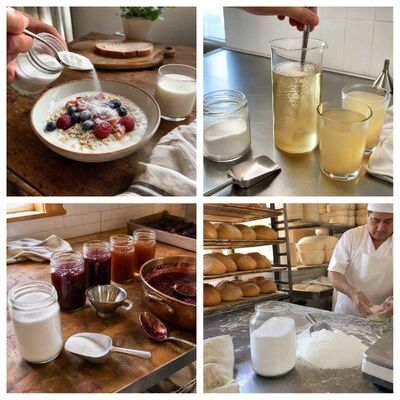
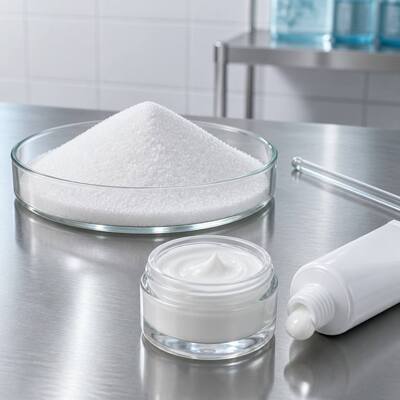
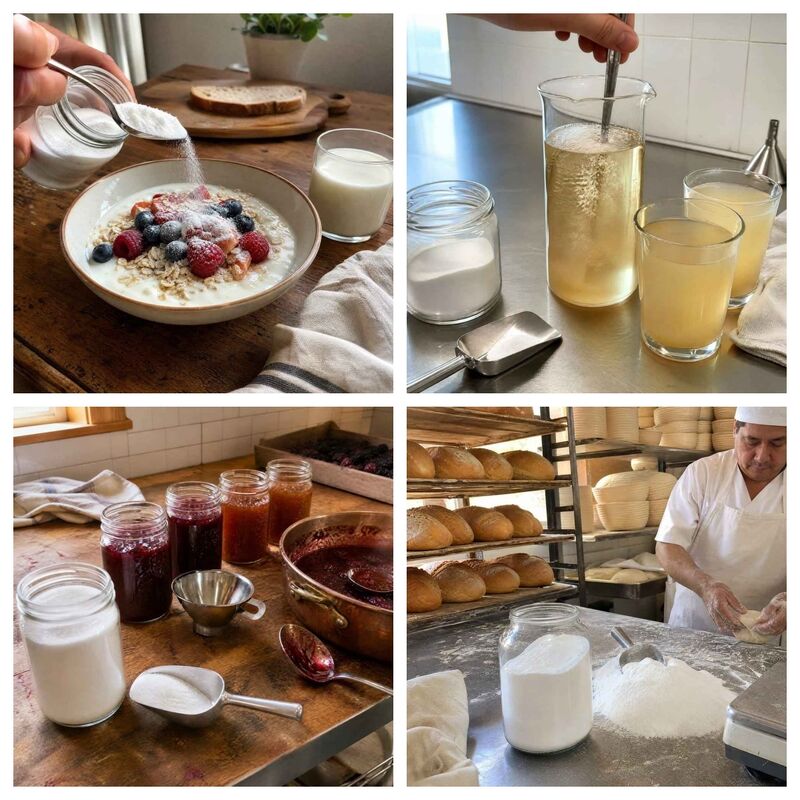
Typical users of this grade are confectionery and chewing-gum plants, bakery and beverage / drink-powder producers, oral-care (toothpaste) manufacturers, personal-care formulators, and chemical plants that take sorbitol as a polyol feedstock for surfactants and polymer building blocks. Each shipment is accompanied by a batch-specific Certificate of Analysis.

| Item | Value |
| Commodity name | Sorbitol Powder |
| Chemical name | D-Glucitol (hexitol) |
| Synonyms | D-Glucitol; D-Sorbitol; Sorbitol |
| CAS No. | 50-70-4 |
| EINECS No. | 200-061-5 |
| INS No. | 420 |
| EU additive number | E 420 (i) |
| Molecular formula | C₆H₁₄O₆ |
| Relative molecular mass | 182.17 |
| Appearance | White crystalline powder; odourless; hygroscopic |
| Sweetness | About 50–70% of sucrose |
| Solubility | Very soluble in water (≈1 g / 0.45 mL); slightly soluble in ethanol |
| Melting range | 88 – 102 °C (typical 97.5 °C) |
| H.S. Code | 29054400 |
| Property | Value |
| Appearance / form | White needle-like crystals or crystalline powder; also supplied as flakes or granules |
| Odour / taste | Odourless; cool, pleasant sweet taste |
| Sweetness vs sucrose | ≈50–70% |
| Melting range | 88 – 102 °C (typical 97.5 °C) |
| Melting point, anhydrous form | about 110 °C |
| Relative density | ≈1.47 – 1.49 |
| pH (10% aqueous solution) | 6 – 7 |
| Refractive index (nD25, 10% solution) | 1.3477 |
| Osmotic pressure | ≈1.88 × that of sucrose at the same concentration |
| Hygroscopicity | Hygroscopic; less hygroscopic than glycerin |
| Solubility | Very soluble in water and hot ethanol; soluble in methanol, isopropanol; slightly soluble in cold ethanol |
| Thermal stability | Stable under heat; no decomposition even at 200 °C |
| Chemical stability | Not readily oxidised by air; resistant to acid and alkali; not readily fermented by micro-organisms |
| Maillard behaviour | Non-reducing; does not readily react with amino acids or proteins, so it does not brown |
| Chelating behaviour | Complexes metal ions (e.g. Al³⁺) and prevents them from precipitating |
| Parameter | FCC | EU E 420 (i) | GB 1886.187 | Our release limit |
| Assay, dry basis | 91.0 – 100.5% | ≥97% total glycitols and ≥91% D-sorbitol | ≥91.0% | ≥99.0% |
| Water content | ≤1.0% | ≤1.5% (Karl Fischer) | ≤1.5% | ≤1.0% |
| Reducing sugars (as glucose) | ≤0.3% | ≤0.3% | ≤0.3% | ≤0.10% |
| Total sugars (as glucose) | ≤1.0% | ≤1% | ≤4.4% | ≤0.30% |
| Residue on ignition / sulphated ash | ≤0.1% | — | ≤0.1% | ≤0.1% |
| Chloride | ≤0.005% | — | ≤50 mg/kg | ≤10 ppm |
| Sulphate | ≤0.01% | — | ≤100 mg/kg | ≤20 ppm |
| Nickel | ≤2 mg/kg | ≤2 mg/kg | ≤2.0 mg/kg | ≤1 ppm |
| Lead | ≤1 mg/kg | ≤1 mg/kg | ≤1.0 mg/kg | ≤0.5 ppm |
| Arsenic | — | ≤3 mg/kg | — | ≤1 ppm |
| Heavy metals (as Pb) | ≤5 mg/kg | — | — | ≤5 ppm |
| Description | — | White hygroscopic powder, crystalline powder, flakes or granules; aqueous solution clear | White powder, flakes or granules; hygroscopic | White crystalline powder |
| Melting range | — | 88 – 102 °C | — | 88 – 102 °C |
| Conductivity | — | ≤20 μS/cm (20% dry-solids solution, 20 °C) | — | — |
The read-across for buyers: our release limits sit well inside the mandatory national minimum (assay ≥99.0% against a ≥91.0% requirement; reducing sugars ≤0.10% against ≤0.3%), and the same lots also satisfy the FCC and EU E 420 (i) profiles — so one specification and one set of documents will serve most markets.
Particle size of this listing: 40–120 mesh — a fine, free-flowing crystalline powder. Our standard cuts inside this window are 40–60 mesh and 60–100 mesh; other fractions are produced to order.
Reference sieve profile — cumulative oversize (percentage retained), measured on the fine cut (60–120 mesh ↔ 250–120 μm):
| Screen opening | Cumulative oversize (retained) |
| Coarser than 250 μm (60 mesh) | ≤ 1% |
| Coarser than 180 μm | 35 – 45% |
| Coarser than 160 μm | 50 – 60% |
| Coarser than 150 μm | 75 – 85% |
| Coarser than 120 μm (120 mesh) | 90 – 95% |
| Finer than 100 μm (through) | ≤ 4% |
What this profile means on your line:
≤1% above 250 μm
90–95% above 120 μm
Fines below 100 μm held at ≤4%
Recorded on sorbitol powder fractions (static = poured, dynamic = tapped):
| Fraction | Static bulk density (g/mL) | Dynamic bulk density (g/mL) |
| 40 mesh and above | 0.640 | 0.748 |
| 60 mesh and above | 0.637 | 0.726 |
| 80 mesh and above | 0.641 | 0.758 |
| 100 mesh and above | 0.627 | 0.769 |
| 120 mesh and above | 0.602 | 0.769 |
Practical range across the fine-grade window: about 0.60–0.64 g/mL poured and 0.73–0.77 g/mL tapped. Use these figures for bag and silo volumes, mixer fill factors and container payload planning.
Reference batch of sorbitol powder, quantity 19.5 MT. A batch-specific Certificate of Analysis is issued for every shipment.
| Item | Specification | Result |
| Appearance | White crystalline powder | Conforms |
| Assay | ≥ 99.0% | 99.5% |
| Moisture content | ≤ 1.0% | 0.5% |
| Sorbitol purity | ≥ 98.5% | 98.8% |
| Total sugar | ≤ 0.30% | 0.20% |
| Reducing sugar | ≤ 0.10% | 0.05% |
| Density (specific gravity) | ≥ 1.45 | 1.48 |
| Specific rotation | 4.0 – 7.0 | 4.7 |
| pH (50% solution) | 5.0 – 7.0 | 6.5 |
| Residue on ignition | ≤ 0.1% | Conforms |
| Heavy metals (as Pb) | ≤ 5 ppm | Conforms |
| Nickel | ≤ 1 ppm | Conforms |
| Lead | ≤ 0.5 ppm | Conforms |
| Chlorides | ≤ 10 ppm | Conforms |
| Sulphates | ≤ 20 ppm | Conforms |
| Arsenic | ≤ 1 ppm | Conforms |
| Total plate count | ≤ 1000 pcs/g | 63 pcs/g |
| Moulds and yeasts | ≤ 100 pcs/g | 10 pcs/g |
| E. coli | Negative | Negative |
| Conclusion | — | Conforms |
The figures above describe a reference batch and show typical performance. The Certificate of Analysis shipped with your order carries the full batch identification.
Typical usage levels below are given on the dry product and are for orientation — always confirm the final figure against your own recipe and your local rules.
| Application | Typical dosage | What it does |
| Confectionery (all types) | 3 – 15% | Pleasant mouthfeel, moisture retention, anti-drying, oxidation and flavour protection, sugar-free concept |
| Cakes, biscuits, pastries | 2 – 10% | Good flavour, less cracking, longer shelf life, shape retention, sugar-free |
| Fish and meat products | 3 – 8% | Protects tissue during freezing, good moisture retention, low sweetness, less browning |
| Frozen minced fish | 5 – 8% | Moisture retention and cryoprotection |
| Jams and fillings | 5 – 10% | Moisture retention, low sweetness, sugar-free |
| Beverages and drink powders | 3 – 5% | Flavour enhancement, carrier function, sugar-free |
| Ice cream, juices, jellies | 3 – 6% | Low sweetness, suppresses crystallisation, sugar-free |
| Oral care — toothpaste | 25 – 30% | Humectant / vehicle that keeps the paste smooth and stops it drying out |
| Cosmetics & personal care | as required | Humectant that can replace glycerin; improves the spread and lubricity of emulsifiers |
| Chemical synthesis | as required | Polyol feedstock for Span / Tween surfactants, alkyd resins, polyethers and plasticisers |
Why the fine grade fits these uses: faster dissolution shortens batch times in beverages, syrups and pastes; the narrow top end keeps the mouthfeel smooth in oral care; and the uniform particle band gives more consistent metering on continuous dry-blending lines.
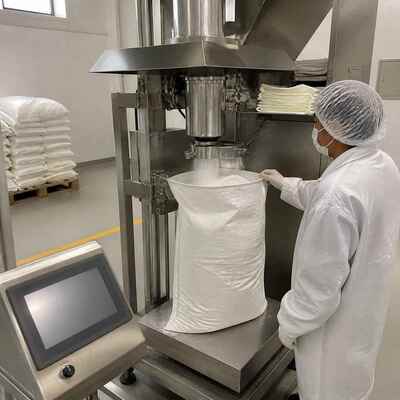
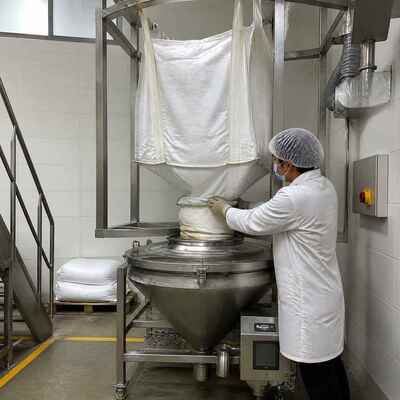
The product is made from refined starch along a documented route: starch liquefaction and saccharification to glucose, decolourisation and ion exchange, catalytic hydrogenation under controlled pressure and temperature, a second decolourisation / ion exchange, vacuum evaporation, crystallisation, centrifugation, drying and sieving, then packing. Residual sugar in the hydrogenated liquor is held below the release limit before crystallisation.
Release testing covers:
Assay by HPLC
Moisture
Reducing sugars and total sugars
Nickel, lead and arsenic
Residue on ignition, chloride and sulphate
Microbiology
Particle size
| Item | Details |
| Standard packing | 25 kg net per bag — white PP woven outer bag with food-grade PE inner liner (unprinted) |
| Alternative packing | Bag size, inner liner, palletising and private-label printing can be arranged to order |
| Marking | Neutral export marking as standard; buyer-specific marking on request |
| Documentation per shipment | Batch Certificate of Analysis; specification sheet; MSDS and other statements on request |
| Container loading | Offered on request — tell us the destination port and we will confirm the loading plan |
Q1. What particle size is this exactly? A. This listing is our fine grade, 40–120 mesh. Our standard cuts inside this window are 40–60 mesh and 60–100 mesh, and the reference sieve profile in section 2.4 is measured on the fine cut (60–120 mesh ↔ 250–120 μm). If your specification calls for a different cut, send it and we will confirm feasibility.
Q2. How fast does it dissolve, and will the solution be clear? A. Sorbitol is very soluble in water (about 1 g in 0.45 mL). The fine powder wets and dissolves faster than a coarse granule and gives a clear aqueous solution. Add it to water under normal agitation, especially at high solids.
Q3. Will it dust or cake? A. Fines below 100 μm are held at ≤4%, so dust is limited — nevertheless use local extraction at filling and weighing points. On caking: sorbitol is hygroscopic, so keep the bag sealed; the powder may set firm over time, which does not affect performance.
Q4. How pure is it? A. Our release limits are assay ≥99.0% and sorbitol purity ≥98.5%; the reference batch tested at 99.5% / 98.8%, well above the ≥91.0% minimum required by GB 1886.187. Purity is measured by HPLC and printed on the batch COA.
Q5. Which standards can I rely on for my market? A. The product is made and tested to the Chinese national food-additive standard GB 1886.187 and also meets the FCC and EU E 420 (i) profiles — see the comparison table in section 2.3. Additive numbers are INS 420 / E 420 (i); CAS 50-70-4.
Q6. How low are the sugars? A. Reducing sugars are held at ≤0.10% and total sugars at ≤0.30% on release; the reference batch tested at 0.05% and 0.20% respectively.
Q7. Does it brown when I bake or heat it? A. No. Sorbitol is a non-reducing sugar: it does not take part in Maillard browning, it resists acid and heat, and it does not decompose even at 200 °C.
Q8. How sweet is it, and how do I replace sucrose? A. Sweetness is about 50–70% that of sucrose, so replacement is normally calculated on a solids-and-sweetness basis rather than 1:1 by weight. Tell us your finished-product target and we will help with a starting ratio.
Q9. Can I use it in sugar-free or reduced-sugar products? A. Sorbitol is a sugar alcohol and carries no reducing sugars. Whether a finished product may make a "sugar-free" claim depends on your local labelling rules — we supply the data, you make the claim.
Q10. What about heavy metals and microbiology? A. Release limits: heavy metals (as Pb) ≤5 ppm, nickel ≤1 ppm, lead ≤0.5 ppm, arsenic ≤1 ppm, chloride ≤10 ppm, sulphate ≤20 ppm; total plate count ≤1000 pcs/g, moulds and yeasts ≤100 pcs/g, E. coli negative. The reference batch complied on every line.
Q11. How is it packed, and can I use my own bag design? A. Standard packing is 25 kg net in a white PP woven bag with a food-grade PE inner liner. Bag size, inner liner, palletising and private-label printing can be arranged to your order.
Q12. What documents come with the goods? A. Every shipment carries a batch-specific Certificate of Analysis plus the specification sheet; MSDS and further statements are available on request. If your customs or QA team needs a specific document, tell us when you order.
Q13. What are the MOQ, lead time, price and payment terms? A. Send your required quantity, destination port and packing preference, and we will confirm MOQ, lead time, price and payment terms for that specific shipment.
Q14. Can you supply other mesh sizes, or make to my specification? A. Yes. Cuts such as 40–60 and 60–100 mesh are standard, and other fractions can be produced to your specification. Send your sieve requirement and we will confirm feasibility, samples and lead time.
Qingdao Golden Grain Chemical Co., Ltd, invested by Golden Grain Group Limited, one professional manufacturer and exporter since 2000, is devoted to supplying products and solutions to food & beverage, medicine, animal feed & nutrition, personal care & household, construction, agriculture.
Golden Grain Group Limited have professional staff, advanced production lines and complete lab equipment, pass GMP, HACCP, ISO, HALAL, KOSHER, BRC, GMP-Free, and other necessary certificates, which ensure our quality to be international standard. For many years' experience, we are exporting our products to more than 60 countries in the world.
"Quality Products", "Efficient Service", Golden Grain Group Limited hope to enter good business cooperation with customers at home and abroad for long.