 |
| Place of Origin: | China |
| Brand Name: | Golden Grain |
| Certification: | ISO9001, COA,SDS |
| Model Number: | GLMA-01771 |
| Minimum Order Quantity: | 100kg |
|---|---|
| Price: | USD850-USD950/MT FOB QINGDAO, CHINA |
| Packaging Details: | 25kg/Bag with Paper Drum and PE Inner |
| Delivery Time: | 7 - 10 working days |
| Payment Terms: | L/C, T/T, D/P, D/A |
| Supply Ability: | 1000MT per month |
| Origin: | China | Meltingpoint: | 95 - 100 °C |
|---|---|---|---|
| Chemical Formula: | C₆H₁₄O₆ | Productname: | Sorbitol Powder |
| Chemical Name: | D-Sorbitol | Apperance: | White Crystailline Or Powder |
| Flash Point: | Non-flammable | Density: | 1.49 G/cm³ (approx.) |
| Shelflife: | 2 Years | Storageconditions: | Store In A Cool, Dry Place |
| Molecular Weight: | 182.17 G/mol | Odor: | Odorless |
| Purity: | 99% Min |
Sorbitol Powder (D-Glucitol) is a white, crystalline polyol (sugar alcohol) produced by the catalytic hydrogenation of D-glucose obtained from hydrolysed and refined starch, followed by refining, concentration, drying and sieving. Chemically it is the same substance listed in China's national food safety standard GB 1886.187 and in the EU food-additive specification E 420 (i), and it carries the international additive numbers INS 420 / E 420 (i).
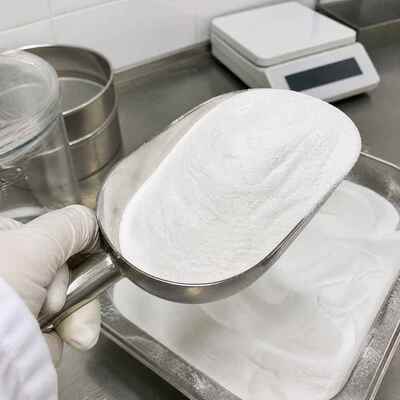
This listing covers our 20–60 mesh granular grade — a free-flowing, low-dust crystalline powder designed for dry blending and for systems where controlled particle size matters more than instant dissolution. Because the granules are coarse and the fines fraction is small, the product pours and doses consistently, generates little airborne dust on the filling line, and resists compaction in the bag.
Sorbitol is roughly 50–70% as sweet as sucrose, is very soluble in water (about 1 g in 0.45 mL) and only slightly soluble in ethanol, and it is not a reducing sugar, so it does not take part in Maillard browning and is stable towards acid and heat. In formulation it works simultaneously as a bulk sweetener, humectant, texturizing agent (anti-staling) and chelating agent.
Typical users of this grade are confectionery and chewing-gum plants, bakery and beverage premix producers, oral-care and toothpaste manufacturers, and personal-care formulators. Each shipment is accompanied by a batch-specific Certificate of Analysis.

| Item | Value |
| Commodity name | Sorbitol Powder |
| Chemical name | D-Glucitol |
| Synonyms | D-Glucitol; D-Sorbitol; Sorbit; Sorbol |
| CAS No. | 50-70-4 |
| EINECS No. | 200-061-5 |
| INS No. | 420 |
| EU additive number | E 420 (i) |
| Molecular formula | C₆H₁₄O₆ |
| Relative molecular mass | 182.17 (GB 1886.187) / 182.2 (E 420 (i)) |
| Appearance | White crystalline powder, flakes or granules; hygroscopic |
| Colour of aqueous solution | Clear |
| Solubility | Very soluble in water (≈1 g / 0.45 mL), slightly soluble in ethanol |
| Melting range | 88 – 102 °C |
| Taste | Sweet, cool and pleasant; sweetness about 50–70% of sucrose |
| H.S. Code | 29054400 |
Sorbitol is obtained by hydrogenation of D-glucose. Depending on the grade of the D-glucose used, the portion that is not D-sorbitol consists of related substances such as mannitol, iditol and maltitol.
| Item | Limit | Method |
| Colour | White | Visual |
| State | Powder, flakes or granules, hygroscopic | Visual |
| Sorbitol content (on dry basis), w/% | ≥ 91.0 | Annex A.3 |
| Water content, w/% | ≤ 1.5 | GB 5009.3, method 2 or 4 (method 4 is the referee method) |
| Reducing sugars (as glucose), w/% | ≤ 0.3 | Annex A.4 |
| Total sugars (as glucose), w/% | ≤ 4.4 | Annex A.5 |
| Residue on ignition, w/% | ≤ 0.1 | Annex A.6 |
| Sulphate (as SO₄), mg/kg | ≤ 100 | Annex A.7 |
| Chloride (as Cl), mg/kg | ≤ 50 | Annex A.8 |
| Nickel (Ni), mg/kg | ≤ 2.0 | GB 5009.138 |
| Lead (Pb), mg/kg | ≤ 1.0 | GB 5009.12 |
Source: EU specification for the food additive E 420 (i).
| Item | Limit |
| Assay | Not less than 97% of total glycitols and not less than 91% of D-sorbitol, on dry weight basis |
| Description | White hygroscopic powder, crystalline powder, flakes or granules; aqueous solution clear |
| Solubility | Very soluble in water, slightly soluble in ethanol |
| Melting range | 88 – 102 °C |
| Water content | ≤ 1.5% (Karl Fischer method) |
| Conductivity | ≤ 20 μS/cm (on 20% dry-solids solution) at 20 °C |
| Reducing sugars (as glucose, dry basis) | ≤ 0.3% |
| Total sugars (as glucose, dry basis) | ≤ 1% |
| Nickel | ≤ 2 mg/kg (on dry weight basis) |
| Arsenic | ≤ 3 mg/kg (on dry weight basis) |
| Lead | ≤ 1 mg/kg (on dry weight basis) |
| Parameter | GB 1886.187 | Our in-house release specification | Reference batch result |
| Assay | ≥ 91.0% (dry basis) | ≥ 99.0% | 99.5% |
| Sorbitol | — | ≥ 98.0% | 98.5% |
| Reducing sugars | ≤ 0.3% | ≤ 0.15% | 0.09% |
| Total sugars | ≤ 4.4% | ≤ 0.5% | 0.2% |
| pH (50% aqueous solution) | — (deleted in this edition) | 5.0 – 7.0 | 5.4 |
| Residue on ignition | ≤ 0.1% | ≤ 0.1% | Conforms |
| Heavy metals (as Pb) | — | ≤ 5 ppm | Conforms |
| Nickel | ≤ 2.0 mg/kg | ≤ 1 ppm | Conforms |
| Lead | ≤ 1.0 mg/kg | ≤ 1 ppm | Conforms |
| Arsenic | — | ≤ 1 ppm | Conforms |
| Chloride | ≤ 50 mg/kg | ≤ 50 ppm | Conforms |
| Sulphate | ≤ 100 mg/kg | ≤ 50 ppm | Conforms |
| Total plate count | — | ≤ 100 p/g | Conforms |
| Coliform / colon bacillus | — | Absent in 1 g | Conforms |
The point worth noting for buyers: our internal release limits (assay ≥ 99.0%, sorbitol ≥ 98.0%, reducing sugars ≤ 0.15%, total sugars ≤ 0.5%) are set considerably tighter than the minimum required by the national food-additive standard, which is why the released reference batch sat at 99.5% assay with only 0.09% reducing sugars.
Measured on the 20–60 mesh product; expressed as cumulative oversize (the percentage retained on each sieve).
| Sieve cut | Cumulative oversize (retained) |
| Coarser than 840 μm (retained on 20 mesh) | 3 – 5% |
| Coarser than 590 μm (retained on 30 mesh) | 30 – 35% |
| Coarser than 420 μm (retained on 40 mesh) | 60 – 65% |
| Coarser than 300 μm (retained on 50 mesh) | 80 – 85% |
| Coarser than 250 μm (retained on 60 mesh) | 88 – 93% |
| Finer than 180 μm (through 80 mesh) | 2 – 4% |
Why this matters in your plant:
420–840 μm window
, so the bulk of the material behaves as a free-flowing granule rather than a flour.
fines fraction below 180 μm is only 2–4%
, which keeps airborne dust at the filling and mixing stations low and reduces the risk of segregation in dry blends.
Recorded on sorbitol powder fractions (static = poured, dynamic = tapped).
| Fraction | Static bulk density (g/mL) | Dynamic bulk density (g/mL) |
| 40 mesh and above | 0.640 | 0.748 |
| 60 mesh and above | 0.637 | 0.726 |
| 80 mesh and above | 0.641 | 0.758 |
| 100 mesh and above | 0.627 | 0.769 |
| 120 mesh and above | 0.602 | 0.769 |
| 200 mesh and above | 0.552 | 0.750 |
For the 20–60 mesh grade the practical range is therefore about 0.64 g/mL poured and 0.73–0.75 g/mL tapped. Use these figures when you calculate bag volumes, silo capacity, mixer fill factors and container payloads.
Reference nutritional data for crystalline (granular) sorbitol, per 100 g:
| Nutrient | Quantity / 100 g |
| Total calories | 260 kcal (2.6 kcal/g) |
| Calories from fat | 0 kcal |
| Total fat / saturated fat / trans fat | 0 g / 0 g / 0 g |
| Cholesterol | 0 mg |
| Sodium | 0.3 mg |
| Potassium | 0.06 mg |
| Total carbohydrate | 100 g |
| Dietary fibre | 0 g |
| Sugars | 0 g |
| Sugar alcohol | 100 g |
| Protein | 0 g |
Because sugars are recorded as 0 g and the entire carbohydrate fraction is sugar alcohol, sorbitol fits "sugar-free" and "reduced-calorie" label calculations for confectionery, chewing gum and beverages.
Reference batch of the 20–60 mesh grade, quantity 19 MT. A batch-specific COA is issued for every shipment.
| Item | Specification | Result |
| Characteristics | White crystalline granule or powder | Complied |
| Assay | 99.0% min | 99.5% |
| Sorbitol | 98.0% min | 98.5% |
| Reducing sugars | 0.15% max | 0.09% |
| Total sugars | 0.5% max | 0.2% |
| pH (50% aqueous solution) | 5.0 – 7.0 | 5.4 |
| Residue on ignition | 0.1% max | Complied |
| Heavy metals | 5 ppm max | Complied |
| Nickel | 1 ppm max | Complied |
| Lead | 1 ppm max | Complied |
| Arsenic | 1 ppm max | Complied |
| Chloride | 50 ppm max | Complied |
| Sulphate | 50 ppm max | Complied |
| Total bacterium | 100 p/g max | Complied |
| Colon bacillus | Absent in 1 g | Complied |
| Conclusion | — | Complied |
| Field | How the 40–120 mesh grade is used |
| Confectionery & chewing gum | Bulk sweetener and bodying agent; delivers about 50–70% of the sweetness of sucrose with a cool, clean taste; as a non-reducing sugar it does not brown, so colours and flavours stay true. |
| Bakery & cereals | Humectant that holds moisture and keeps crumb soft; texturizing agent that refines crumb structure and retards starch staling. Its resistance to Maillard browning helps keep pale-coloured doughs and fillings from darkening. |
| Beverages & drink premixes | Very soluble in water (≈1 g / 0.45 mL) and stable in acid systems; used in sugar-free and reduced-calorie formulations and as a mouthfeel builder. |
| Oral care — toothpaste, mouthwash | Sweetener and humectant that keeps paste from drying out; tooth-friendly in oral-care systems. |
| Cosmetics & personal care | Humectant in creams, lotions and other aqueous formulations; also acts as a chelating agent. |
| Dry blends & seasonings | Coarse, low-dust granules disperse evenly and resist segregation in premixes; the chelating action supports colour and flavour stability. |
Assay by HPLC.
Water content
Reducing sugars
batch-specific Certificate of Analysis
. Batches are packed only after release.
| Item | Details |
| Standard packing | 25 kg/bag, with PE inner liner |
| Bag type | Kraft-paper or PP-woven outer bag, as required by the destination and by the buyer |
| Customised packing | Available according to customers' requirements (bag size, inner liner, palletising, private-label printing) |
| Documentation per shipment | Batch Certificate of Analysis; specification sheet; MSDS and other statements on request |
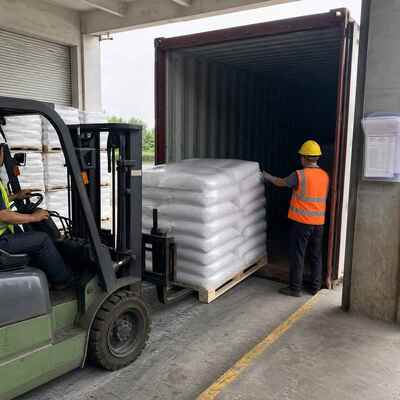
| Container loading | Offered on request — please tell us the destination port and we will confirm the loading plan |
Q1. What exactly is this grade — and how is it different from a fine powder? A. This listing is the 20–60 mesh granular grade. It is a white crystalline granule/powder with a narrow distribution centred on 420–840 μm and only 2–4% of fines below 180 μm. If you need faster dissolution or a finer mouthfeel, other particle sizes can be discussed against your specification.
Q2. How pure is it, and how is purity verified? A. Our in-house release specification is assay ≥ 99.0% and sorbitol ≥ 98.0%, well above the ≥ 91.0% (dry basis) minimum required by GB 1886.187. The reference batch tested at 99.5% assay / 98.5% sorbitol. Purity is measured by HPLC with refractive-index detection and the result is printed on the batch COA.
Q3. Which standards can I rely on for my market? A. The product is made and tested to the Chinese national food-additive standard GB 1886.187, and it also fits the EU food-additive specification E 420 (i). Additive numbers are INS 420 / E 420 (i), CAS 50-70-4.
Q4. Will the powder cake or become sticky in a humid climate? A. Sorbitol is hygroscopic, so caking is prevented by keeping the bag sealed. This grade helps you here: the coarse granule is less prone to compaction than a fine powder, and the low fines fraction limits surface area available for moisture pickup. Store in a cool, dry, ventilated area, re-seal opened bags, and keep stock on pallets.
Q5. What is the water content? A. The limit in both GB 1886.187 and the EU E 420 (i) specification is ≤ 1.5% (Karl Fischer in the EU method).
Q6. How low is the sugar content? A. Reducing sugars are specified at ≤ 0.15% internally (reference batch 0.09%) against a GB limit of ≤ 0.3%, and total sugars at ≤ 0.5% internally (reference batch 0.2%) against a GB limit of ≤ 4.4%. Reference nutritional data record 0 g sugars and 100 g sugar alcohol per 100 g.
Q7. Does it brown during baking or heating? A. No — sorbitol is a non-reducing sugar, so it does not participate in Maillard browning, and it is resistant to acid and heat. That is one reason it is popular in pale baked goods and in acidic beverage systems.
Q8. How sweet is it, and how do I substitute for sucrose? A. Its sweetness is about 50–70% that of sucrose, so replacement is normally done on a solids-and-sweetness basis rather than 1:1 by weight. Please share your finished-product target and we will help you with the starting ratio and the related labelling figures.
Q9. Is it suitable for sugar-free or reduced-calorie products? A. Reference nutritional data record 260 kcal per 100 g (2.6 kcal/g), 0 g sugars and 100 g sugar alcohol. Whether a finished product may carry a "sugar-free" claim depends on your local labelling rules — we supply the data, you decide the claim.
Q10. What about heavy metals and microbiology? A. Internal limits: heavy metals (as Pb) ≤ 5 ppm, nickel ≤ 1 ppm, lead ≤ 1 ppm, arsenic ≤ 1 ppm, chloride ≤ 50 ppm, sulphate ≤ 50 ppm; total plate count ≤ 100 p/g and colon bacillus absent in 1 g. GB limits for lead (≤ 1.0 mg/kg) and nickel (≤ 2.0 mg/kg) and the EU limits for nickel (≤ 2 mg/kg), arsenic (≤ 3 mg/kg) and lead (≤ 1 mg/kg) are all met. The reference batch complied on every line.
Q11. How is it packed, and can I have my own bag design? A. Standard packing is 25 kg/bag with PE inner liner; kraft-paper or PP-woven outer bags are selected to suit the destination and your handling. Customised packing — bag size, inner liner, palletising and private-label printing — is available on request.
Q12. What documents come with the goods? A. Every shipment carries a batch-specific Certificate of Analysis, plus the specification sheet; MSDS and additional statements are available on request. If your customs or your QA team needs a specific document, tell us at the ordering stage.
Q13. What are the MOQ, lead time, price and payment terms? A. Please send your required quantity, destination port and packing preference, and we will confirm MOQ, lead time, price and payment terms for that specific shipment.
Q14. Can you supply other mesh sizes or a full specification to my standard? A. Yes — other particle sizes can be discussed. Send your specification and we will confirm feasibility, the sample plan and the lead time.
Qingdao Golden Grain Chemical Co., Ltd, invested by Golden Grain Group Limited, one professional manufacturer and exporter since 2000, is devoted to supplying products and solutions to food & beverage, medicine, animal feed & nutrition, personal care & household, construction, agriculture.
Golden Grain Group Limited have professional staff, advanced production lines and complete lab equipment, pass GMP, HACCP, ISO, HALAL, KOSHER, BRC, GMP-Free, and other necessary certificates, which ensure our quality to be international standard. For many years' experience, we are exporting our products to more than 60 countries in the world.
"Quality Products", "Efficient Service", Golden Grain Group Limited hope to enter good business cooperation with customers at home and abroad for long.