 |
| Place of Origin: | China |
| Brand Name: | Golden Grain |
| Certification: | ISO9001, ISO22000, HALAL, KOSHER, COA, SDS |
| Model Number: | GLMA-R1T6 |
| Minimum Order Quantity: | 100kg |
|---|---|
| Price: | USD850-USD950/MT FOB QINGDAO, CHINA |
| Packaging Details: | 25kg/bag with kraft and PE INNER |
| Delivery Time: | 7 - 10 working days |
| Payment Terms: | L/C, T/T, D/P, D/A |
| Supply Ability: | 1000MT per month |
| Product Name: | Sorbitol Powder (D-Glucitol), E420(i) | Synonyms: | D-Glucitol, D-Sorbitol, Sorbitol E420, INS 420, Glucitol, Sorbit, Sugar Alcohol, Polyol Sweetener |
|---|---|---|---|
| CAS No.: | 50-70-4 | E Number / INS No.: | E420(i) / INS 420 |
| HS Code: | 29054400 | Molecular Formula: | C6H14O6 |
| Molecular Weight: | 182.17 | Grade: | Food Grade, E420(i) |
| Standard: | FCC, BP, USP, EP | Appearance: | White Crystalline Powder, Free-Flowing, Odourless |
| Assay: | 99.0% Min (Dried Basis) | Particle Size / Mesh: | 20-60 Mesh Standard; 40-120 Mesh, 60-80 Mesh, 80-120 Mesh, 100 Mesh On Request |
| Sweetness: | 50-60% Of Sucrose, Mild Cooling Effect | Solubility: | Freely Soluble In Water, Clear Colourless Solution |
| Moisture / Loss On Drying: | 0.5% Max | Reducing Sugars: | 0.2% Max |
| Total Sugars (as Glucose): | 1.0% Max | Residue On Ignition: | 0.10% Max |
| Total Heavy Metals (as Pb): | 5 Mg/kg Max | Lead: | 1 Mg/kg Max |
| Arsenic: | 2 Mg/kg Max | Total Plate Count: | 1000 Cfu/g Max |
| Yeast & Mould: | 100 Cfu/g Max | Function: | Humectant, Bulking Agent, Low-Calorie Sweetener, Anti-Hardening Plasticizer, Free-Flow Aid, Anti-Caking Agent |
| Application - Sports Nutrition: | Protein Bars, Cereal Bars, Energy Bars, Sports Nutrition, Energy Drinks, Meal Replacement Powder, Protein Powder Blends, Stick Pack & Sachet Filling, Chewable Supplements | Application - Food: | Confectionery, Sugar-Free Chocolate, Panning & Sugar Coating, Chewing Gum, Gummy & Marshmallow, Bakery, Beverage, Ice Cream & Frozen Dessert, Dairy & Yogurt |
| Application - Oral & Personal Care: | Toothpaste, Mouthwash, Oral Care, Cosmetic Grade On Request | Non-GMO: | Non-GMO Corn-Based Glucose Source |
| Allergen: | No Major Allergens Intentionally Added; Gluten Free | Packaging: | 25 Kg Kraft Paper Bag With Food-Grade PE Inner Liner, Unprinted |
| Customization: | Custom Mesh, Neutral Or Buyer-Labelled Packaging, OEM & ODM Available | Shelf Life: | 24 Months In Unopened Original Packaging |
| Storage: | Cool, Dry, Ventilated Warehouse; Below 25 DegC; Below 60% RH; Keep Off Floor | Bulk Density: | Free-Flowing Powder, Bulk Density Data On Request |
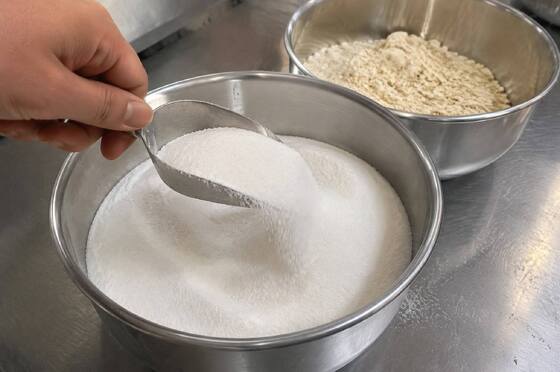
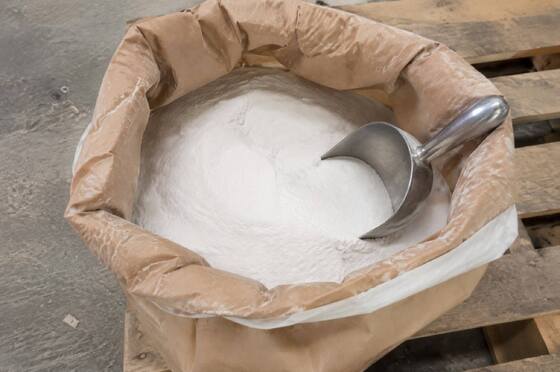
Sorbitol Powder E420(i), also written D-glucitol or CAS 50-70-4, is the food-grade crystalline form of a six-carbon sugar alcohol obtained by hydrogenating glucose. It is a white, free-flowing, odourless powder that dissolves freely in water, is not fermented by oral bacteria, and carries about half to three-fifths of the sweetness of sucrose — a bulk sweetener and humectant rather than a high-intensity replacer. This grade is specified at 99.0% min assay on a dry basis and 0.5% max moisture, milled to 20-60 mesh as standard with 40-120, 60-80, 80-120 and 100 mesh cut on request, and packed non-caking in 25 kg kraft paper bags with a food-grade PE inner liner, unprinted. It is made in a plant operating ISO 9001 and ISO 22000 systems and ships Halal and Kosher certified, with a batch certificate issued against every shipment.
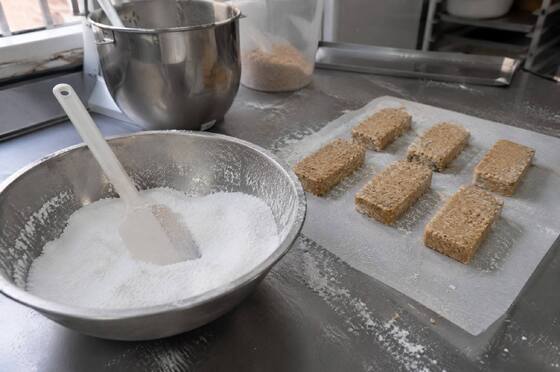
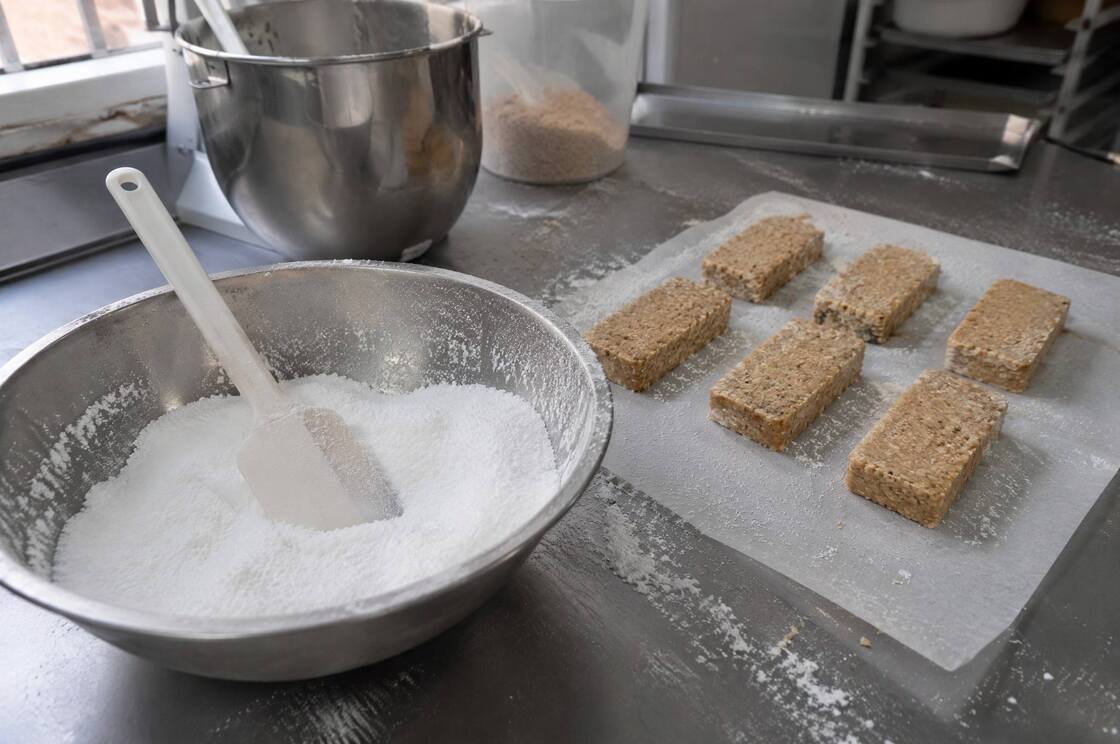
Put the same powder into a bar and a second property becomes the reason buyers specify it. A protein bar that goes hard as a brick by week six is rarely a protein problem — it is a water problem. Over the first weeks on the shelf, water migrates out of the syrup phase and into the protein, the matrix tightens, and the bar loses the soft bite it had on the line. Sorbitol works on that directly: it keeps a share of that water immobilised, and it stays mobile in the matrix as a plasticiser rather than crystallising out.
The sweetness level is the rest of the argument. At roughly half to three-fifths of sucrose it carries bulk and body into a bar or a drink mix while leaving room for a sugar-free or reduced-sugar claim, without pushing the profile so sweet that it has to be masked afterwards.
| Item | Detail |
| Product name | Sorbitol Powder, D-Glucitol |
| CAS / E number | 50-70-4 / E420(i), INS 420 |
| Formula / molecular weight | C6H14O6 / 182.17 |
| Assay (dry basis) | 99.0% min |
| Appearance | White crystalline powder, free-flowing, odourless |
| Sweetness | 50-60% of sucrose, mild cooling effect |
| Standard mesh | 20-60; 40-120, 60-80, 80-120, 100 mesh and finer on request |
| Function | Bulking agent, humectant, plasticiser, low-calorie sweetener, free-flow aid |
| Certification | ISO 9001, ISO 22000, Halal, Kosher |
| Packaging | 25 kg kraft paper bag with food-grade PE inner liner |
| HS code | 29054400 |
| Shelf life | 24 months in unopened original packaging |

| Parameter | Specification |
| Product name | Sorbitol Powder, D-Glucitol |
| CAS number / E number | 50-70-4 / E420(i) |
| Molecular formula / weight | C6H14O6 / 182.17 |
| Appearance | White crystalline powder, free-flowing, odourless |
| Assay (as C6H14O6, dried basis) | 99.0% min |
| Particle size | 20-60 mesh standard; 40-120 / 60-80 / 80-120 / 100 mesh and finer on request, 95% min passing |
| Moisture (loss on drying) | 0.5% max |
| Reducing sugars | 0.2% max |
| Total sugars (as glucose) | 1.0% max |
| Residue on ignition | 0.10% max |
| Total heavy metals (as Pb) | 5 mg/kg max |
| Lead | 1 mg/kg max |
| Arsenic | 2 mg/kg max |
| Total plate count | 1000 cfu/g max |
| Yeast and mould | 100 cfu/g max |
| Grade / standard | Food Grade, E420(i); FCC, BP, USP and EP monographs |
| Source | Non-GMO glucose, corn based; no major allergens intentionally added |
The certificate of analysis issued for each shipment is the governing document.
| Test item | Typical result | Method |
| Assay (D-Glucitol) | 99.3% | HPLC |
| Appearance | White crystalline powder | Visual |
| Particle size, 80-120 mesh | 96% pass | Sieve analysis |
| Moisture | 0.16% | Karl Fischer |
| Reducing sugars | 0.04% | Titrimetric |
| Residue on ignition | 0.03% | Gravimetric |
| Total heavy metals (as Pb) | below 1 mg/kg | ICP |
| Total plate count | below 100 cfu/g | Plate count |
Typical values describe routine production, not a release guarantee. Each bag ships with its own batch certificate.
| Application | Suggested mesh | Primary function | Starting range |
| Protein bars, cereal bars, meal-replacement bars | 80-120 mesh | Humectant, anti-hardening plasticiser | 3-8% of bar weight |
| Energy drinks, RTD shakes, electrolyte beverages | 80-120 mesh or finer | Low-calorie sweetness, mouthfeel, body | 1-5% |
| Powder blends, stick packs, sachet filling | 60-80 / 80-120 mesh | Bulking, free-flow aid, sweetness | 5-20% of blend |
| Chewable and gummy supplements | 80-120 mesh | Bulk, chew, sweetness | 20-40% of piece weight |
| Instant drink powders, meal-replacement powder | 80-120 mesh | Dispersibility, low hygroscopicity on the line | 3-10% |
Treat these as starting points, not limits. The workable level moves with your solids, target water activity, protein source and the claim you intend to print on the label.
Bars: the humectant decision that sets shelf life. Bar hardening is driven by water leaving the continuous phase and binding to protein, plus slow reorganisation of the matrix around the protein particles. Sorbitol competes for that water and stays mobile, so the bar keeps a soft bite for longer. It is also the practical way to cut back on glycerin: a heavy glycerin load lowers water activity efficiently but leaves a tacky surface that sticks to the wrapper and to the consumer's fingers. Blending sorbitol with glycerin at a ratio tuned to your water activity target usually buys the same shelf life with a cleaner surface and a shorter, more label-friendly ingredient line.
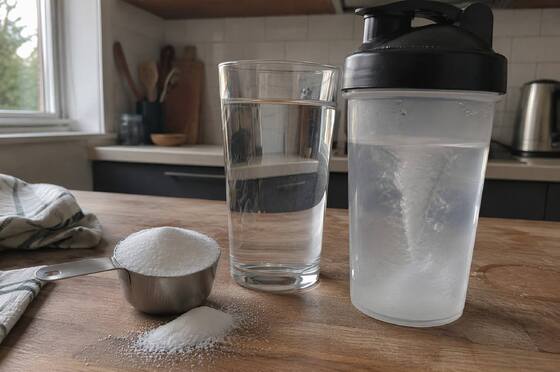
Drinks and drink mixes: sweetness without a syrup. Sorbitol dissolves freely and leaves no lingering aftertaste, so a ready-to-drink or a stick pack can hit a lower sweetness target without the thin, watery body that comes from cutting sugar with water alone. In chilled or frozen formats its freezing point depression also matters, keeping the product scoopable rather than icy.
| Sorbitol | Maltitol | Erythritol | Glycerin | |
| Sweetness vs sucrose | 50-60% | Higher, close to sucrose | Around 70% | Not a sweetener |
| Humectancy | Strong | Moderate | Weak | Very strong |
| Cooling effect | Mild | Low | Strong | None |
| Laxative threshold | Higher | Lower | Highest | Not applicable |
| Surface tack in bars | Low | Moderate | Low | High |
| Typical role here | Humectant plus bulk sweetener | Sugar-free sweetness in chocolate and chewing gum | Calorie-free sweetness, not a water binder | Water activity reduction |
Indicative comparison against published supplier data sheets. Confirm against the grade you actually hold.
| Symptom | Likely cause | First adjustment |
| Bar hardens within 4-8 weeks | Water migrating to protein, insufficient bound water | Raise sorbitol share of the humectant system, re-check water activity at day 1 and day 30 |
| Wrapper sticks, surface tacky | Glycerin loading too high for the local humidity | Shift part of the humectant load from glycerin to sorbitol powder |
| Gritty or chalky mouthfeel | Mesh too coarse for the matrix | Move to 100 mesh or finer |
| Powder cakes in the stick pack | Moisture pickup during filling or storage | Specify the non-caking grade, control filling-room humidity, keep bags sealed until use |
| Sweetness reads flat for the claim | Sorbitol carries only 50-60% of sucrose sweetness | Rebalance with a high-intensity sweetener rather than increasing bulk |
| Cloudy or slow-dissolving drink mix | Coarse particle size in a cold-fill line | Use finer mesh, or move to a liquid sorbitol stream |
Sampling runs at the reactor, the crystalliser and the packing line, not only at final release. Assay is confirmed by HPLC against the D-glucitol peak, moisture by Karl Fischer, and particle size by sieve analysis; heavy metals, lead, arsenic and microbiological counts are tested against the limits in the specification before a batch is released. Every bag passes a metal detector before palletising.
Traceability is kept simple on purpose: a single code links the bag, its pallet ticket and the released certificate, so any bag you open can be traced back to the run behind it. Retained samples are held for re-test, and a fresh certificate or a pre-shipment sample can be issued against a specific batch on request.
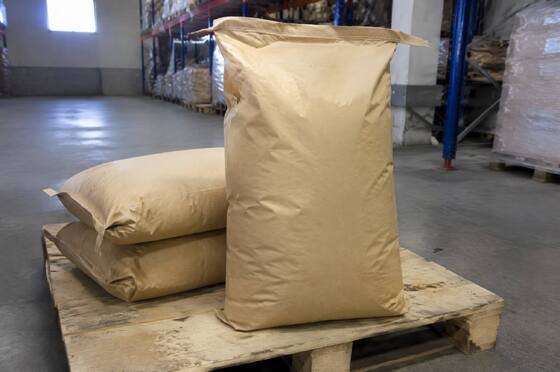
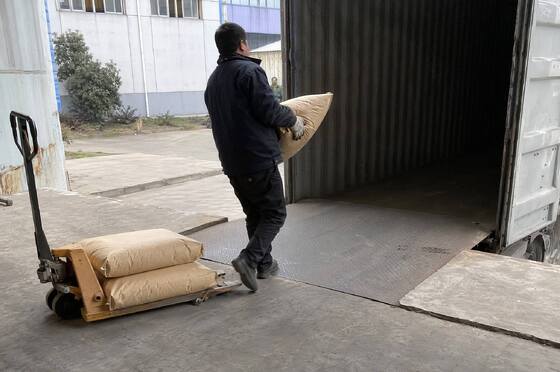
Standard packing is a 25 kg kraft paper bag with a food-grade PE inner liner, heat-sealed to limit moisture pickup in transit. Bags can be palletised and shrink-wrapped, and neutral or buyer-labelled printing is available for volume orders.
Full container, LCL and mixed shipments are all handled. Booking documents, packing list and certificate of analysis are issued before dispatch, and container loading is confirmed per order against your destination port and the palletisation you choose.
Store in a warehouse that stays cool and dry, with the bags raised off the floor, clear of condensing walls, out of direct sunlight and away from strong odours — the powder picks up foreign smells readily. Prolonged storage above 40 °C is not recommended. Left unopened in the original bag, the powder keeps its free-flowing behaviour for up to two years; after opening, close the bag tightly and work the balance off promptly, since moisture and warehouse odours are what shorten its useful life.