 |
| Place of Origin: | China |
| Brand Name: | Golden Grain |
| Certification: | ISO9001, ISO22000, HALAL, KOSHER, COA, SDS |
| Model Number: | GLMK-0978A86 |
| Minimum Order Quantity: | 100kg |
|---|---|
| Price: | USD850-USD950/MT FOB QINGDAO, CHINA |
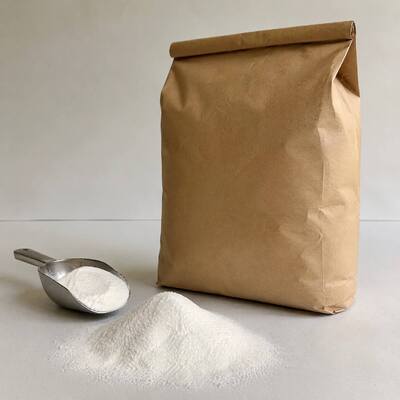
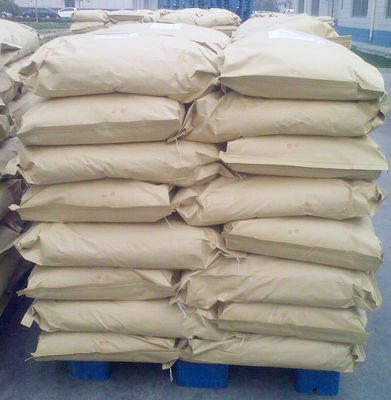
| Packaging Details: | 25kg/bag with kraft and PE INNER |
| Delivery Time: | 7 - 10 working days |
| Payment Terms: | L/C, T/T, D/P, D/A |
| Supply Ability: | 1000MT per month |
| Product Name: | Sorbitol Powder (D-Glucitol), E420 Humectant | Synonyms: | D-Glucitol, D-Sorbitol, Sorbitol E420, INS 420, Sorbit, Sorbol |
|---|---|---|---|
| CAS No.: | 50-70-4 | E-Number (INS No.): | E420 / INS 420 |
| HS Code: | 29054400 | Grade: | Food Grade E 420 (i) |
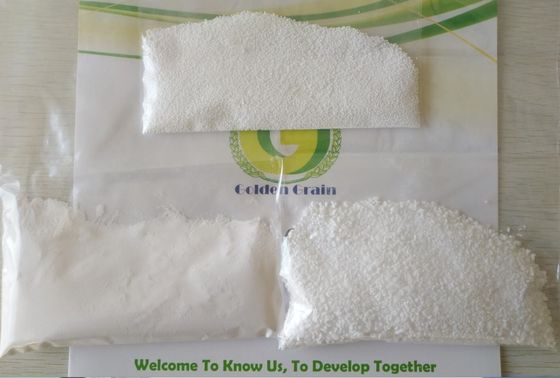
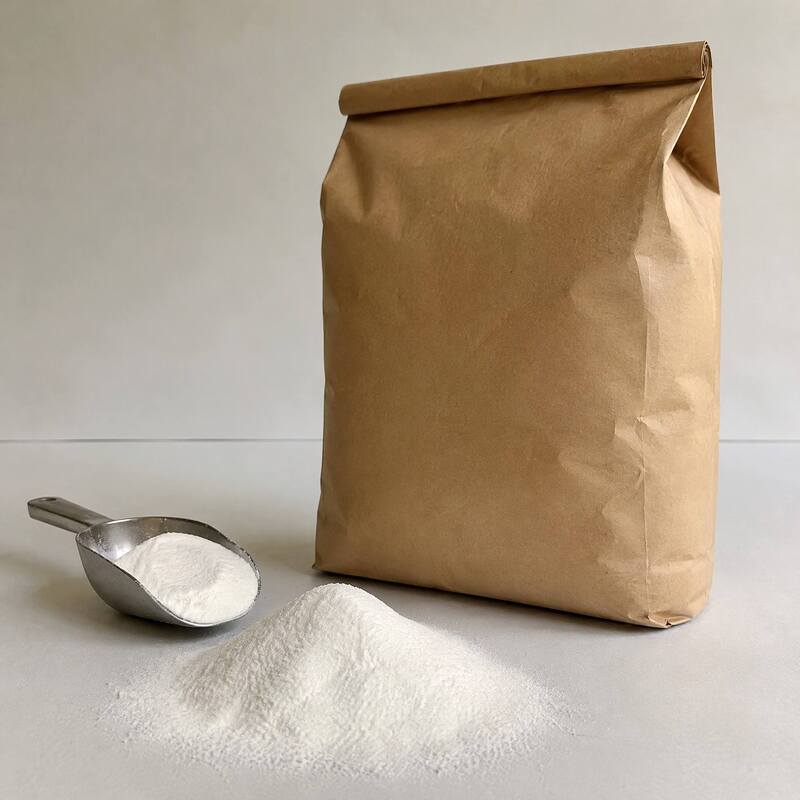
| Standard: | BP, USP, EP, FCC | Appearance: | White Crystalline Powder, Free-Flowing, Non-Caking |
| Assay: | 98.0% Min (Typical 99.5%) | Particle Size: | 20-60 Mesh |
| Moisture: | 1.0% Max | Function: | Humectant, Cryoprotectant, Anti-Staling Agent, Bulking Agent |
| Application: | Frozen Dough, Par-Baked Bread, Frozen Croissant, Pizza Base, Retarded Dough | Recommended Dosage: | 2-5% Of Flour Weight |
| Packaging: | 25kg Kraft Paper Bag With Food-Grade PE Inner Liner, Unprinted | Shelf Life: | 24 Months |
| Storage: | Cool, Dry, Ventilated; Below 25 C, Below 60% RH | Certification: | ISO 9001, ISO 22000, Halal, Kosher |
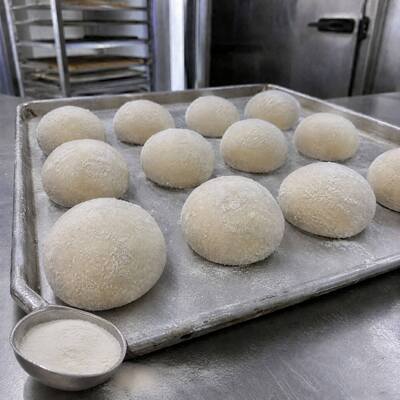
Frozen dough and part-baked bread rarely fail on the spec sheet. They fail on water. In frozen storage, free water turns into ice crystals that rupture the gluten network and reduce yeast viability, so the bake comes out with less volume and a tighter crumb. In part-baked bread held under chill, water migrates from crumb to crust, and the crust that was crisp at the end of the bake goes leathery in the bag.
Sorbitol powder E420 addresses both, because it binds water in a form that resists freezing and resists migration. This grade is aimed specifically at that duty: a free-flowing crystalline powder at 20-60 mesh that disperses into the dry blend, dissolves during mixing, and holds moisture in the crumb through the freeze-thaw cycle.
Identity. Sorbitol (D-glucitol), food grade E 420 (i) / INS 420, CAS 50-70-4, HS code 29054400, molecular formula C6H14O6, molecular weight 182.2. White crystalline powder, odourless, freely soluble in water, giving a clear and colourless solution.
Four properties that matter in a frozen bakery system.
It binds free water.
It is not fermentable by baker's yeast.
It is non-reducing.
It interrupts staling.
Supply form. 25 kg kraft paper bag with food-grade PE inner liner, unprinted. Produced in an ISO 9001 and ISO 22000 plant; Halal and Kosher certified.

| Item | Specification |
| Product name | Sorbitol Powder (D-Glucitol) |
| Synonyms | D-Glucitol, D-Sorbitol, Sorbit, Sorbol, Glucitol, Sorbitol E420 |
| Grade | Food grade E 420 (i) / INS 420 |
| Standard | BP, USP, EP, FCC |
| CAS No. | 50-70-4 |
| E-Number / INS | E420 / INS 420 |
| HS Code | 29054400 |
| Molecular formula | C6H14O6 |
| Molecular weight | 182.2 |
| Appearance | White crystalline powder or granular, free-flowing, non-caking |
| Assay (dry basis) | 98.0% min |
| Moisture / loss on drying | 1.0% max |
| Particle size | 20-60 mesh standard; 40-120, 60-80, 80-120, 100 mesh on request |
| Sweetness | About 50-60% of sucrose, mild cooling effect |
| Solubility | Freely soluble in water; clear, colourless solution |
| Reducing sugar | 0.10% max |
| Total sugar | 0.30% max |
| pH (50% solution) | 5.0 - 7.0 |
| Heavy metals (as Pb) | 5 ppm max |
| Lead | 0.5 ppm max |
| Arsenic | 1 ppm max |
| Nickel | 1 ppm max |
| Chlorides | 10 ppm max |
| Sulphates | 20 ppm max |
| Residue on ignition | 0.1% max |
| Total plate count | 1000 cfu/g max |
| Moulds and yeasts | 100 cfu/g max |
| E. coli | Negative |
| Function in bakery | Humectant, cryoprotectant, anti-staling agent, bulking agent, partial sweetener |
| Packaging | 25 kg kraft paper bag with food-grade PE inner liner, unprinted |
| Shelf life | 24 months in unopened original packing |
Typical values from a routine production batch, shown so you can see the working margin against specification. The Certificate of Analysis shipped with your lot is the binding document.
| Item | Specification | Typical result |
| Appearance | White crystalline powder or granular | Conforms |
| Assay | 98.0% min | 99.50% |
| Moisture content | 1.0% max | 0.42% |
| Total sugar | 0.30% max | 0.20% |
| Reducing sugar | 0.10% max | 0.05% |
| Density | 1.45 min | 1.48 |
| Specific rotation | 4.0 - 7.0 | 4.6 |
| pH value (50% solution) | 5.0 - 7.0 | 6.4 |
| Residue on ignition | 0.1% max | Conforms |
| Heavy metals (as Pb) | 5 ppm max | Conforms |
| Nickel | 1 ppm max | Conforms |
| Lead | 0.5 ppm max | Conforms |
| Arsenic | 1 ppm max | Conforms |
| Chlorides | 10 ppm max | Conforms |
| Sulphates | 20 ppm max | Conforms |
| Particle size | 20-60 mesh | 20-60 mesh |
| Total plate count | 1000 cfu/g max | 10 cfu/g |
| Moulds and yeasts | 100 cfu/g max | 10 cfu/g |
| E. coli | Negative | Negative |
The damage in frozen dough happens in two places: the gluten network, and the yeast. Ice crystals physically puncture the gluten film, and the yeast loses viability with each cycle as ice forms inside and around the cells. Reducing freezable water reduces both.
Dose sorbitol into the dry blend with the flour so it is uniformly distributed before the water goes in. Expect to raise added water slightly, because sorbitol binds water that would otherwise be free in the dough - in practice around 1 to 2 percent of flour weight. Judge by dough feel and by the farinograph or mixograph curve, not by the number alone.
Freeze-thaw trial protocol we suggest. Run the comparison in your own plant. Two doughs, identical apart from the sorbitol addition, subjected to five freeze-thaw cycles of 24 hours at -18 C followed by 12 hours at 4 C. Measure proof height and bake volume per cycle, and score crumb grain and crust colour at the end. The point where the control dough starts to collapse is where the sorbitol dose shows its value.
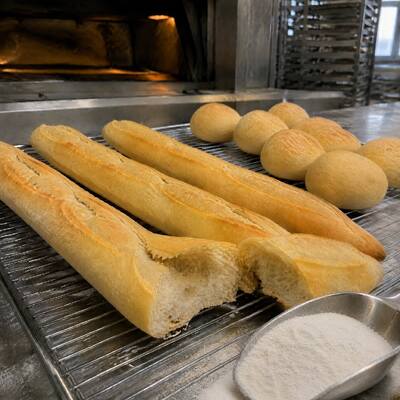
In part-baked bread the enemy is migration, not freezing. Water moves from crumb to crust during chilling and cold storage, and the crust loses crispness within days. Sorbitol holds water in the crumb phase and reduces that gradient.
Two processing notes. Because sorbitol is non-reducing, crust colour after the partial bake stays paler than with a reducing-sugar humectant, and colour is completed in the final bake - so set your partial-bake time and temperature against a final-bake test, not against the part-baked appearance on its own. Because sorbitol is hygroscopic, cool the product before bagging and keep the packing room below about 60 percent RH, otherwise the crust picks up surface moisture before the bag is even sealed.
Sorbitol does not feed the yeast, so it extends the fermentation window without shifting the sugar balance of the formula. Useful in retarded dough where you want a longer cold hold and a stable gas production curve at the end.
Sorbitol at 50-60 percent of the sweetness of sucrose works best as a partial replacement rather than a full one. Replacing 20 to 50 percent of the sucrose keeps sweetness close to target while adding the moisture and freeze-thaw benefits. Full replacement needs a high-intensity sweetener on top and will change dough rheology, browning and volume - test it, do not assume it.
Starting points for a pilot batch, not a fixed recipe. Your flour, hydration, yeast level and freezing regime will move these.
| Application | Sorbitol, % of flour weight | Primary purpose |
| Frozen bread dough, rolls | 2 - 5 | Cryoprotection, reduced ice damage, softer crumb after thaw |
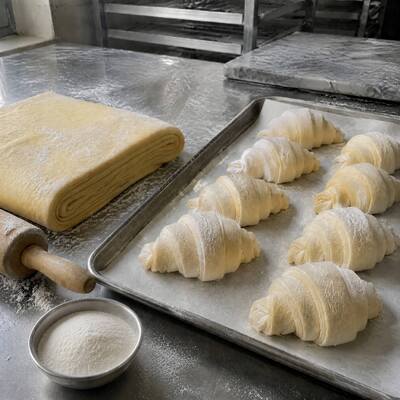
| Frozen laminated dough, croissant, danish | 2 - 4 | Plasticity of the sheet at freezing, less cracking on folding |
| Frozen pizza base | 2 - 4 | Limited moisture migration, fewer ice fissures in the base |
| Part-baked baguette, roll, ciabatta | 2 - 4 | Crumb moisture retention, crust crispness retention |
| Retarded dough, long cold hold | 1 - 3 | Stable fermentation, moisture retention |
| Sucrose replacement | Replace 20 - 50% of sucrose | Sweetness plus humectancy, less staling |
| Sorbitol powder E420 | Sorbitol 70% liquid | Glycerol | Maltitol syrup | |
| Form and dosing | Dry, blends with flour, no water adjustment beyond +1-2% | Liquid, must deduct from added water | Liquid, very mobile | Liquid, viscous, harder to dose |
| Water binding | Strong | Strong | Strong | Moderate |
| Sweetness | 50-60% of sucrose | 50-60% of sucrose | Negligible, sweet-ish aftertaste at high dose | About 90% of sucrose |
| Fermentable by baker's yeast | No | No | No | Partly, depending on syrup composition |
| Typical role in frozen dough | Cryoprotectant plus humectant, dry-line friendly | Same function where a liquid line is easier | Cost-driven water binding | Sweetness-led, less cryoprotection |
| Handling | 25 kg bag, hygroscopic, reseal after opening | Drum, dose by weight, viscosity at low temperature | Drum, low viscosity, easy to over-dose | Drum, needs warming to pump |
| Best fit | Dry-blend bakeries, export shipments, private label | Plants already dosing liquids | High-volume cost-sensitive formulas | Sugar-reduced sweet bakery |
We supply both the powder and the 70 percent solution from the same plant, so a powder-versus-liquid trial does not mean two suppliers and two document sets.
It will not rescue a dough that is already over-frozen or badly frozen.
It will not replace an improver system.
It is not a sweetener at sugar strength.
It carries energy.
Application (frozen dough, part-baked, other), mesh range, dose you are trialling, packing preference (25 kg kraft bag, 25 kg carton, 1000 kg jumbo bag), quantity for the first order and destination port. With those lines we can quote a grade that fits rather than a price per tonne.
| Item | Detail |
| Standard packing | 25 kg kraft paper bag with food-grade PE inner liner, unprinted |
| Alternative packing | 25 kg carton; 1000 kg jumbo bag; 500 kg jumbo bag; private-label printed bags on request |
| Pallet loading | 40 bags per pallet, 1000 kg net |
| Container loading | 20 MT per 20' FCL in 25 kg bags, unpalletised; palletising reduces net weight per container |
| Minimum order | 100 kg for trial, 1 MT for a standard commercial lot |
| Lead time | 7 - 10 working days after order confirmation, depending on mesh and quantity |
| Port of loading | Qingdao, China |
| Trade terms | FOB, CIF, CFR, DDP |
| Payment terms | T/T, L/C, D/P, D/A |
| Documents | Certificate of Analysis, packing list, commercial invoice, certificate of origin, Halal and Kosher certificates, SDS on request |
| Supply ability | 1000 MT per month |