 |
| Place of Origin: | China |
| Brand Name: | Golden Grain |
| Certification: | ISO9001, ISO22000, HALAL, KOSHER, COA, SDS |
| Model Number: | GLMAS-03 |
| Minimum Order Quantity: | 100 kg |
|---|---|
| Price: | USD1.39 - 6.94/KG FOB QINGDAO |
| Packaging Details: | 25kg/bag with kraft and PE INNER |
| Delivery Time: | 7 - 10 working days |
| Payment Terms: | L/C, T/T, D/P, D/A |
| Supply Ability: | 1,000 MT per month |
| Grade: | Pharmacopoeial Grade (BP / USP / EP / FCC) | Application / End Use: | Tablet Sugar Coating, Film Coating Suspension, Chewable Tablets, Chewing Gum Panning, Lozenges |
|---|---|---|---|
| Function: | Coating Solid, Tablet Diluent, Bulk Sweetener, Taste Masking, Bulking Agent | Form & Appearance: | White Crystalline Powder, Odourless |
| Particle Size / Mesh: | 60-200 Mesh Standard; 30-400 Mesh On Request | Assay / Purity: | 99.0% - 101.0% (HPLC) |
| CAS No. / E-Number: | 585-88-6 / E965 (INS 965) | Molecular Formula: | C12H24O11 |
| Synonyms / Other Names: | D-Maltitol, Maltitol Crystal, Hydrogenated Maltose, Maltitol Excipient | Moisture Content: | 0.5% Max (Karl Fischer) |
| Conductivity: | 20 MicroSiemens Per Centimeter, Max | Heavy Metals: | 10 PPM Max Calculated As Pb; Lead, Arsenic And Nickel 0.5 PPM Max Each |
| Microbiological: | Total Plate Count 20 CFU/g Max; Yeast And Mould 10 CFU/g Max; E. Coli And Salmonella Negative | Melting Point: | 148-151 Celsius |
| Sweetness / Energy: | About 90 Percent Of Sucrose Sweetness; 2.1 Kilocalories Per Gram | Solubility: | Freely Soluble In Water |
| Key Properties: | Non-cariogenic, Tooth-friendly, Low Glycemic, Heat Stable Up To 160 Celsius, Low Hygroscopicity | Packaging: | 25kg Kraft Paper Bag + PE Inner Liner; FIBC 500-1000kg Available |
| Certification: | ISO9001, ISO22000, HALAL, KOSHER, COA, SDS | HS Code: | 2940009090 |
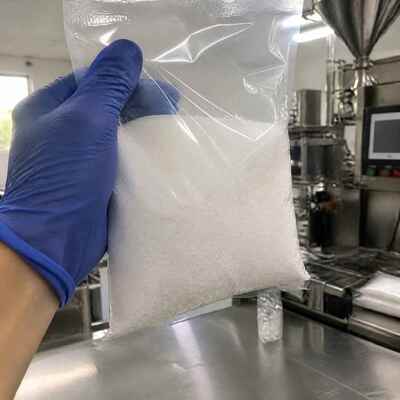
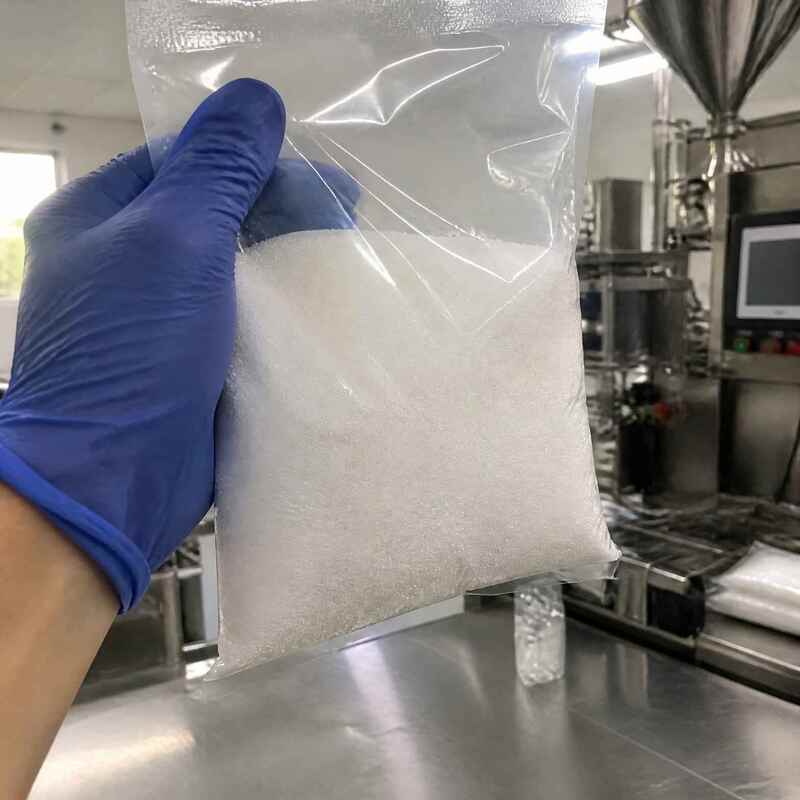
Maltitol powder is a sugar alcohol — E965, INS 965, CAS 585-88-6, C₁₂H₂₄O₁₁ — produced by hydrogenating maltose obtained from high-quality non-GMO corn starch. It is supplied as an odourless white crystalline powder that dissolves freely in water. The crystalline powder and the liquid maltitol syrup sold for the same applications are the same polyol in two physical forms; this page covers the powder.
As an ingredient it behaves like sugar in the parts of a formula that matter. Sweetness is about 90% of sucrose, the sweet profile is clean without the cooling bite of sorbitol or xylitol, energy is roughly 2.1 kcal/g, the melting range is 148–151 °C, bulk density sits at 0.55–0.75 g/cm³, hygroscopicity is low and it withstands about 160 °C of drying air. In practice that means it can be weighed, blended, compressed, pan-coated and dried on equipment that was built for sucrose, without rebuilding the process around the sweetener.
Functionally it serves as a bulk sweetener, a tablet diluent and filler, the solid phase of a coating system, a humectant and a carrier for flavours and actives. Because it is non-cariogenic, low glycemic and IMO-free, it carries sugar-free, tooth-friendly and reduced-calorie positioning into the finished product instead of limiting it to the package.
We produce it in two grade families: a pharmacopoeial grade released against the BP, USP and EP monographs, and an FCC food grade for confectionery and bakery work. Standard mesh is 60–200, with cuts to 30–400 made to order; packing is 25 kg kraft paper bags with PE inner liner; shelf life is 24 months. Production runs under ISO 9001, ISO 22000 and FSSC 22000 management systems, with Halal and Kosher (Pareve) product certification.
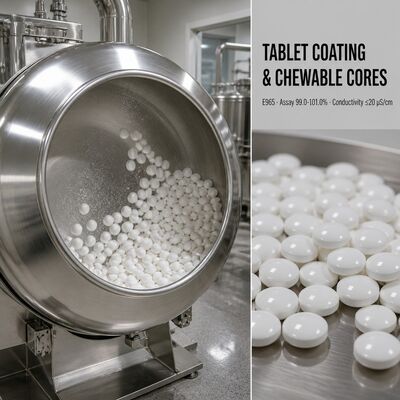
At a glance: two jobs bring buyers to this grade — the bulking and sweetening solids of a tablet coating suspension, and the compressible, sugar-free core of a chewable tablet. The pharmacopoeial figures that decide those two jobs — assay 99.0–101.0%, moisture ≤0.5%, conductivity ≤20 μS·cm⁻¹, heavy metals ≤10 ppm — are set out in the specification table further down.
If you are choosing between grades or mesh cuts for a coating line, the sections below run in the order the decision is usually made: what the material does in the pan, which cut fits your process, then the numbers and the paperwork.

Sugar coating and film coating use maltitol differently, and it is worth being precise about which one you are buying for.
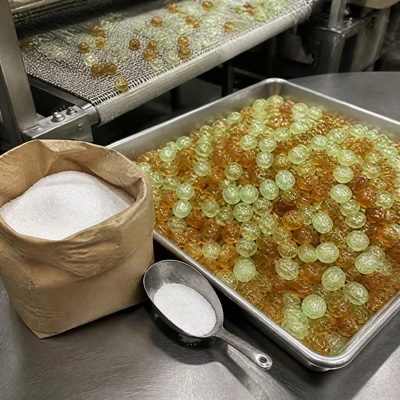
Here maltitol replaces all or part of the sucrose in the coating syrup. It brings roughly 90% of the sweetness of sugar with about 2.1 kcal/g, and it is non-cariogenic, so a sugar-free claim on the finished tablet stays intact through the shell and not just the core. Two physical properties matter on the pan: the material is only mildly hygroscopic, so the shell does not pick up moisture between coats, and it is stable to about 160 °C, so it tolerates normal inlet air temperatures without caramelising or yellowing. The result is a hard, glossy, colour-retaining shell on tablets, chewing gum pellets and lozenges.
Maltitol is not a film former, and no supplier should tell you otherwise — the film still comes from HPMC, PVA or an acrylic system. In a film-coating suspension maltitol works as soluble bulking solids: it raises coating weight, carries flavour and sweetness, and improves mouthfeel without adding a sugar. Because a coating suspension sits in a tank for hours, the two numbers that matter here are bioburden and conductivity, and this is where a pharmacopoeial grade separates itself from a food grade: total bacteria ≤20 cfu/g and conductivity ≤20 μS·cm⁻¹ on the specification sheet, with HPLC assay and Karl Fischer moisture on every batch.
Mesh is the single most common reason a trial goes wrong — the chemistry is identical across cuts, the behaviour on the line is not. Standard production is 60–200 mesh; other cuts up to 30–400 mesh are made to order.
| Cut | Typical use | What it changes on the line |
| 60–80 mesh | Coating syrups, gum panning | Dissolves quickly in the syrup tank with limited dust; keeps suspension solids uniform through a long run |
| 100–200 mesh | Fine sugar coating, smooth film-coating suspensions | Faster dissolution and a smoother shell; less specking on the tablet surface |
| 30–60 mesh | Chewable tablet cores, direct compression blends | Better flow and less caking in the hopper; the cut most compression trials start from |
| Item | Specification |
| Description | White crystalline powder |
| Identification | A, B, C, D |
| Assay | 99.0% – 101.0% |
| Specific optical rotation | +105.5° – +108.5° |
| Reducing sugars | ≤0.1% |
| Water | ≤0.5% |
| Sulphates | ≤0.01% |
| Sulphated ash | ≤0.10% |
| Chloride | ≤50 ppm |
| Sulfate | ≤100 ppm |
| Conductivity | ≤20 μS·cm⁻¹ |
| Heavy metals | ≤10 ppm |
| Lead | ≤0.5 ppm |
| Nickel | ≤0.5 ppm |
| Arsenic | ≤0.5 ppm |
| Melting point | 148 °C – 151 °C |
| Total bacteria count | ≤20 cfu/g |
| Moulds and yeasts | ≤10 cfu/g |
| Escherichia coli | Negative |
| Salmonella | Negative |
A food grade to FCC is also produced for confectionery and bakery buyers, where the microbiological limits are wider and the price reflects it. If your specification does not need the pharmacopoeial limits, say so and we will quote the grade that fits rather than the one that sounds better.
The figures below are from a routine production batch of the food grade, published so you can see the margin between specification and practice. Pharmacopoeial grade batches are released against the monograph table above, and the batch COA travels with the goods.
| Test item | Method | Specification | Typical result |
| Appearance | Visual | White crystalline powder | Conforms |
| Assay (maltitol, dry basis) | HPLC | ≥98.0% | 98.6% |
| Moisture | Karl Fischer | ≤1.0% | 0.28% |
| pH (50% solution) | pH meter | 5.0 – 7.5 | 6.2 |
| Reducing sugars | Titrimetric | ≤0.10% | <0.05% |
| Sulfated ash | Gravimetric | ≤0.10% | 0.02% |
| Heavy metals (as Pb) | Colorimetric | ≤5 ppm | <5 ppm |
| Lead | AAS / ICP-MS | ≤1 ppm | <1 ppm |
| Arsenic | AAS / ICP-MS | ≤1 ppm | <1 ppm |
| Nickel | ICP-MS | ≤2 ppm | <1 ppm |
| Total plate count | Plate count | ≤1,000 cfu/g | <100 cfu/g |
| Yeast and mould | Plate count | ≤100 cfu/g | <10 cfu/g |
| Escherichia coli | Plate count | Absent / g | Absent |
| Salmonella | Plate count | Absent / 25 g | Absent |
Every order ships with a batch-specific Certificate of Analysis, material safety data sheet, specification sheet, packing list, commercial invoice and certificate of origin, and third-party test reports are supplied on request. For nutraceutical and supplement customers there is also a non-GMO declaration, since the material is produced from high-quality non-GMO corn starch.
Management systems are ISO 9001, ISO 22000 and FSSC 22000; product certification covers Halal and Kosher (Pareve). Finished batches are tested in our own laboratory by HPLC for assay, Karl Fischer for moisture, and full microbiological plating, with ICP available for elemental impurities — which is what keeps the release cycle short when you need a batch re-tested against a customer monograph rather than a generic one.
Most coating projects go through one 25 kg bag before anything else. To quote and ship the right cut the first time, send us four things: the application, the mesh or particle size distribution you currently work with, the grade your market requires, and your expected annual volume. If you already have a target specification, send it and we will mark up the differences instead of sending a generic sheet back.
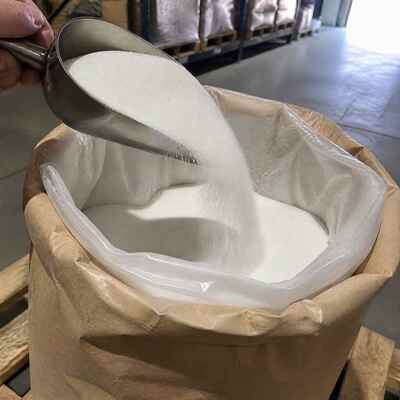
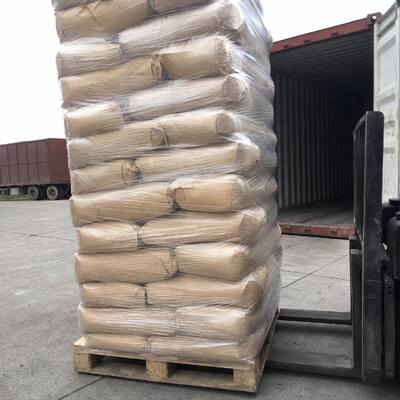
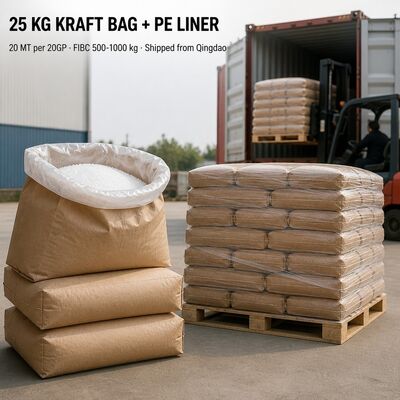
Standard export packing is 25 kg kraft paper bags with an inner PE liner, unprinted, with 20 MT loadable in a 20GP container. For volume buyers an FIBC supersack of 500–1,000 kg is available, and loading plans are confirmed per order according to grade, packing format and palletisation. OEM and private-label work is supported — branded bags, custom weights and retail-ready packs — which is useful for distributors who resell in repacked form. Shipments are arranged from Qingdao.
Keep the bags sealed and store in a cool, dry, well-ventilated warehouse below 25 °C with relative humidity under 60%, away from direct sunlight, moisture and strongly odorous goods. Under these conditions shelf life is 24 months from the date of manufacture.
Can it replace sucrose one-to-one in a sugar-coating syrup? Not by weight without adjustment. Sweetness is about 90% of sucrose, so a like-for-like swap tastes slightly less sweet, and the solids level of the syrup may need trimming to keep viscosity in the same working range. Most customers run a short pan trial and fix the syrup on the result.
Does the shell still qualify as sugar-free? Maltitol is a polyol with about 2.1 kcal/g versus roughly 4 kcal/g for sucrose, and it is non-cariogenic, so the tooth-friendly and reduced-calorie positioning holds through the coating. Label wording for polyols differs by market — confirm the claim against your local regulation before printing.
Will the powder cake in the bag? Maltitol is only mildly hygroscopic, and the PE liner does most of the work. Caking in practice comes from storage above the recommended humidity or from opened bags left unsealed, not from the material itself.
Is a pharmacopoeial grade really available, or only food grade? Both are produced. The BP / USP / EP grade is released against the monograph table above with per-batch HPLC assay, Karl Fischer moisture, conductivity and elemental impurities; the FCC food grade is the wider-limit, lower-cost option. Tell us which one your registration needs.
Can maltitol be the film former in a film-coating system? No. It is the soluble bulking and sweetening phase. The film still requires a polymer such as HPMC or PVA, and we would rather say that clearly than have you discover it in a pilot batch.
Lead time and minimum order? Both depend on grade, mesh and packing format, so they are confirmed per order rather than quoted as a fixed number. Sample quantities and full-container loads ship from the same plant.
Send us your coating process and current specification — the application, the mesh, the grade and the annual volume — and we will come back with the matching cut, the batch documentation and a quotation. Sample bags are available for trial work before an order is placed.