 |
| Place of Origin: | China |
| Brand Name: | Golden Grain |
| Certification: | ISO9001, ISO22000, HALAL, KOSHER |
| Model Number: | GLMA-KJ2 |
| Minimum Order Quantity: | 1300kg |
|---|---|
| Price: | USD500/MT FOB QINGDAO - USD700/MT FOB QINGDAO |
| Packaging Details: | 250kg/drum, 270kg/drum, 275kg/drum with new plastic drum, 1300kg IBC drum, flexible bag |
| Delivery Time: | 7 - 10 working days |
| Payment Terms: | L/C, T/T, D/P, D/A |
| Supply Ability: | 1000MT per month |
| Grade: | Food Grade / FCC, Non-GMO | Concentration: | HSH 75/50: 75% Dry Substance (75 Brix), 50% Maltitol On Dry Basis |
|---|---|---|---|
| Application / End Use: | Flavored Milk, Yogurt, Dairy Drink, Beverage, Ice Cream | Also Used In: | Chewy Candy, Hard Candy, Gummy, Bakery Filling, Chocolate, Oral Care |
| Claim Support: | Sugar-Free, No Added Sugar, Reduced Sugar, Diabetic Friendly, Keto Friendly | Function: | Bulk Sweetener, Humectant, Sugar Replacer, Viscosity Regulator, Stabilizer |
| Properties: | Non-Crystallizing, Low Glycemic, Low Calorie, Tooth-Friendly, Low Maillard Browning | Form & Appearance: | Colourless, Transparent, Viscous Liquid |
| Sweetness: | About 75% Of Sucrose; Energy 2.1 Kcal/g | PH (50% Solution): | 5.0 - 7.0 |
| Reducing Sugars: | 0.3% Max On Dry Basis (typical 0.06%) | Sorbitol Content: | 6% Max On Dry Basis (typical 4.6%) |
| Heavy Metals: | 5 Ppm Max (as Pb); Arsenic 0.5 Mg/kg Max; Lead 0.5 Ppm Max; Nickel 2 Ppm Max | Synonyms / Other Names: | D-Maltitol, Maltitol Syrup, Liquid Maltitol, Hydrogenated Starch Hydrolysate, HSH, Sugar Alcohol, Polyol |
| CAS No. / E-Number: | 585-88-6 / E965 (INS 965) | Molecular Formula: | C12H24O11 / 344.31 |
| Certification: | ISO 9001, ISO 22000, Halal, Kosher | Packaging: | 275kg New HDPE Drum (Standard); 250kg / 270kg Drum, 1000kg IBC, 1300kg IBC Tote, Flexible Bulk On Request |
| Shelf Life: | 24 Months, Unopened, Above 5 °C |
Maltitol Syrup 75/50 E965 Brix 75, Non-Crystallizing Sweetener for Flavored Milk and Yogurt Drink, Halal Kosher, ISO 9001, 275kg Drum
Liquid Maltitol Syrup 75/50 E965 Sugar Free Humectant for Dairy Drink, Yogurt and Beverage, ISO 22000 Halal Kosher, 275kg Drum, Bulk Supply
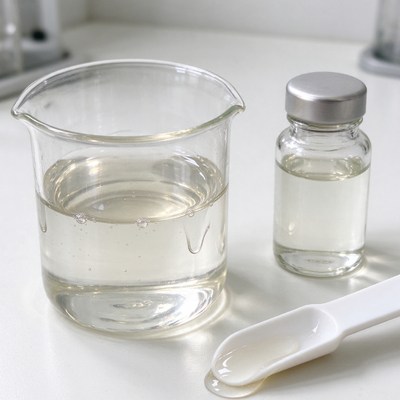
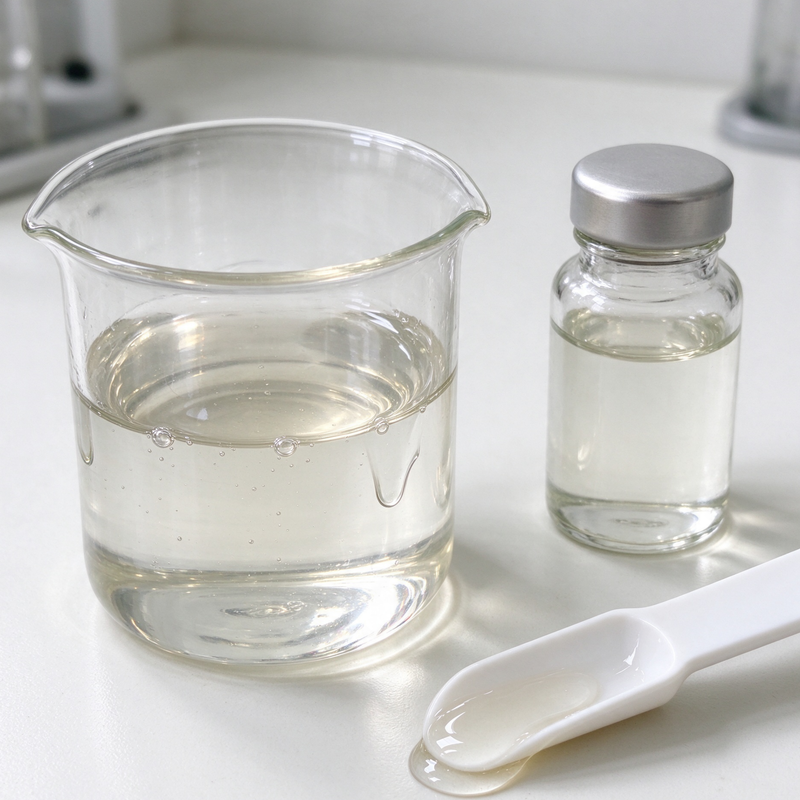
Maltitol Syrup 75/50 (D-Maltitol, CAS 585-88-6, E965 / INS 965) is a clear, colourless, viscous sugar alcohol liquid produced by catalytic hydrogenation of high-maltose corn syrup — chemically a hydrogenated starch hydrolysate, or HSH. This grade carries a minimum of 75% dry substance (about 75 Brix) with a minimum of 50% maltitol on dry basis, together with sorbitol and hydrogenated oligosaccharides. It is roughly 75% as sweet as sucrose, supplies about 2.1 kcal/g, is non-crystallizing in storage, and holds a viscosity that stays workable at ambient temperature.
This listing is configured for the dairy and beverage side rather than for candy. In a flavoured milk or a UHT milk drink, the constraint that decides your formula is colour: sucrose and glucose syrups carry reducing sugars that react with the protein fraction under sterilisation and push the finished drink towards beige. This syrup carries reducing sugars at 0.3% max on dry basis, typically 0.06%, so a UHT or retort cycle causes very little Maillard browning and the drink keeps the white it started with. That is the single most useful difference between maltitol syrup and a conventional glucose syrup in a dairy line, and it is why the grade is specified here rather than a generic sweetener.
In yogurt and fermented milk drinks the second constraint is acid. Maltitol syrup carries no sucrose, so there is nothing to invert when the pH drops, and no sweetness drift or darkening around the acidification point. It adds body and mouthfeel to a low-fat or zero-fat base that would otherwise read thin, and it holds water in the gel structure so the product does not express whey in the cup over shelf life.
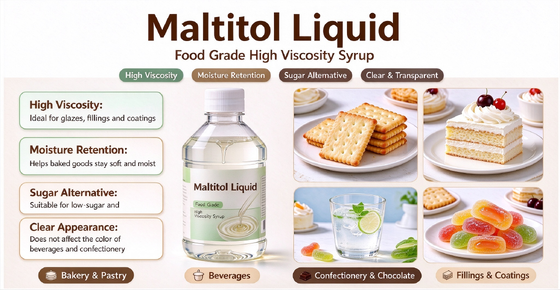
In frozen dessert it depresses the freezing point and controls overrun, and in beverage bases and syrups it delivers a clean sweetness with no cooling spike and no bitter tail. The same material is the standard non-crystallising bulk sweetener for chewy candy, hard candy and gummy, a humectant in bakery fillings and jam, and a moisture-binding base in toothpaste and oral care.
Maltitol is non-cariogenic — oral bacteria cannot ferment it into the acids that demineralise enamel — and it produces a lower glycemic response than sucrose, which is what supports a sugar-free, no-added-sugar, reduced-sugar or diabetic-friendly claim on the finished pack. Supply is backed by ISO 9001 and ISO 22000 systems with Halal and Kosher certification, and every lot ships with a batch-specific COA and MSDS before the order leaves.

| Parameter | Specification |
| Product name | Maltitol Syrup (Hydrogenated Starch Hydrolysate, HSH) |
| Chemical name | D-Maltitol with sorbitol and hydrogenated oligosaccharides |
| CAS number / E number | 585-88-6 / E965 (INS 965) |
| Molecular formula / weight | C12H24O11 / 344.31 |
| Appearance | Colourless, transparent, viscous liquid |
| Dry substance (Brix) | 75% min |
| Maltitol content (dry basis) | 50% min |
| Sorbitol content (dry basis) | 6% max |
| Reducing sugars (dry basis) | 0.3% max |
| Water content | 25% max |
| pH (50% solution) | 5.0 – 7.0 |
| Sweetness | About 75% of sucrose |
| Energy value | About 2.1 kcal/g |
| Sulphated ash | 0.1% max |
| Chloride | 50 ppm max |
| Heavy metals (as Pb) | 5 ppm max |
| Arsenic (as As) | 0.5 mg/kg max |
| Lead (Pb) | 0.5 ppm max |
| Nickel (Ni) | 2 ppm max |
| Microbiology | Released against the FCC limits; plate count, yeast and mould and E. coli are stated on the batch COA |
| Grade | Food grade; conforms to FCC specification |
| Crystallisation behaviour | Non-crystallising in storage and in the finished product |
| Packaging | 275 kg new HDPE drum |
| Shelf life | 24 months, unopened, above 5 °C |
The two numbers that decide which grade you order are dry substance and maltitol content. Dry substance sets the water you do not have to add and the body the syrup brings; maltitol content on dry basis sets the sweetness and the humectant strength. 75/50 is the grade for drinks and dairy, where a lower solids load keeps the syrup easy to pump and blend at ambient temperature. 80/55 and 85/55 are the same chemistry at higher solids, and are used where the finished piece or filling needs less added water. All three are produced on the same line, so a formula can move between them without re-qualifying a supplier.
Every lot is released against the specification on a batch-specific COA that reports the measured result next to the limit, so incoming inspection can be checked line by line rather than against a generic datasheet. The lot code on the drum repeats on the pallet label and on the certificate.
| Test item | Typical result | Method |
| Dry substance | 75.3% | Refractometry |
| Maltitol (dry basis) | 52.4% | HPLC, refractive index |
| Sorbitol (dry basis) | 4.6% | HPLC, refractive index |
| pH (50% solution) | 6.1 | pH meter |
| Water content | 24.7% | Karl Fischer |
| Reducing sugars | 0.06% | Titrimetric |
| Conductivity ash | 0.02% | Conductometry |
| Total heavy metals (as Pb) | < 5 mg/kg | ICP-MS |
| Arsenic (as As) | < 1 mg/kg | ICP-MS |
| Total plate count | < 100 cfu/g | Plate count |
| Yeast and mould | < 10 cfu/g | Plate count |
Halal and Kosher certificates, including the issuing body, certificate number and validity dates, are provided on request so your compliance team can verify them with the certifier directly. A sample COA and the MSDS can be issued before the order so QA can approve the material in advance.
Flavoured milk and UHT milk drinks. The syrup replaces sucrose at about 1.05 to 1.15 times the sucrose weight to match sweetness, and it is normally dosed into the aqueous phase before homogenisation. Because reducing sugars sit at 0.3% max on dry basis, the UHT or retort cycle produces very little browning against the milk protein, so a vanilla or plain base keeps its colour through the process and through shelf life. Check the finished solids and the water you no longer need to add: at 75 Brix the syrup brings three quarters of its own weight as solids.
Yogurt, drinking yogurt and fermented milk drinks. Added to the sweetened base before fermentation or as a post-fermentation syrup, it holds water in the protein gel and reduces whey separation in the cup. With no sucrose in the system there is no inversion at the acidification point, so sweetness stays where it was formulated and the product does not darken around the acid dose. In a zero-fat or low-fat base it is the ingredient that restores the body the fat used to carry.
Ice cream and frozen dessert. Used to depress the freezing point and control overrun, and to keep the mix from becoming icy in a reduced-sugar formulation. Pair it with the fat and stabiliser system rather than treating it as a straight sucrose swap, since the freezing curve of a polyol blend is not the same as sucrose.
Beverage bases, cordials and ready-to-drink syrups. Fully soluble and colourless, it sweetens without a colour contribution, which matters in clear drinks and in citrus systems where a glucose syrup would haze or darken. It also carries no cooling effect, so a mint or fruit flavour reads as formulated.
Chewy candy, toffee and nougat. This is the largest single use worldwide. Blended with a fat phase and a texture modifier, the syrup keeps the chew supple over the shelf period and holds water where it is wanted, so the piece does not turn waxy or dry at the surface of the wrap.
Hard candy and deposited sweets. Because the polyol blend resists crystallisation, the melt can be discharged onto the cooling belt, coloured, flavoured and passed through the batch roller and rope sizer without the white streaks that signal graining. Depositing needs a melt that releases cleanly from the mould, and the 75% dry substance grade gives the lower viscosity of the three, which fills small cavities more cleanly than the 85/55 cut.
Bakery fillings, jam and fruit preparation. Used as a humectant and bulking sweetener to keep a filling soft and to lower water activity without adding reducing sugars, which limits browning in a baked application.
Toothpaste and oral care. A humectant that keeps the paste from hardening in the tube and gives it a clean, non-cariogenic sweetness, which is why it appears in both the oral care and the confectionery side of the same plant.
Nutraceutical and sugar-free syrup bases. A low-calorie, non-cariogenic vehicle for supplements and sugar-free syrups, where the mild sweetness also masks the bitter notes of actives.
Control starts at the high-maltose glucose syrup intake, where dextrose equivalent, dry substance and colour are checked before hydrogenation. After the reactor the liquor passes ion exchange and evaporation, and each lot is sampled at the evaporator outlet and again at the filling head. Maltitol and sorbitol distribution are measured by HPLC, water by Karl Fischer, and dry substance by refractometer against a temperature-corrected table — those are the four parameters that decide how the syrup behaves in a dairy line or a candy cook.
Every drum carries a lot code that repeats on the pallet label and on the certificate, so a drum in your store can be traced back to its evaporation run. Retained samples are kept for re-test, and a stability sample from each lot is held to confirm that no crystallisation appears in the drum over time.
The product is made from non-GMO starch and contains none of the ingredients on the EC list of allergens. No animal-derived processing aids are used in the hydrogenation, ion exchange or evaporation stages, so it is suitable for vegan and vegetarian formulations.
| Certificate | Scope |
| ISO 9001 | Quality management system |
| ISO 22000 | Food safety management system |
| Halal | Product and production process |
| Kosher | Product and production process |
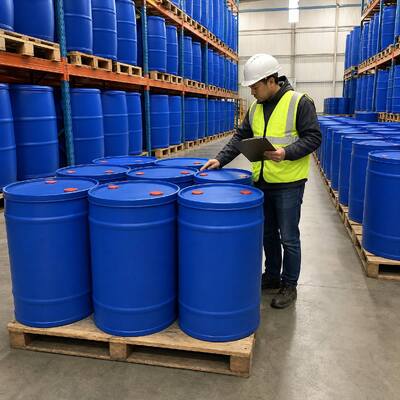
The standard pack is a 275 kg new HDPE drum with a sealed lid, a size that lets a plant hold a full batch on one pallet without a drum tipper. For smaller draw-off or trial quantities the same syrup is supplied in 250 kg and 270 kg new HDPE drums, in a 1000 kg IBC with a bottom discharge valve, in a 1300 kg IBC tote, and in flexible bulk packaging for plants with their own bulk unloading.
Drums are palletised, shrink-wrapped and strapped for container loading; a 20 ft container is loaded by weight rather than by drum count, so the number of drums depends on your booking weight and the destination road limit. Lead time is 7 to 10 working days from order confirmation, FOB Qingdao, with L/C, T/T, D/P and D/A accepted.
If your line draws from an IBC rather than a drum, say so at quotation stage — the valve type and the discharge height need to match your pump, and it is cheaper to specify that before the container is loaded than after.
Store sealed, in a cool, dry, ventilated warehouse, away from direct sunlight and heat, at above 5 °C. Shelf life is 24 months unopened under these conditions. Do not freeze: the syrup is a concentrated polyol solution, and freezing separates the solids from the water phase in a way that does not fully reverse on thawing.
If a drum has been stored at the low end of the range, let it come to ambient and roll or stir it before drawing off so the solids are uniform. Maltitol syrup does not crystallise in normal storage, and any crystallisation found in a drum should be treated as a temperature excursion in transit rather than a property of the grade. Keep drums closed between draws, use stock on FIFO rotation, and keep the material away from strong odours, which it will pick up and carry into a bland dairy base.
A maltitol syrup purchase usually ends up as one of two things: a trader quoting someone else's drum, or a plant that only runs one solids grade. This listing sits in a different position — 75/50, 80/55 and 85/55 are all produced on our own hydrogenation and evaporation lines, next to our maltitol powder and the sorbitol range, which is what makes the grade, the packing and the lead time negotiable rather than fixed.
One supplier across the whole polyol system. A sugar-free bar, a sugar-free chocolate or a sugar-free dairy drink usually needs a powder portion and a syrup portion from the same family. Buying both from one plant means one COA format, one certificate set, one container, and a powder-to-syrup ratio you can shift between orders without qualifying a second supplier.
Three solids grades from one line. Moving a formula from 75/50 to 80/55 or 85/55 changes the water balance, not the supplier. The maltitol content on dry basis moves with the grade, so sweetness and humectant strength can be tuned without reformulating around a different material.
The documents arrive before the goods do. Sample COA, MSDS, Halal and Kosher certificates, and the allergen and non-GMO statements are issued at quotation stage, so QA and compliance can approve the material while the order is still being priced. Every shipment then carries a batch COA whose number is printed on the drum and matches the certificate in the shipping documents.
Packing matched to how you draw the material. Drum, IBC or flexible bulk, in the sizes that fit a pallet, a pump or a bulk tank — specified at quotation stage rather than defaulted to whatever is on the floor.
Formulation support, not just a datasheet. The sucrose replacement factor, the cook temperature adjustment and the solids balance for a dairy base are sent with the quotation as starting points, to be confirmed against your own trial. When a drink browns in the retort or a filling weeps in the cup, the useful question is which fraction moved and by how much — answering that from the COA and the dosage is usually faster than reformulating blind.