 |
| Place of Origin: | China |
| Brand Name: | Golden Grain |
| Certification: | ISO9001, COA,SDS |
| Model Number: | GLMA-K32 |
| Minimum Order Quantity: | 100kg |
|---|---|
| Price: | USD850-USD950/MT FOB QINGDAO, CHINA |
| Packaging Details: | 25kg/Bag with Paper Drum and PE Inner |
| Delivery Time: | 7 - 10 working days |
| Payment Terms: | L/C, T/T, D/P, D/A |
| Supply Ability: | 1,000 MT per Month |
| Product Name: | Sorbitol Powder (D-Glucitol) | Other Names: | D-Glucitol; D-Sorbitol; Glucitol |
|---|---|---|---|
| CAS No.: | 50-70-4 | EINECS No.: | 200-061-5 |
| E Number: | E420 / INS 420(i) | Molecular Formula: | C6H14O6 |
| Molecular Weight: | 182.17 | Appearance: | White Crystalline Powder |
| Assay: | ≥98.0% (Food Grade) | Grade: | Food Grade |
| Standard: | USP / BP / EP / FCC | Moisture: | ≤1.0% |
| PH: | 3.5-7.0 (50% Aqueous Solution) | Reducing Sugars: | ≤0.2% |
| Solubility: | Freely Soluble In Water, Slightly Soluble In Ethanol | Taste Odor: | Sweet Taste, Odorless |
| Melting Point: | 95-99 °C | Particle Size: | Multiple Mesh Sizes Available On Request |
| Function: | Humectant; Sweetener; Stabilizer; Bulking Agent; Cryoprotectant | Application: | Sugar-free Candy; Chewing Gum; Toothpaste; Bakery; Dairy; Beverage; Pharmaceutical Excipient; Vitamin C; Cosmetics; Frozen Surimi |
| Certification: | ISO 9001; ISO 22000; Halal; Kosher | Packaging: | 25 Kg Kraft Paper Bag With PE Inner Liner |
| MOQ: | 1 X 20' FCL | Loading Capacity: | 20 MT Per 20' FCL (loose) |
| Shelf Life: | 24 Months In Unopened Original Packaging | Storage: | Store In A Cool, Dry Place, Away From Moisture And Direct Sunlight |
| Place Of Origin: | Shandong, China | Port: | Qingdao, China |
| Payment Terms: | T/T; L/C At Sight | Lead Time: | 7-15 Days After Deposit |
| Sample: | Free Sample Available | OEM ODM: | Available |
| Heavy Metals: | ≤5 Ppm (as Pb); Lead ≤0.5 Ppm; Arsenic ≤1 Ppm | HS Code: | 29054400 |
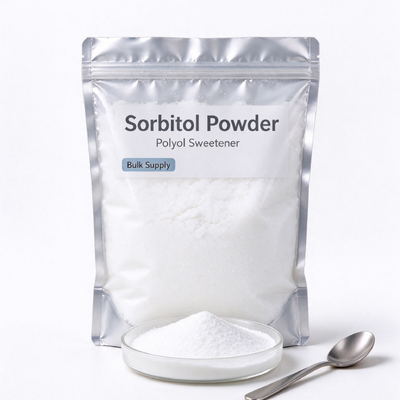
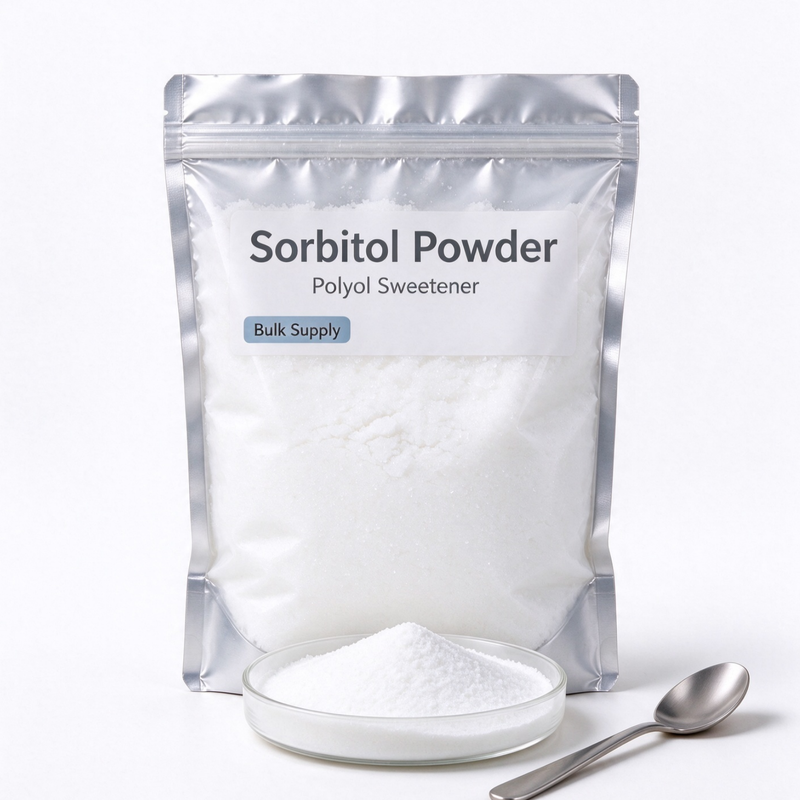
Sorbitol Powder is a high-purity polyol (sugar alcohol) supplied as a white, free-flowing crystalline powder. Chemically it is D-glucitol (C6H14O6), a sugar alcohol with about 60% of the sweetness of sucrose and roughly one-third fewer calories. It gives a smooth mouthfeel with a clean, cool and pleasant sweetness, and it is non-cariogenic (does not promote tooth decay).
Why the grade code matters. In EU and Codex additive nomenclature, E 420(i) / INS 420(i) designates sorbitol proper - the solid crystalline product - as distinct from E 420(ii) / INS 420(ii), which designates sorbitol syrup. Buyers preparing EU labelling or Codex-aligned specifications can therefore quote this grade directly under E 420(i) / INS 420(i), CAS 50-70-4 without further qualification.
This grade is manufactured to USP, BP and FCC requirements and is intended for food, oral-care, cosmetic and pharmaceutical-excipient use. It is produced by a manufacturer operating under ISO 9001, ISO 22000 and HACCP, and holding Halal and Kosher certification, so the same material can serve multinational food brands, nutraceutical plants and personal-care producers with a single incoming specification.
The powder is free-flowing and non-caking, dissolves readily in water, and is supplied as standard in 25 kg bags with a food-grade PE inner liner, with alternative pack formats and mesh cuts available on request.
Chemical and identification data
| Property | Value |
| Commodity name | Sorbitol Powder (crystalline) |
| Chemical name | D-Glucitol |
| Synonyms | D-Sorbitol, Sorbit, Sorbol, Gulitol |
| CAS No. | 50-70-4 |
| E-Number / INS No. | E 420(i) / INS 420(i) |
| HS Code | 29054400 |
| Molecular formula | C6H14O6 |
| Molecular weight | 182.2 |
| Appearance | White or almost white crystalline powder |
| Solubility | Very soluble in water; slightly soluble in ethanol |
| Taste | Sweet, cool, clean; approx. 60% the sweetness of sucrose |

Standard grade. Conforms to USP, BP and FCC monographs.
| Item | Specification |
| Appearance | White or almost white crystalline powder, free-flowing |
| Identification (IR / TLC) | Conforms |
| Assay (dry basis) | >= 98.0% |
| Loss on drying / Moisture | <= 1.0% |
| Total sugar | <= 0.30% |
| Reducing sugar | <= 0.10% |
| Specific rotation | +4.0 deg to +7.0 deg |
| pH (50% solution) | 5.0 - 7.0 |
| Density | >= 1.45 g/cm3 |
| Residue on ignition | <= 0.1% |
| Heavy metals (as Pb) | <= 5 ppm |
| Lead (Pb) | <= 0.5 ppm |
| Arsenic (As) | <= 1 ppm |
| Nickel (Ni) | <= 1 ppm |
| Chlorides | <= 10 ppm |
| Sulphates | <= 20 ppm |
| Melting range | 95 - 99 deg C |
| Particle size | 20 - 60 mesh (standard); 60 - 120 mesh and 80 - 120 mesh on request |
| Total plate count | <= 1000 cfu/g |
| Moulds and yeasts | <= 100 cfu/g |
| Coliforms | <= 30 cfu/g |
| E. coli | Negative |
| Salmonella | Negative in 25 g |
| Packaging | 25 kg net, kraft paper bag with food-grade PE inner liner |
Particle size guide
| Mesh grade | Character | Typical use |
| 20 - 60 mesh | Coarse crystalline granular, lowest dust | Chewing-gum base, tableting premix, dry blends, frozen surimi |
| 60 - 120 mesh | Medium-fine powder | Confectionery, bakery, dairy, beverage dry mix |
| 80 - 120 mesh | Fine, fast-dissolving powder | Toothpaste, oral care, fine dry blends, direct compression |
Mesh number is the number of openings per linear inch of sieve: a higher number means a finer powder. Custom cuts between 40 and 400 mesh can be quoted against your sieving specification.
Representative batch results. A batch-specific COA is issued with every shipment.
| Parameter | Specification | Typical result |
| Appearance | White crystalline powder or granular | Conforms |
| Assay | >= 98.0% | 99.50% |
| Moisture content | <= 1.0% | 0.42% |
| Total sugar | <= 0.30% | 0.20% |
| Reducing sugar | <= 0.10% | 0.05% |
| Density | >= 1.45 | 1.48 |
| Specific rotation | +4.0 deg to +7.0 deg | +4.6 deg |
| pH value (50%) | 5.0 - 7.0 | 6.4 |
| Residue on ignition | <= 0.1% | Conforms |
| Heavy metals (as Pb) | <= 5 ppm | Conforms |
| Nickel | <= 1 ppm | Conforms |
| Lead | <= 0.5 ppm | Conforms |
| Chlorides | <= 10 ppm | Conforms |
| Sulphates | <= 20 ppm | Conforms |
| Arsenic | <= 1 ppm | Conforms |
| Particle size | 20 - 60 mesh | 20 - 60 mesh |
| Total plate count | <= 1000 cfu/g | 10 cfu/g |
| Moulds and yeasts | <= 100 cfu/g | 10 cfu/g |
| E. coli | Negative | Negative |
| Conclusion | - | Conforms to specification |
Values above are representative typical results, not a guarantee for a specific lot. The COA supplied with your shipment states the actual results for that batch, tested against the specification agreed in the order.
Confectionery and chewing gum. Bulk sweetener, humectant and crystallisation controller. Used in sugar-free gum, mints, compressed and coated candies, chocolate and jelly products, where it contributes body, a cool sweetness and resistance to drying out during shelf life.
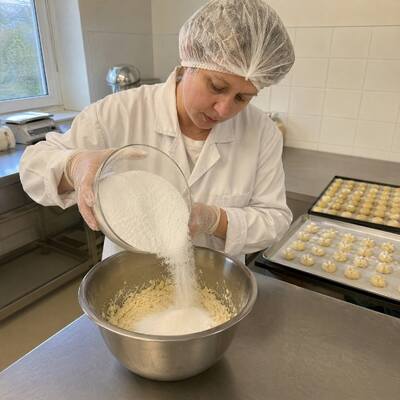
Bakery and cereals. Retains moisture in cakes, biscuits, fillings and cereal bars, limits staling, and lowers water activity so products stay soft longer without added sugar.
Dairy and frozen desserts. Controls ice-crystal growth and freezing point in ice cream and frozen desserts, improves scoopability and freeze-thaw stability, and supports reduced-sugar formulations in flavoured milk and yoghurt-type products.
Beverages and powdered mixes. Contributes sweetness, mouthfeel and body in sugar-free drinks, syrups and instant powder blends; highly soluble and stable in dry premixes.
Oral care and personal care. Humectant and sweetener in toothpaste, mouthwash and dental gels, and a moisture-binding agent in creams, lotions and other formulations. Keeps pastes from hardening in the tube and improves feel on the skin.
Pharmaceutical excipients. Diluent, binder and sweetening vehicle in chewable and wet-granulated tablets, syrups and oral suspensions, where a non-cariogenic, low-moisture-pickup excipient is wanted.
Frozen surimi and seafood. Cryoprotectant that limits protein denaturation during frozen storage, helping maintain water-holding capacity and texture after thawing.
Industrial. Polyol intermediate for surfactants, sorbitan esters and chemical synthesis; humectant where moisture retention is required.
Formulation advantages
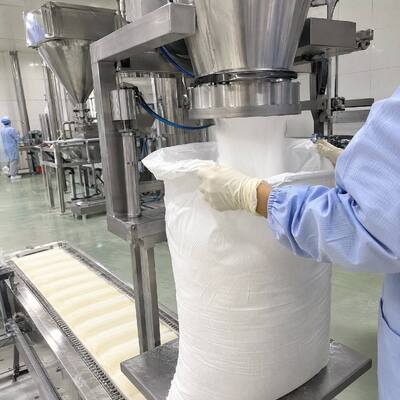
Control from raw material to finished bag. Production starts from starch slurry, passes through liquefaction, hydrogenation and ion-exchange purification, and is followed by crystallisation and drying. Each stage is sampled and held to an internal specification before the material moves on; finished powder is released only after the full certificate battery is complete.
In-house laboratory. Assay, moisture, sugar profile, optical rotation, pH, heavy metals and microbiological counts are tested in the plant laboratory, so a deviation is caught inside the batch rather than at the port.
Clean-room crystallisation and packing. Crystallisation and the packing area are operated as controlled clean zones, which is what keeps total plate count and mould/yeast counts in the low tens rather than at the limit.
Management systems held by the manufacturer
Documentation with every order
Audit and traceability. Batch numbers link finished bags back to production date and raw-material lots. Customers are welcome to visit and audit the plant, and third-party pre-shipment inspection can be arranged at your nominated agency.
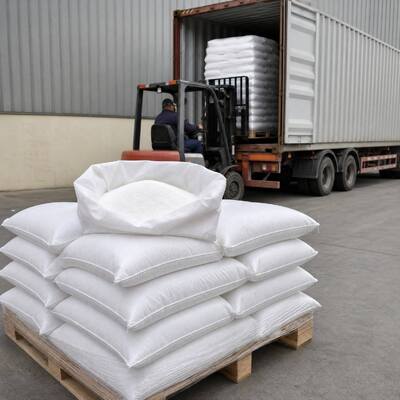
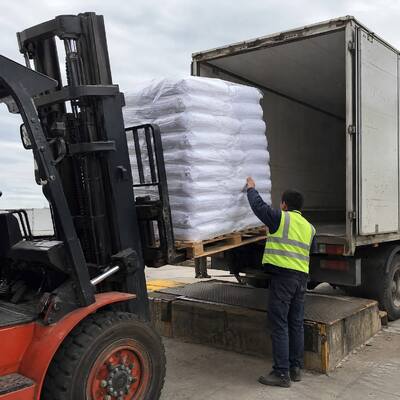
Standard packing. 25 kg net per bag - kraft paper bag with food-grade PE inner liner, stitched or heat-sealed closure, palletised and stretch-wrapped for container loading. Bag weight 25 kg is the export standard and keeps manual handling within normal limits.
Options on request
Loading. 25 kg bags load at approximately 16 - 18 MT per 20' FCL, palletised or floor-loaded to your preference. Container loading photos and weight tickets are provided before departure.
Lead time and terms. Ready stock or short production lead time for standard grade; 7 - 10 working days for volume orders, confirmed against the signed contract. FOB Qingdao / CFR / CIF quoted per destination. Payment by T/T, L/C or D/P as agreed.
Shipping notes. Keep bags dry and undamaged in transit; do not stow alongside strong odours or oxidising materials. Sea freight in vented or dry containers; avoid loading in high-humidity conditions.
Store in a cool, dry, well-ventilated warehouse, away from direct sunlight, moisture and strong odours. Keep bags closed, off the floor and away from walls; observe first-in-first-out rotation. Under these conditions the powder remains free-flowing and stable for a long shelf life, and no caking is expected in the sealed bag.
Handle with normal dust-control practice: local exhaust ventilation at the weighing and dosing point, dust mask and eye protection for operators, and earthing of conveying equipment to avoid static build-up. Spilled powder is slippery on hard floors - clean up dry, not by washing down.