 |
| Place of Origin: | China |
| Brand Name: | Golden Grain |
| Certification: | ISO9001, COA,SDS |
| Model Number: | GLMA-ae1 |
| Minimum Order Quantity: | 100kg |
|---|---|
| Price: | USD1.00-USD1.65/KG FOB QINGDAO, CHINA |
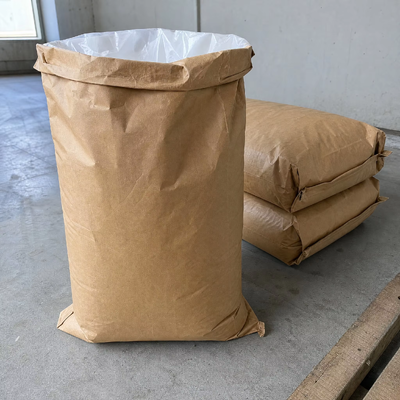
| Packaging Details: | 25kg/Bag with Paper Drum and PE Inner |
| Delivery Time: | 7 - 10 working days |
| Payment Terms: | L/C, T/T, D/P, D/A |
| Supply Ability: | 1000MT per month |
| Product Name: | Maltitol Powder (Crystalline Maltitol, E965) | Synonyms / Other Names: | D-Maltitol, Maltitol, Hydrogenated Maltose, Maltitol Powder E965 |
|---|---|---|---|
| CAS No.: | 585-88-6 | E Number / INS No.: | E965, E965 (i), INS 965 |
| Molecular Formula: | C12H24O11 | Molecular Weight: | 344.31 |
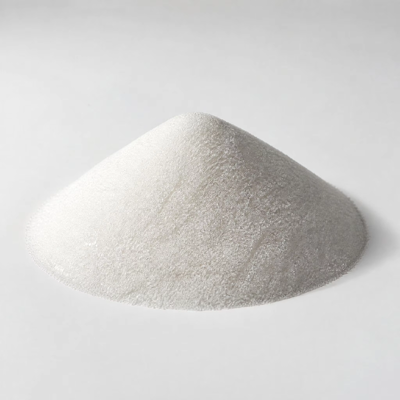
| Appearance: | White Crystalline Powder, Free-Flowing, Granular | Grade: | Food Grade, FCC, BP, USP, EP |
| Assay / Purity: | 99.0% - 101.0%, 99% Min | Particle Size / Mesh: | 20-40 Mesh, 30-80 Mesh, 30-400 Mesh, 80-400 Mesh, Multi Mesh Available |
| Sweetness: | 75-90% Of Sucrose | Calorie: | 2.1-2.4 Kcal/g |
| Cooling Effect: | Negligible Cooling, Low Cooling Effect | Function: | Bulk Sweetener, Sugar Substitute, Sugar Alcohol, Polyol, Humectant, Excipient |
| Properties: | Non-Cariogenic, Tooth-Friendly, Low Calorie, Sugar-Free, Heat Stable, Highly Soluble, Free Flowing, Non-Caking | Certification: | ISO 9001, ISO 22000, HACCP, Halal, Kosher |
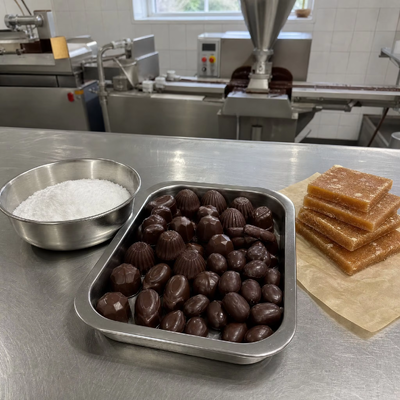
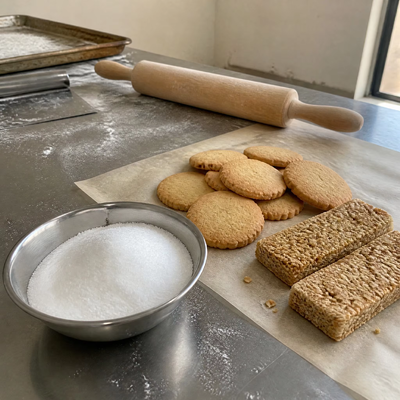
| Application / End Use: | Sugar-Free Candy, Hard Candy, Chewing Gum, Gummy, Jelly, Marshmallow, Nougat, Caramel, Toffee, Fudge, Fondant, Icing, Chocolate, Compound Coating, Panning, Bakery, Biscuit, Cookie, Cake, Cereal Bar, Protein Bar, Granola, Ice Cream, Frozen Dessert, Beverage |
Crystalline maltitol powder (E 965, CAS 585-88-6) manufactured by Qingdao Golden Grain Chemical Co., Ltd, supplied in bulk at food grade and BP/USP/EP grade. Around 75-90% of sucrose sweetness with a clean, sugar-like taste and negligible cooling effect, packed in 25 kg kraft bags for candy, chocolate, chewing gum, bakery and beverage production.
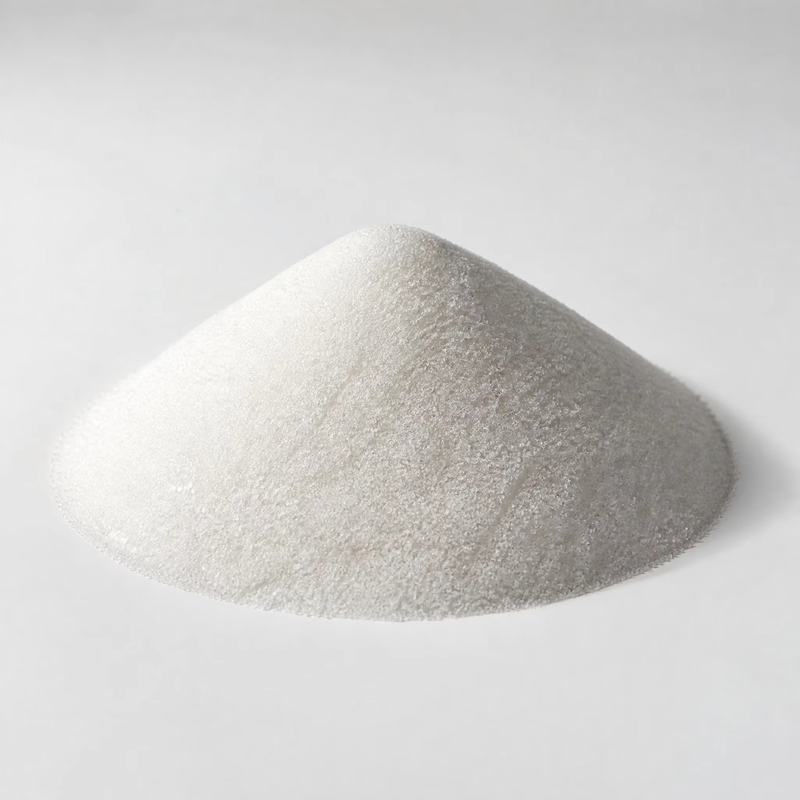
Maltitol powder is a crystalline sugar alcohol produced by hydrogenating high-maltose glucose syrup obtained from starch. The result is a white, free-flowing crystalline powder that behaves much more like sugar than most other polyols do: it carries enough sweetness to be used on its own without a high-intensity partner, it adds real bulk and mouthfeel, it holds moisture, and it controls crystallisation in coatings. Where a formulation is being moved from sucrose to a sugar-free or reduced-sugar base, maltitol is usually the shortest route there.
Two functional differences matter in practice. The cooling effect is negligible, because maltitol has a positive heat of solution, so a hard candy or a chocolate does not finish with the sharp cooling bite that other polyols introduce. And maltitol does not take part in Maillard browning, so baked goods keep the colour the recipe was designed for.
We manufacture this product ourselves. Hydrogenation, crystallisation, drying, milling, screening and bagging run on one site, so the cut approved in a sample is the cut that fills the bag, with no re-packing step in between and no change of specification between the sample and the container.

Route. Starch is hydrolysed to a high-maltose syrup, the syrup is refined and then catalytically hydrogenated, and the resulting maltitol liquor is crystallised, dried, milled and screened to the requested cut. Screening is the last process step before packing, which is why granulation can be held to a tight band rather than sold as an average.
Capacity and lead time. Production capacity is about 1,000 MT per month. Standard orders ship in 7-10 working days; the minimum order is 100 kg, so a formulation trial and a container programme can both be placed on the same specification.
Who we supply. Food and confectionery manufacturers, chocolate and compound-coating producers, chewing gum and gummy plants, bakery and cereal-bar lines, beverage bottlers and dry-mix plants, nutraceutical and pharmaceutical contract manufacturers, private-label brand owners, and importers and distributors who stock sugar alcohols for their own customer base.
Commercial terms. FOB Qingdao, or CIF on request. Payment by L/C, T/T, D/P or D/A. Full container loads and LCL shipments are both arranged, palletised or loaded loose according to the unloading equipment at the receiving warehouse.
| Cut | Typical use | Why this cut |
| 20-40 mesh (granular) | Chewing gum, dry blending, panning, nut and cereal coating | Coarse crystals flow freely, dust less and resist caking in storage |
| 30-80 mesh (standard) | Hard candy, gummies, bakery, general confectionery | Balance of flow and dissolution for most lines |
| 30-400 mesh (fine) | Direct compression, chewable tablets, ice cream, beverages | Dissolves quickly and feeds a die cavity evenly |
| 80-400 mesh (ultrafine) | Fine dispersions, tablet excipients, instant mixes | Fast cold-water dissolution with minimal grit |
| Agglomerated / instant | Spoonable instant mixes, dry beverage premix | Porosity drives wetting and dispersion without lumping |
Grades. Food grade to FCC; BP / USP / EP grade for excipient use; tighter low-microbe and low-conductivity grades available for nutraceutical and pharmaceutical customers. Assay is 99.0% minimum (dry basis) for food grade and 99.0-101.0% on the pharmacopoeial specification. The grade, the cut and the packaging are all fixed on the specification sheet before the order is placed, so nothing is left to interpretation at shipment.
General information
| Item | Detail |
| Trade name | Maltitol Powder |
| Chemical name | D-Maltitol (4-O-alpha-D-glucopyranosyl-D-glucitol) |
| Synonyms | Maltitol, D-Maltitol, Hydrogenated Maltose |
| CAS number | 585-88-6 |
| E number | E 965 (i) |
| INS number | 965 |
| HS code | 3824.90 (confirmed per destination on the shipping documents) |
| Molecular formula | C12H24O11 |
| Molecular weight | 344.31 |
| Standard | BP / USP / EP / FCC |
| Appearance | White crystalline powder or granules, free flowing, no visible foreign matter |
| Allergens | Contains none of the ingredients on the EU allergen list |
| Source | Starch-derived (non-GMO corn starch route available) |
Specification
| Item | Specification |
| Identification | A, B, C, D |
| Assay (dry basis) | 99.0% - 101.0% |
| Related products | ≤ 1% |
| Specific optical rotation | +105.5° to +108.5° |
| Reducing sugars | ≤ 0.1% |
| Water | ≤ 0.5% |
| Sulfates | ≤ 0.01% |
| Heavy metals | ≤ 10 ppm |
| Sulfate | ≤ 100 ppm |
| Chloride | ≤ 50 ppm |
| Conductivity | ≤ 20 µS/cm |
| Sulfated ash | ≤ 0.10% |
| Lead | ≤ 0.5 ppm |
| Nickel | ≤ 0.5 ppm |
| Arsenic | ≤ 0.5 ppm |
| Melting point | 148°C - 151°C |
| Total plate count | ≤ 500 cfu/g (tighter low-microbe grades available) |
| Yeast and mould | ≤ 50 cfu/g |
| Escherichia coli | Absent |
| Salmonella | Absent |
Functional data
| Property | Value |
| Sweetness | About 75-90% of sucrose |
| Energy | About 2.1-2.4 kcal/g (sucrose: 4 kcal/g) |
| Glycaemic index | About 35 |
| Solubility | Very soluble in water, slightly soluble in ethanol |
| Cooling effect | Negligible (positive heat of solution) |
| Maillard reaction | Does not participate; baked colour is retained |
| Cariogenicity | Non-cariogenic; oral bacteria cannot ferment it to the acids that cause decay |
Representative values from a single production lot. Every shipment carries its own lot-specific certificate of analysis.
| Test item | Typical result | Method |
| Description | White crystalline powder, conforms | Visual |
| Identification | A, B, C, D, conforms | Ph. Eur. / USP |
| Assay | 99.42% | HPLC |
| Related products | 0.58% | HPLC |
| Specific optical rotation | +106.5° | Polarimetry |
| Reducing sugars | 0.02% | Titrimetric |
| Water | 0.09% | Karl Fischer |
| Sulfates | Conforms | Gravimetric |
| Heavy metals | < 10 ppm | Colorimetric |
| Sulfate | < 100 ppm | Turbidimetric |
| Chloride | < 50 ppm | Titrimetric |
| Conductivity | 4.8 µS/cm | Conductivity meter |
| Sulfated ash | 0.02% | Gravimetric |
| Lead | 0.01 ppm | ICP-MS |
| Nickel | < 0.5 ppm | ICP-MS |
| Arsenic | < 0.5 ppm | ICP-MS |
| Melting point | 149.5°C | Capillary |
| Total plate count | < 500 cfu/g | Plate count |
| Yeast and mould | < 50 cfu/g | Plate count |
| Escherichia coli | Absent | Plate count |
| Salmonella | Absent | Plate count |
Conclusion: the results conform to the specification.
| Benefit | What it means for your formulation |
| Sugar-like sweetness | Usable as the sole sweetener; no need to blend with a high-intensity sweetener to reach the target profile |
| Negligible cooling effect | Hard candy, chocolate and gum finish clean, without the cooling bite typical of other polyols |
| Real bulk | Replaces the body sucrose gives, so piece weight, texture and mouthfeel hold up |
| Controls crystallisation | Syrups and coatings stay clear; less risk of crystallising in the bottle neck or on the surface |
| Humectant | Keeps biscuits, bars and cakes soft through shelf life |
| Non-cariogenic | Supports tooth-friendly positioning on gum, mints and confectionery |
| About half the calories of sugar | Around 2.1-2.4 kcal/g against 4 kcal/g for sucrose |
| No Maillard browning | Baked goods keep their intended colour |
| Free flowing, low dust | Feeds blenders, extruders and tablet presses at a steady rate |
| Documented every lot | Certificate of analysis matched to the bag code, so incoming inspection has something to check against |
Maltitol is used unblended, which keeps the recipe short and the flavour clean. In panning it builds the shell without the cooling shock other polyols give, and it holds a gloss because the coating resists crystallising.
Replacement is close to one-to-one by weight. A defined granulation disperses into the refiner feed without the dusting a fine cut produces, refining energy stays predictable, and the finished coating keeps a tight particle size distribution, which is what holds surface gloss and snap.
Gum base is charged as coarse crumb, so a sweetener of matching granule size blends in without separating in the mixer and feeds the extruder at a steady rate. In gummies and jelly confectionery, maltitol carries sweetness and body while the hydrocolloid sets the gel, with no reducing sugars to drive unwanted browning during the cook.
Maltitol contributes sweetness, bulk and moisture retention in reduced-sugar biscuits, cakes, cereal bars, granola, protein bars, and in fillings for pie, tart and cheesecake. Because it does not brown, the crust colour stays where the recipe put it.
Marshmallow, nougat, caramel, fudge, fondant and icing all depend on crystallisation control and on bulk that survives a cook. Maltitol covers both, and keeps boiled sweets and toffees from graining during storage.
High solubility means it goes into concentrates and syrups without a heating step, and the resistance to crystallisation keeps bottle necks and caps clean. Used in soft drinks, fruit juice, drink mixes, flavoured milk, yogurt and coffee creamer where sugar is being reduced.
As an excipient and sweetening vehicle in chewable tablets, lozenges, syrups, effervescent and sachet products; as a diluent for direct compression at the 30-400 mesh cut; and as a plasticiser in gelatine capsules. The BP / USP / EP grade is supplied against the pharmacopoeial monograph.
Functions as a humectant and emollient in oral care and cosmetic products, keeping the product moist and pleasant to use without adding sugar.
Every lot is released only after a full battery of physical, chemical and microbiological testing against the BP / USP / EP / FCC specification: assay, related products, specific optical rotation, reducing sugars, water, sulfates, sulfate, chloride, conductivity, sulfated ash, heavy metals, lead, nickel, arsenic, melting point, and microbiological safety including total plate count, yeast and mould, E. coli and Salmonella.
Granulation is checked on a stacked sieve set as a passing fraction and a retained fraction, not as a single average, because a cut that averages correctly can still carry an excess of fines. A magnet and a metal detector sit on the packing line downstream of the screener, and the reject is checked at the start and end of each packing shift. Retained samples are kept from every lot for re-test.
The lot code on the bag, the pallet label and the certificate of analysis are the same string, so a bag in a warehouse can be traced back to the crystallisation that produced it.
Identity:
Standards:
Management systems:
Religious certification:
Allergens:
Documents per shipment:
Regulatory status is stated for the substance as we supply it. The final labelling and claim position, including any sugar-free declaration, depends on the composition of your finished product and remains the responsibility of the brand owner.
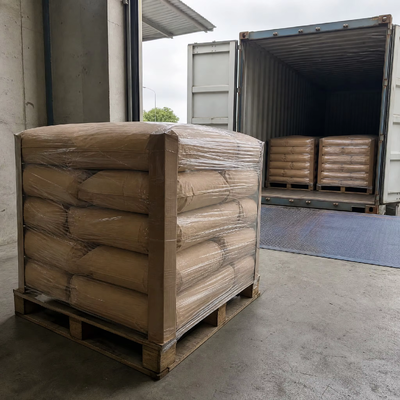
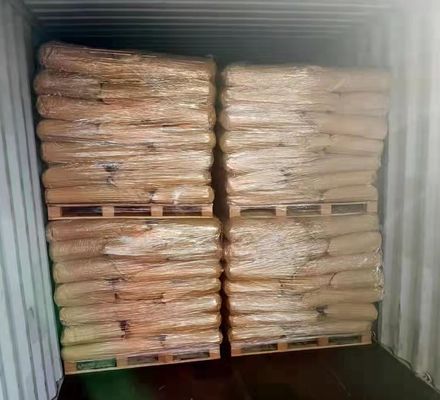
Standard packing. 25 kg kraft paper bag with a food-grade PE inner liner, heat-sealed at the mouth so the powder does not pick up moisture in transit. Bags are stacked 40 to a pallet for a one tonne net pallet, stretch-wrapped and corner-boarded, or loaded loose for hand-stacked containers.
Custom packing. Neutral bags, buyer-printed bags, private-label marking and pallet configuration to suit your unloading equipment. Smaller pack sizes and drum packing can be quoted against a confirmed volume.
Shipping. FOB Qingdao, or CIF to your port. Full container loads and LCL both arranged. Every shipment leaves with a packing list and a certificate of analysis matched to the lot codes on the bags.
Store in a cool, dry, ventilated warehouse, off the floor and away from walls that condense, with the bag mouth closed between withdrawals. Maltitol is not strongly hygroscopic at these granulations, but an open bag in a humid room will still pick up surface moisture and bridge at the fold. Avoid stacking above five bags high, since the powder compacts under sustained load and a compacted bag feeds poorly.
In unopened original packing under dry conditions, the product holds its cut and free flow for 24 months. Rotate stock on a first-in, first-out basis.
One site, one specification. Hydrogenation, crystallisation, drying, screening and bagging are on the same plant. Nothing is re-packed by a third party, so the material in the bag is the material that was tested.
Cut verified on both screens. Passing and retained fractions are recorded separately against the mesh limits, so the granule behaves the same way in your feeder from one delivery to the next.
Capacity behind the order. Around 1,000 MT per month, with a 100 kg minimum, so a trial order and a repeat container programme sit on one specification.
Documentation that matches the bag. Lot codes on the bag, pallet label and certificate of analysis are identical, and the safety data sheet is ready for your import file.
Certified and auditable. ISO 9001, ISO 22000 and HACCP-based control, with Halal and Kosher certificates available, and a factory audit welcome.
OEM and private label. Buyer-printed bags, private-label marking and custom pack sizes for brand owners, distributors and importers building their own line.
Packing to suit the receiving end. Palletised or loose, neutral or printed, with pallet configuration confirmed against your warehouse before loading.
Which mesh should I choose? Choose by process, not by habit. Coarse 20-40 mesh for chewing gum, dry blending and panning, where flow and low dust matter. 30-80 mesh covers hard candy, gummies and general confectionery. Fine 30-400 mesh for direct compression, chewable tablets, ice cream and beverages, where fast dissolution matters. 80-400 mesh where you need the fastest cold-water dispersion.
How does maltitol compare with sorbitol, xylitol and erythritol? Sorbitol is less sweet and noticeably more hygroscopic, which is useful in humectant roles but harder to keep free flowing. Xylitol and erythritol deliver a pronounced cooling effect that suits gum and mints but shows up as an off-note in chocolate and bakery. Maltitol sits closest to sucrose in sweetness and mouthfeel, which is why it is the usual drop-in for sugar in candy, chocolate and bakery.
Can I use it for a sugar-free claim? Maltitol is a polyol, not a sugar, so it does not count toward the sugar figure in most jurisdictions. Whether your finished product may be labelled sugar-free depends on its total sugar content and on the rules of your market, so the declaration is made by you as the brand owner. We supply the composition data you need to make that call.
Do you supply Halal and Kosher certificates? Yes. Halal and Kosher certificates are available with the shipment, and copies can be issued before the order so your compliance file is complete ahead of production.
Can I order a sample or a small trial quantity? Yes. The minimum order is 100 kg, which covers both a bench trial and a short production run, and it is placed on the same specification as bulk orders. Lead time is 7-10 working days.
What documents come with each shipment? Certificate of analysis matched to the lot codes on the bags, packing list, commercial invoice and safety data sheet. A technical specification sheet is available before ordering.
Can you pack under my own brand? Yes. Buyer-printed bags, private-label marking and custom pack sizes are available on confirmed volumes.