 |
| Place of Origin: | China |
| Brand Name: | Golden Grain |
| Certification: | ISO9001, ISO22000, HALAL, KOSHER |
| Model Number: | GLMA-02008 |
| Minimum Order Quantity: | 1300kg |
|---|---|
| Price: | USD450-USD550/MT FOB QINGDAO, CHINA |
| Packaging Details: | 250kg/drum, 270kg/drum, 275kg/drum with new plastic drum, 1300kg IBC drum, flexible bag |
| Delivery Time: | 7 - 10 working days |
| Payment Terms: | L/C, T/T, D/P, D/A |
| Supply Ability: | 1000MT per month |
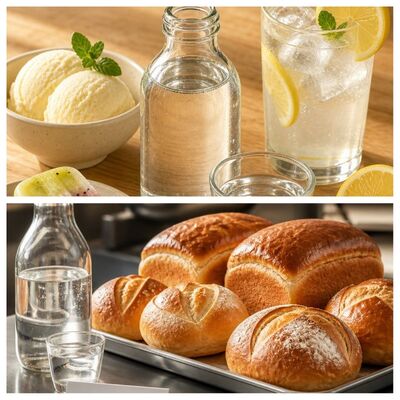
| Grade: | Food Grade / FCC | Application / End Use: | Candy, Chewing Gum, Beverage, Bakery, Ice Cream |
|---|---|---|---|
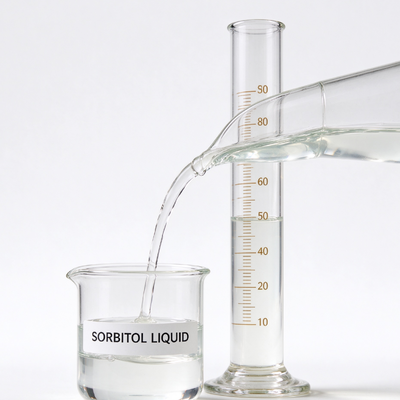
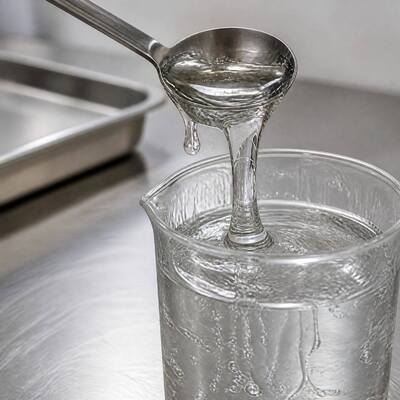
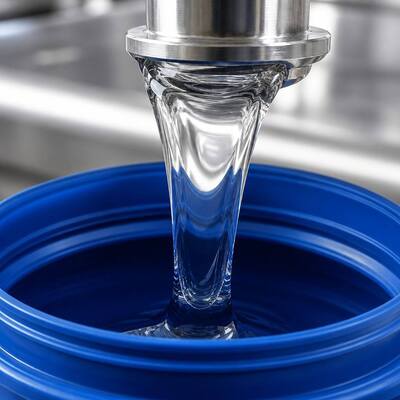
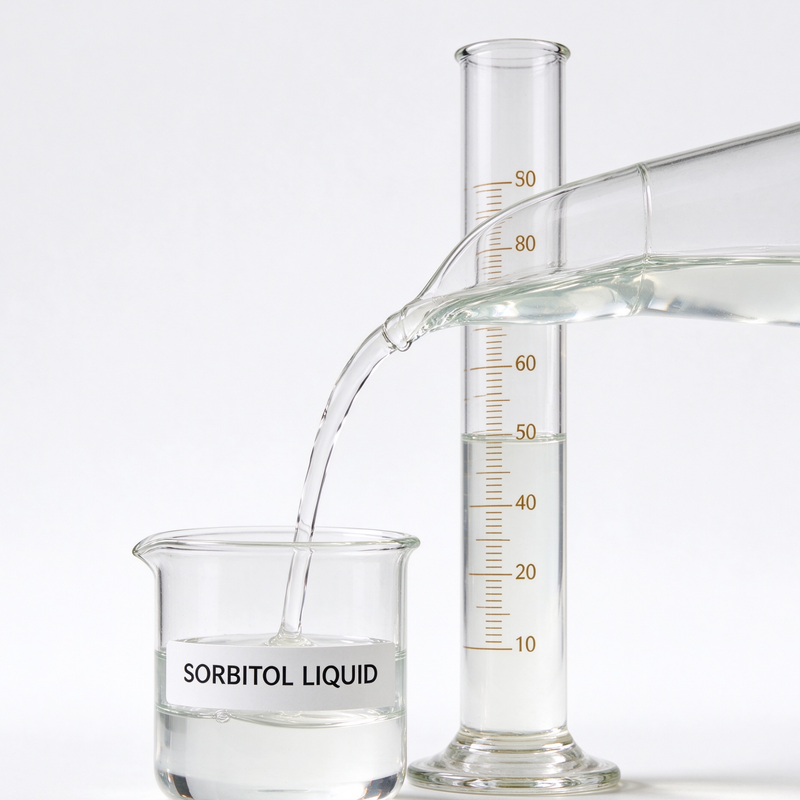
| Function: | Sweetener, Humectant, Moisture Retention | Form & Appearance: | Clear Colorless Syrupy Liquid |
| Concentration: | 70% Dry Solids | Synonyms / Other Names: | D-Glucitol, Sorbitol Solution, Sorbitol Syrup |
| CAS No. / E-Number: | 50-70-4 / E420 (INS 420) | Certification: | ISO 9001, ISO 22000, HACCP, Halal, Kosher |
| Packaging: | 250kg / 275kg Plastic Drum, 1000kg IBC Tank | HS Code: | 38246000 |
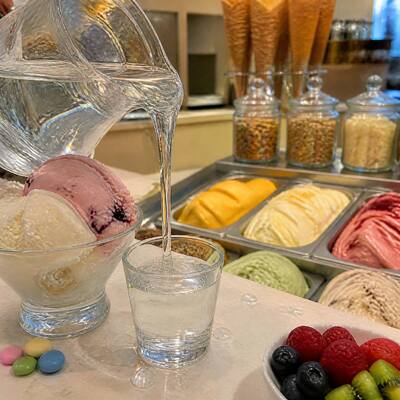
Sorbitol Solution 70% is a clear D-Glucitol syrup at 70% dry substance, carried under CAS 50-70-4 and E420. In a frozen dessert it does the work that sugar alone cannot: it holds the freezing point down so the product stays scoopable, and it interferes with the growth of ice crystals so the texture stays smooth through the cold chain. Freezing point depression is the number that governs the whole formula. A mix that freezes too high comes out of the continuous freezer hard and grainy and is un scoopable at -18 °C; a mix pushed too low will not hold its shape and weeps in the display cabinet. Sorbitol has a lower molecular weight than sucrose and therefore depresses the freezing point more per unit of solids, so it gives control over the serving temperature without piling in more sugar. The same property limits the water available to freeze, which is directly what keeps ice crystal size down. Crystal growth is a time and temperature problem, not just a recipe problem. Ice cream goes through heat shock every time a cabinet door opens or a pallet waits on a dock, and each cycle grows the crystals that were already there. Sorbitol binds water in the unfrozen phase and restricts the diffusion that crystals need to grow, so a product that would turn icy after a few cycles keeps a finer structure. At 2-6% of the mix it also softens the body, adds a clean sweetness without a heavy sugar load, and reduces the sandy feel that appears when lactose or sucrose crystallises in a stored tub. Typical specification. The certificate of analysis issued for each shipment is the governing document. Every lot ships with its own certificate of analysis, and a safety data sheet is provided on request. Dairy ice cream. At 2-6% of the mix it lowers the freezing point and softens the body, so the product scoops cleanly at standard cabinet temperature. Gelato and reduced-fat frozen dessert. Sorbitol carries body where fat has been cut, and limits the iciness that low-fat mixes show after a heat shock cycle. Sorbet and water ice. The syrup controls the frozen water fraction so the product stays spoonable rather than turning into a block. Frozen yoghurt. It buffers the acidity and adds a clean sweetness that does not mask the culture note. Ice cream coatings and inclusions. A small addition keeps a chocolate shell flexible at frozen temperature and limits cracking during transport. Typical addition is 2-6% of the mix, set against the target serving temperature and the solids already contributed by sucrose and glucose syrup.Product Overview

Technical Specification
Parameter
Specification
Product name
Sorbitol Solution 70%
Chemical name / CAS number
D-Glucitol / 50-70-4
E number
E420
Appearance
Clear, colourless, odourless viscous liquid
Assay (D-Glucitol, dry basis)
70.0% min
Dry substance / water
69.0-71.0% / 29.0-31.0%
pH (25 °C)
5.0-7.5
Density (20 °C)
1.285-1.315 g/cm³
Freezing point (70% solution)
Below -20 °C
Grade
Food Grade
Typical Certificate of Analysis
Test item
Typical result
Method
Assay (D-Glucitol)
70.4%
HPLC
Appearance
Clear, colourless
Visual
Dry substance
70.2%
Refractometric
Water content
29.8%
Karl Fischer
pH (25 °C)
6.5
pH meter
Density (20 °C)
1.303 g/cm³
Pycnometer
Reducing sugars
0.04%
Titrimetric
Total heavy metals (as Pb)
< 5 mg/kg
Colorimetric
Arsenic (as As)
< 2 mg/kg
AAS
Total plate count
< 100 cfu/g
Plate count
Yeast and mould
< 10 cfu/g
Plate count
Applications
Release testing for a frozen dessert ingredient focuses on solids accuracy, because the freezing point calculation depends on it. Dry substance is read refractometrically and cross-checked by Karl Fischer, and the two results are reported side by side on the certificate so a formulator can see the actual water load being added to the mix. Colour is read against a fresh reference, since a tint carries into a vanilla or a milk-white base.
Each lot is held for a crystallisation resistance check at 18 °C for 48 hours, which confirms that a drum stored in a cold dairy will not seed before use. Assay is confirmed by HPLC, and reducing sugars, heavy metals, arsenic and microbiological counts are released against specification. The lot record, drum number and retained sample are filed together so a finished batch of frozen dessert can be traced back through the plant.
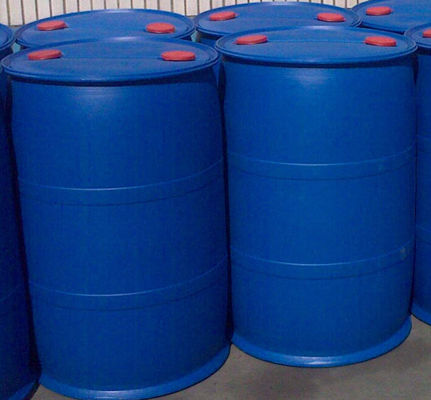
Syrup is filled into 250 kg blue tight-head drums with food-grade lining, sealed bungs and tamper-evident caps, labelled with product, grade, net weight and lot number. Four drums are palletised and shrink-wrapped, and a 20 ft container takes 80 drums as a full load. A 1000 kg food-grade IBC with bottom discharge is available for dairies that dose directly from bulk, and buyer-specific labelling can be applied before the container is sealed.
Store between 15 °C and 30 °C, upright, in a closed and dry area away from freezers, cold store walls and ammonia lines. At low temperature the syrup becomes very viscous and can crystallise at the drum wall, and although the crystals redissolve on warming, the lot should not be dosed half thawed because the solids will not be uniform. Keep bungs sealed, avoid drawing from a drum sitting in a wet room, and keep the drums away from flavour compounds and sanitiser drums.
Solids data built for freezing point work. Dry substance and water are both reported, so the freezing point of a new mix can be calculated before the first trial batch.
Consistent viscosity for dosing. The syrup pumps and meters evenly, which keeps the overrun and the draw temperature steady across a production run.
Cold-store stability. A 48 hour crystallisation resistance check at 18 °C is run on each lot, which matters for drums held in a chilled dairy.
Clean colour and flavour. A colourless, odourless syrup that will not tint a vanilla base or carry an off note into a delicate culture flavour.
Bulk formats. 250 kg sealed drums or 1000 kg food-grade IBC tanks, both suited to a dairy intake bay and a direct dosing line.
Documentation ready for audit. Certificate of analysis, safety data sheet and packing list are issued with the booking, and loading is confirmed per destination