 |
| Place of Origin: | China |
| Brand Name: | Golden Grain |
| Certification: | ISO9001, ISO22000, HALAL, KOSHER |
| Model Number: | GLMA-887 |
| Minimum Order Quantity: | 100kg |
|---|---|
| Price: | USD1.00-USD1.65/KG FOB QINGDAO, CHINA |
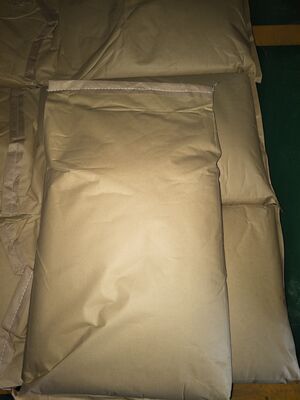
| Packaging Details: | 25kg/Bag with Paper Drum and PE Inner |
| Delivery Time: | 7 - 10 working days |
| Payment Terms: | L/C, D/A, D/P, T/T |
| Supply Ability: | 1000MT per month |
| Grade: | BP / USP / EP / FCC, Food Grade | Application / End Use: | Chewable Tablet, Dietary Supplement Excipient, Confectionery |
|---|---|---|---|
| Function: | Diluent, Sweetening Vehicle, Humectant | Properties: | Non-Cariogenic, Tooth-Friendly |
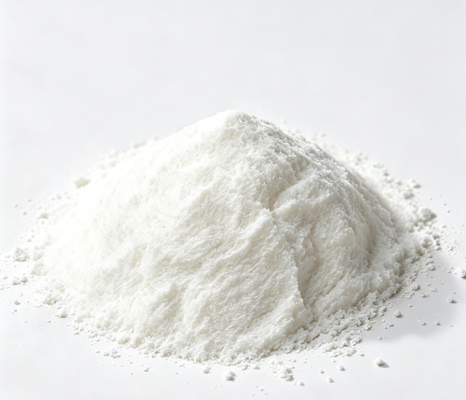
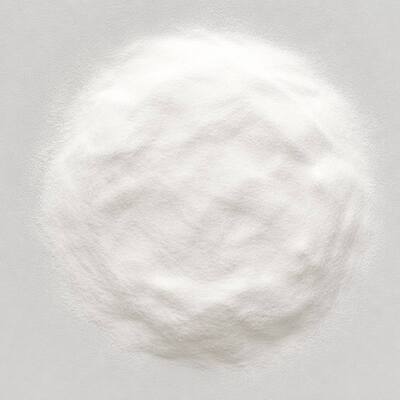
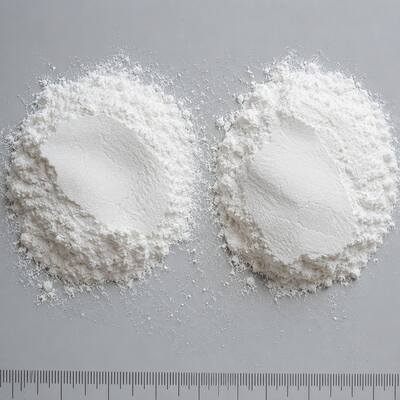
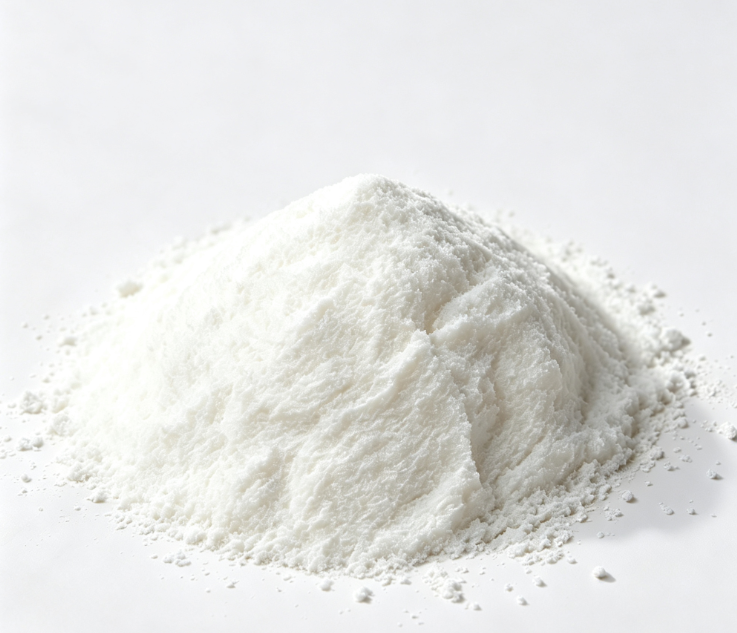
| Particle Size: | 30-400 Mesh | Form & Appearance: | White Crystalline Powder |
| Synonyms / Other Names: | D-Maltitol, Maltitol, Hydrogenated Maltose | CAS No. / E-Number: | 585-88-6 / E965 |
| Molecular Formula: | C12H24O11 | Packaging: | 25kg Kraft Bag With PE Inner Liner |
| Certification: | ISO9001, ISO22000, HALAL, KOSHER | HS Code: | 2940009090 |
| Assay / Purity: | 99.0% - 101.0% (typical 99.3%, HPLC) | Heavy Metals: | 10 Ppm Max (as Pb); Lead / Arsenic / Nickel 0.5 Ppm Max Each |
| Moisture / Water Content: | 0.5% Max (typical 0.16%, Karl Fischer) | Sweetness: | About 90% Of Sucrose; Energy 2.1 Kcal/g |
Maltitol Powder is a crystalline sugar alcohol, D-Maltitol, CAS 585-88-6, E965, supplied to BP, USP and EP monograph requirements at a 30-400 mesh band for tablet excipient use. In a tablet it acts as a diluent that also carries sweetness, and unlike an inert filler it contributes to mouthfeel, to compressibility and to the taste of the finished dose.
Flow is the first property a tableting line notices. A powder that bridges in the hopper or surges through the feed frame produces weight variation that no press setting can correct. Maltitol crystals with a controlled size distribution and a low fines fraction flow steadily, fill the die consistently and hold tablet weight within a narrow band across a long compression run, which is why the mesh band is specified more tightly than for a food grade.
Compaction is the second. Maltitol deforms under pressure and bonds across the particle surfaces, so it forms a hard tablet at moderate compression force and shows little tendency to cap or laminate at the edges. That behaviour makes it useful both in direct compression, where the powder is blended with the active and compressed without granulation, and in wet granulation, where it acts as a binder in the granulating liquid and then as a filler in the dried granule. The third property is taste and mouthfeel in a chewable or dispersible tablet. Maltitol is non-cariogenic, dissolves smoothly on the tongue and leaves no chalky residue, so a tablet that is chewed or dispersed does not need a separate sweetener to be palatable. It is non-reducing as well, which keeps it from reacting with active ingredients that carry an amine group.

| Parameter | Specification |
|---|---|
| Product name | Maltitol Powder |
| Chemical name | 4-O-alpha-D-glucopyranosyl-D-glucitol (D-Maltitol) |
| CAS number / E number | 585-88-6 / E965 |
| Molecular formula | C12H24O11, MW 344.31 |
| Appearance | White crystalline powder, free flowing |
| Assay (dry basis) | 99.0% min |
| Mesh / particle size | 30-400 mesh, 95% min passing 200 mesh |
| Moisture | 0.5% max |
| Grade | BP / USP / EP Grade |
| Packaging | 25kg PP woven bag with PE inner liner |
Typical specification. The certificate of analysis issued for each shipment is the governing document.
| Test item | Typical result | Method |
|---|---|---|
| Assay (D-Maltitol, dry basis) | 99.5% | HPLC |
| Appearance | White crystalline powder, free flowing | Visual |
| Mesh distribution (30-400) | 97% pass 200 mesh | Sieve analysis |
| Moisture | 0.12% | Karl Fischer |
| Reducing sugars | 0.03% | Titrimetric |
| Residue on ignition | 0.02% | Gravimetric |
| Total heavy metals (as Pb) | < 5 mg/kg | Colorimetric |
| Arsenic (as As) | < 1 mg/kg | AAS |
| Total plate count | < 200 cfu/g | Plate count |
| Yeast and mould | < 20 cfu/g | Plate count |
| E. coli | Absent | Plate count |
A certificate of analysis is issued for every batch, and a safety data sheet and technical data sheet are available on request.
Maltitol is blended with the active and a lubricant and compressed without granulation. The controlled particle band limits segregation in the blender, and the powder bonds into a tablet with good hardness at a moderate compression force.
Added to the granulating liquid, maltitol acts as a binder and gives a granule that dries to a free-flowing mass. Tablets pressed from the granule show fewer edge defects and a more even surface than a granule bound with starch paste.
Maltitol supplies the bulk and most of the sweetness in a chewable tablet, dissolving cleanly so the dose does not leave a gritty residue. In a dispersible tablet it helps the tablet break down and disperse in water.
The powder is dry-blended with the acid and carbonate pair, and its low moisture content protects the blend from premature reaction before the tablet reaches the water glass.
Where a botanical extract is dosed at a high percentage, maltitol carries the balance of the tablet weight without adding a strong taste of its own, and it does not react with the polyphenols in the extract.
Compendial grade material is released against the BP, USP and EP monographs, with assay by HPLC, moisture by Karl Fischer, residue on ignition by gravimetry and heavy metals and arsenic tested against the monograph limits. Particle size is measured on a sieve stack at the mill outlet, since the fines fraction governs both flow and compression behaviour. Microbiological counts are run on the finished powder, and the lot is held until every result is inside specification.
Bag, pallet label and certificate carry the same lot code, so a tablet batch record can be matched to the excipient lot it consumed. Retained samples from each lot are kept for re-test if a customer reviews a delivery after a compression issue.
The standard pack is a 25kg PP woven bag with a food-grade PE inner liner, heat-sealed and palletised. Neutral bags or buyer-labelled bags can be printed for bulk orders. Shipments are booked as full container, LCL or mixed loads, with the certificate of analysis, packing list and booking documents issued before the goods are released for loading.
Store in a cool, dry, well-ventilated area, off the floor and away from direct sunlight. Keep the liner sealed until the bag is issued to the dispensary, and reseal a part-used bag at the end of the shift. Do not store next to solvents or volatile actives, because the crystal adsorbs odours. Under these conditions the powder stays within monograph specification for 24 months in unopened packaging.