Product Overview
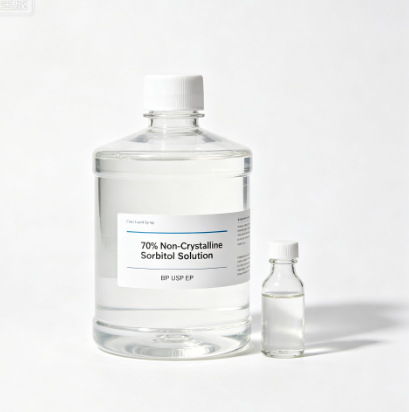
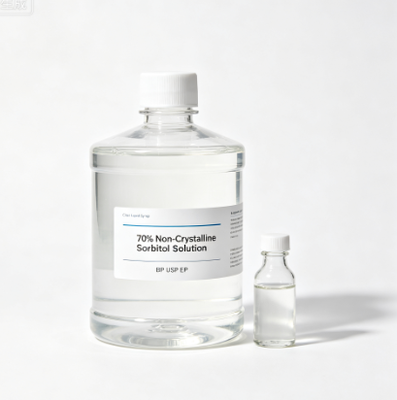
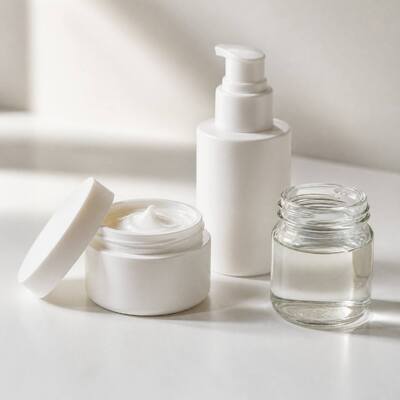
Sorbitol Solution 70% is a clear, colourless and odourless D-Glucitol syrup at 70% dry substance, supplied as Cosmetic Grade under CAS 50-70-4 and E420. In skin care it is a humectant and a skin-conditioning agent, and its commercial advantage over the more familiar humectants is the way it feels on the skin rather than the amount of water it can hold.
Humectancy is a water-binding property, and most humectants do it well in a beaker. The difference shows in use. Glycerin at a high loading draws water into the stratum corneum effectively but leaves a tacky, dragging feel while it dries, and in a humid climate it can pull moisture from the air and leave a film. Sorbitol binds water in the formulation and in the upper skin layers with a lighter, less sticky hand, so a lotion spreads evenly and a serum absorbs without a residue. That is why it is often used as part of a humectant blend, taking over part of the glycerin load and reducing the tack without reducing the moisture-binding capacity of the finished product.
In the formula it also earns its place as a rheology and stability aid. It moderates the viscosity of aqueous gels, improves the freeze-thaw stability of emulsions by limiting water crystallisation, and adds a smooth, cushiony rub-out that makes an emulsion feel more expensive than its oil phase would suggest. It is non-crystallizing, so it does not grain in a cream or leave a grit on the skin, and it is odourless, which keeps a fragrance accord clean.

Technical Specification
| Parameter |
Specification |
| Product name |
Sorbitol Solution 70% |
| Chemical name / CAS number |
D-Glucitol / 50-70-4 |
| E number |
E420 |
| Appearance |
Clear, colourless, odourless viscous liquid |
| Assay (D-Glucitol, dry basis) |
70.0% min |
| Dry substance / water |
69.0-71.0% / 29.0-31.0% |
| pH (25 °C) |
5.0-7.5 |
| Density (20 °C) |
1.285-1.315 g/cm³ |
| Colour (ICUMSA) |
15 IU max |
| Grade |
Cosmetic Grade |
Typical specification. The certificate of analysis issued for each shipment is the governing document.
Typical Certificate of Analysis
| Test item |
Typical result |
Method |
| Assay (D-Glucitol) |
70.4% |
HPLC |
| Appearance |
Clear, colourless |
Visual |
| Colour |
4 IU |
ICUMSA |
| Turbidity |
< 3 NTU |
Nephelometric |
| Dry substance |
70.2% |
Refractometric |
| Water content |
29.8% |
Karl Fischer |
| pH (25 °C) |
6.3 |
pH meter |
| Reducing sugars |
0.04% |
Titrimetric |
| Total heavy metals (as Pb) |
< 5 mg/kg |
Colorimetric |
| Total plate count |
< 100 cfu/g |
Plate count |
| Yeast and mould |
< 10 cfu/g |
Plate count |
A certificate of analysis is issued per lot against the drum number, and a safety data sheet is provided for the cosmetic ingredient file.
Applications
Moisturising lotion and cream. Used at 3-8% as part of the humectant blend, it lifts the water-binding capacity without the tack that a heavy glycerin load leaves on the skin.
Serum and essence. A light, non-greasy humectant that keeps a water-based serum from feeling tight as it dries.
Gel and water gel. It moderates gel viscosity and improves freeze-thaw recovery, so a clear gel does not weep after a cold supply chain.
Cleanser and micellar water. It reduces the tight after-feel of a surfactant system and helps the skin feel conditioned rather than stripped.
Body and hand care. A cushiony rub-out that improves the perceived richness of an emulsion without adding oil.
Typical use is 3-8% of the formula, adjusted against the glycerin load and the target skin feel for the market.
Quality Control
Cosmetic release testing starts with the properties a formulator notices first. Colour is read on the ICUMSA scale, turbidity is read nephelometrically, and odour is checked on a diluted sample, since a syrup with a fermented note will carry into an unscented lotion. Dry substance and water are confirmed by refractometer and Karl Fischer, and a crystallisation resistance check at 18 °C over 48 hours confirms the lot will not grain in a cream jar.
Assay is confirmed by HPLC and pH is recorded because it affects compatibility with preservative systems and with pH-sensitive actives. Heavy metals, arsenic, reducing sugars and microbiological counts are released against the specification, and each lot is held as a retained sample filed under the drum number so a finished cosmetic batch can be traced back to the syrup it used.
Packaging & Shipping
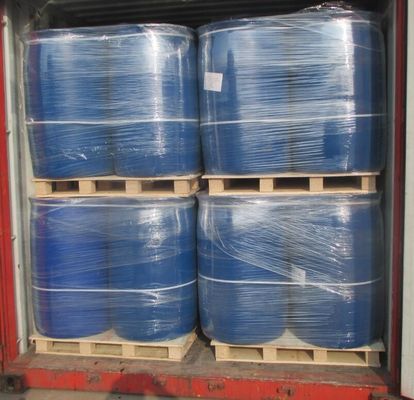
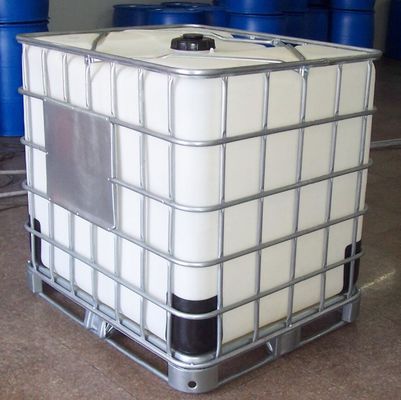
Syrup ships in 250 kg blue tight-head drums with food-grade lining, sealed bungs and tamper-evident caps, labelled with product, grade, net weight and lot number. Drums are stacked four per pallet, shrink-wrapped for sea freight, with 80 drums to a 20 ft container. A 1000 kg food-grade IBC with a bottom discharge valve is available for plants that formulate from bulk, and neutral or buyer-branded labelling is applied before loading.
Storage & Handling
Keep drums closed and upright between 15 °C and 30 °C, away from direct light and from fragrance drums, since an odourless syrup will pick up aromatics through an open bung. Cold storage raises viscosity and can start crystallisation at the drum wall; warm storage slowly develops colour. Because the product carries about 30% water, an open drum in a humid filling room will dilute, which shifts both the solids on the batch sheet and the preservative balance of the finished formula.
Why Choose Us
Low tack, tested in use. The syrup is chosen by formulators for skin feel, and our technical team can advise on the blend ratio against glycerin for a given market climate.
Odourless and colour stable. Colour and odour are checked on every lot, which matters in an unscented or white emulsion.
Non-crystallizing in the jar. A 48 hour resistance check at 18 °C confirms the lot will not grain after a cold supply chain.
Formulation support. Help with humectant blend ratios, freeze-thaw behaviour and viscosity in aqueous gels, based on your existing formula.
Drum and IBC formats. 250 kg sealed drums for smaller fill runs, 1000 kg food-grade IBC tanks for bulk formulation.
Cosmetic documentation. Certificate of analysis, safety data sheet and specification sheet are issued with the shipment for your ingredient file