 |
| Place of Origin: | China |
| Brand Name: | Golden Grain |
| Certification: | ISO9001, ISO22000, HALAL, KOSHER |
| Model Number: | GMAL-104 |
| Minimum Order Quantity: | 100kg |
|---|---|
| Price: | USD1.00-USD1.65/KG FOB QINGDAO, CHINA |
| Packaging Details: | 25kg/bag with kraft and PE INNER |
| Delivery Time: | 7 - 10 working days |
| Payment Terms: | L/C, T/T, D/P, D/A |
| Supply Ability: | 1000MT per month |
| Grade: | Food Grade / FCC | Application / End Use: | Sugar-Free Candy, Beverage, Bakery, Chewing Gum |
|---|---|---|---|
| Function: | Bulk Sweetener, Humectant, Sugar Substitute | Properties: | Non-Cariogenic, Tooth-Friendly, Low Calorie |
| Particle Size: | 30-400 Mesh | Form & Appearance: | White Crystalline Powder, Free-Flowing |
| Synonyms / Other Names: | D-Maltitol, Maltitol, Hydrogenated Maltose | CAS No. / E-Number: | 585-88-6 / E965 |
| Molecular Formula: | C12H24O11 | Packaging: | 25kg Kraft Bag With PE Inner Liner |
| Certification: | ISO9001, ISO22000, HALAL, KOSHER | HS Code: | 2940009090 |
| Assay / Purity: | 99.0% - 101.0% (typical 99.3%, HPLC) | Heavy Metals: | 10 Ppm Max (as Pb); Lead / Arsenic / Nickel 0.5 Ppm Max Each |
| Moisture / Water Content: | 0.5% Max (typical 0.16%, Karl Fischer) | Sweetness: | About 90% Of Sucrose; Energy 2.1 Kcal/g |
Maltitol Powder is a crystalline sugar alcohol, D-Maltitol, CAS 585-88-6, E965, produced to BP, USP and EP monographs and milled to a 30-400 mesh band for direct compression. In a direct compression line the excipient is asked to do several jobs without any granulation step: it must flow into the die, blend evenly with a small dose of active, and compact into a tablet that survives coating and packing.
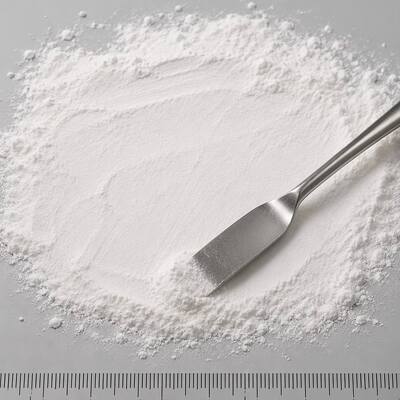
Particle size distribution decides the first two. A blend separates when one component is much coarser than the others, and a low-dose active weighing a fraction of a percent of the tablet will not stay evenly distributed through a powder that flows and vibrates differently from itself. A tight 30-400 mesh band with a controlled fines fraction lets maltitol move with the active and the lubricant rather than past them, so blend uniformity holds from the head of the bin to the last tablet of the run.
Flow is the second consequence of the same property. A free-flowing crystal with a narrow band fills the die at a consistent weight, which keeps tablet weight and hardness inside the control limits without constant adjustment at the press. Maltitol also has a low tendency to adhere to punch faces, so a long run does not build up the film that causes sticking and picking on polished tooling. Compaction is the third. Maltitol deforms plastically under pressure and bonds across particle surfaces, so it reaches a serviceable hardness at a moderate compression force and resists capping and lamination when the press runs fast. Where a formula needs more binding strength, it works as a dry binder alongside a small share of a conventional excipient, and in a chewable or dispersible tablet it also carries the taste.

| Parameter | Specification |
|---|---|
| Product name | Maltitol Powder |
| Chemical name | 4-O-alpha-D-glucopyranosyl-D-glucitol (D-Maltitol) |
| CAS number / E number | 585-88-6 / E965 |
| Molecular formula | C12H24O11, MW 344.31 |
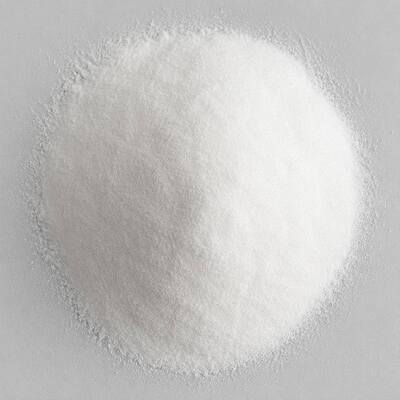
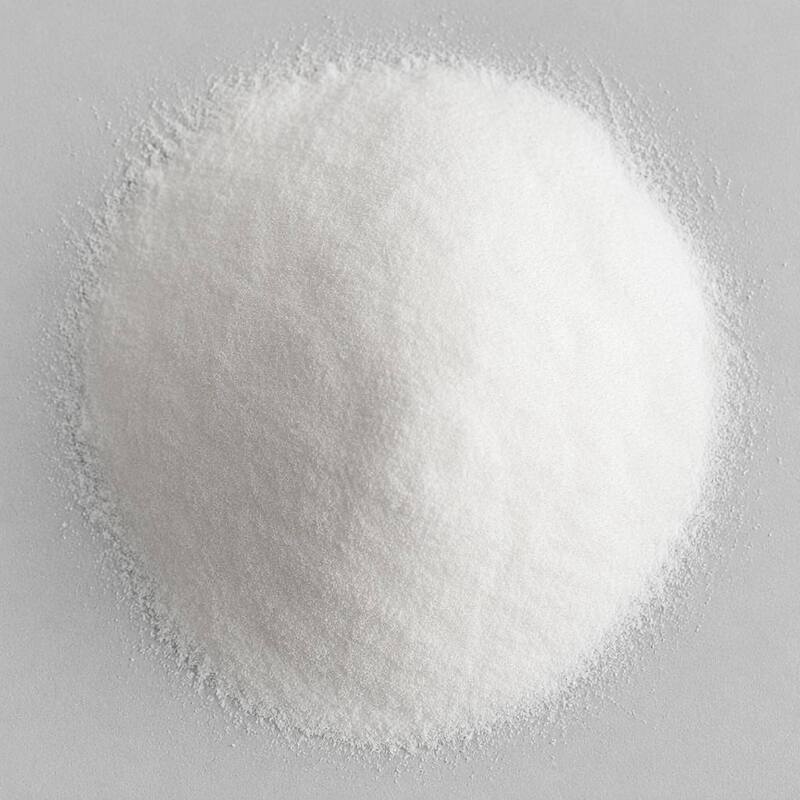
| Appearance | White crystalline powder, free flowing, non-sticky |
| Assay (dry basis) | 99.0% min |
| Mesh / particle size | 30-400 mesh, 95% min passing 200 mesh |
| Moisture | 0.5% max |
| Grade | BP / USP / EP Grade |
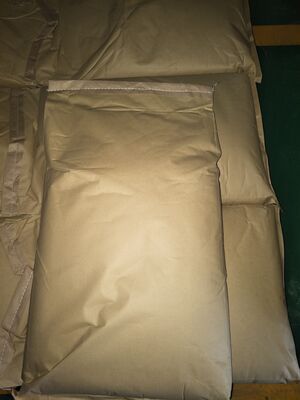
| Packaging | 25kg PP woven bag with PE inner liner |
Typical specification. The certificate of analysis issued for each shipment is the governing document.
| Test item | Typical result | Method |
|---|---|---|
| Assay (D-Maltitol, dry basis) | 99.4% | HPLC |
| Appearance | White crystalline powder, free flowing | Visual |
| Mesh distribution (30-400) | 96% pass 200 mesh | Sieve analysis |
| Moisture | 0.13% | Karl Fischer |
| Reducing sugars | 0.03% | Titrimetric |
| Residue on ignition | 0.02% | Gravimetric |
| Total heavy metals (as Pb) | < 5 mg/kg | Colorimetric |
| Arsenic (as As) | < 1 mg/kg | AAS |
| Total plate count | < 200 cfu/g | Plate count |
| Yeast and mould | < 20 cfu/g | Plate count |
| E. coli | Absent | Plate count |
A certificate of analysis is issued for each batch, and a safety data sheet and particle size report are available on request.
Maltitol is blended with the active and a lubricant and compressed in a single step. The narrow band limits segregation in the bin, so a low-dose active stays evenly distributed to the last tablet of the batch.
Where the active is a small fraction of the tablet weight, the excipient has to match it in flow rather than dominate it. A controlled fines fraction keeps the blend from separating during transfer and die fill.
The same flow behaviour suits a dosator or a tamping pin filler, where a consistent powder bed is what keeps fill weight inside tolerance across a shift.
Because maltitol sweetens as it fills, a sugar free tablet can be built without a separate sweetener, and the compacted matrix still breaks down in the mouth without a gritty residue.
Low moisture is critical in an acid-carbonate system, and maltitol at 0.5% maximum keeps the blend from reacting before the tablet reaches water. It also compacts into a tablet that dissolves without leaving a residue in the glass.
Direct compression grade is released on the monograph tests plus a particle size measurement at the mill, because the fines fraction is what governs segregation and die fill. Assay runs by HPLC, moisture by Karl Fischer, residue on ignition by gravimetry, and heavy metals and arsenic are tested to the monograph limits. Microbiological counts are run on the finished powder and the lot is quarantined until every result is inside specification.
Bag, pallet label and certificate share one lot code, so a tableting batch record can be tied to the excipient lot that was consumed. Retained samples from each lot are kept for re-test.
The powder is filled into 25kg PP woven bags with a food-grade PE inner liner, heat-sealed and palletised. Plain bags or buyer-branded print are available for bulk orders. Shipments are booked as full container, LCL or mixed loads depending on volume, with booking documents, packing list and certificate of analysis issued before the container is released.
Keep bags in a cool, dry, ventilated store, away from direct sunlight and from any wall that condenses. Reseal a part-used bag at the end of the shift so the powder does not pick up water and lose its flow, and store it away from solvents or volatile actives. Sealed bags remain within monograph specification for 24 months.