 |
| Place of Origin: | China |
| Brand Name: | Golden Grain |
| Certification: | ISO9001, ISO22000, HALAL, KOSHER |
| Model Number: | GMAL-1419 |
| Minimum Order Quantity: | 100kg |
|---|---|
| Price: | USD1.00-USD1.65/KG FOB QINGDAO, CHINA |
| Packaging Details: | 25kg/bag with kraft and PE INNER |
| Delivery Time: | 7 - 10 working days |
| Payment Terms: | L/C, T/T, D/P, D/A |
| Supply Ability: | 1200MT per month |
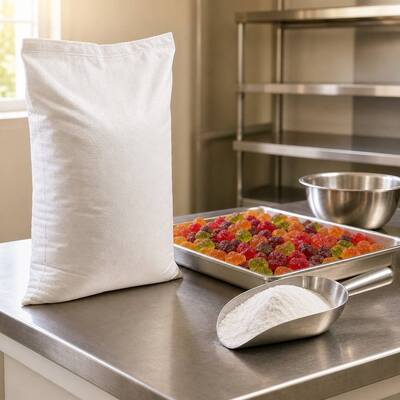
| Grade: | Food Grade / FCC | Application / End Use: | Confectionery, Bakery, Beverage, Ice Cream |
|---|---|---|---|
| Function: | Sweetener, Humectant, Bulking Agent | Particle Size: | 20-60 Mesh |
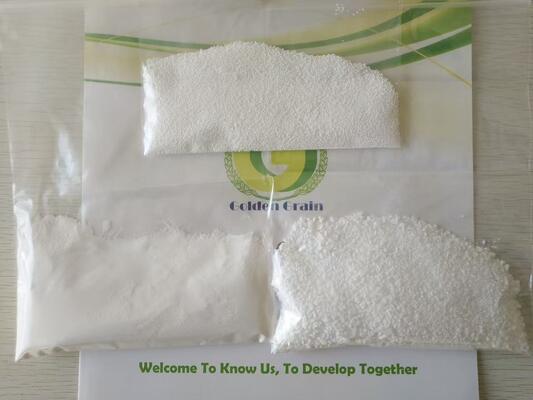
| Form & Appearance: | White Crystalline Powder, Free-Flowing, Non-Caking | Synonyms / Other Names: | D-Glucitol, D-Sorbitol, Sorbit |
| CAS No. / E-Number: | 50-70-4 / E420 (INS 420) | Certification: | ISO 9001, ISO 22000, HACCP, Halal, Kosher |
| Packaging: | 25kg Kraft Bag With PE Inner Liner | HS Code: | 29054400 |
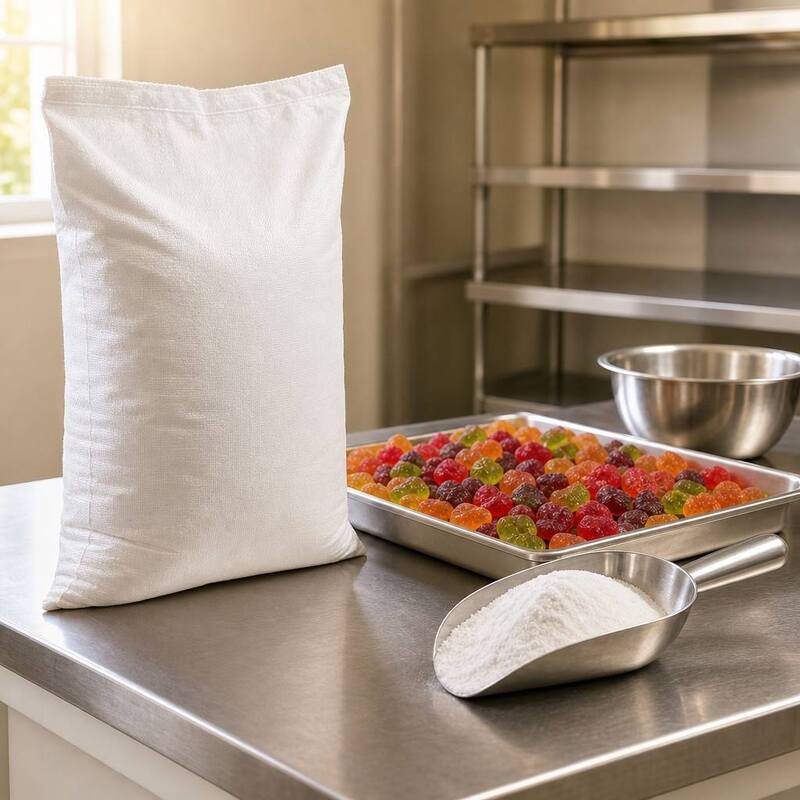
Our Sorbitol Powder (D-Glucitol, CAS 50-70-4, INS No. 420(i)) is a food-grade polyol obtained by catalytic hydrogenation of D-glucose. It is a white, hygroscopic, crystalline powder or granular form with a faint, sweet taste, approximately 50–60% as sweet as sucrose. It is very soluble in water and slightly soluble in ethanol, with a melting range of 88–102°C. Sorbitol occurs naturally in various fruits but is manufactured commercially through hydrogenation to ensure consistent purity and particle characteristics.
As a food additive, sorbitol functions as a sweetener, humectant, sequestrant, texturizer, stabilizer, and bulking agent. Its humectant properties allow it to retain moisture and prevent products from drying out, making it valuable in baked goods, confectionery, and oral care products. In pharmaceutical applications, it is used as a tablet diluent in wet granulation and direct compression, particularly in chewable tablets where its sweet taste and pleasant mouthfeel are advantageous; it also acts as a plasticizer for gelatin in capsule formulations and prevents crystallization in syrups. This grade is offered with FOB quotation for export buyers, packed in 25 kg PP bags, and available for bulk supply.
JECFA has evaluated sorbitol and assigned an ADI “not specified”, indicating no numerical limit is deemed necessary based on available toxicological data. The product meets JECFA specifications: total glycitols not less than 97.0% and D-sorbitol not less than 91.0% on the anhydrous basis, with typical purity for this grade at ≥99%. Key quality parameters include moisture ≤1.0% (Karl Fischer), reducing sugars ≤0.3%, total sugars ≤1.0%, lead ≤1 mg/kg, and nickel ≤2 mg/kg.

| Parameter | Specification |
|---|---|
| Product name | Sorbitol Powder, food grade |
| Chemical name | D-Glucitol |
| CAS number | 50-70-4 |
| E number | E420 |
| Appearance | White crystalline powder, free flowing |
| Assay (dry basis) | 99.0% min |
| Mesh | 80-120, other cuts on request |
| Moisture | 0.5% max |
| Packaging | 25kg PP woven bag with PE inner liner |
| Price basis | FOB, named Chinese port, per metric tonne |
Typical specification. The certificate of analysis issued for each shipment is the governing document.
| Test item | Typical result | Method |
|---|---|---|
| Assay (D-Glucitol) | 99.2% | HPLC |
| Appearance | White crystalline powder | Visual |
| Mesh distribution (80-120) | 96% pass | Sieve analysis |
| Moisture | 0.17% | Karl Fischer |
| Reducing sugars | 0.05% | Titrimetric |
| Residue on ignition | 0.02% | Gravimetric |
| Total heavy metals (as Pb) | < 5 mg/kg | Colorimetric |
| Arsenic (as As) | < 2 mg/kg | AAS |
| Total plate count | < 1000 cfu/g | Plate count |
| Yeast and mould | < 100 cfu/g | Plate count |
A certificate of analysis is issued for every batch, and a safety data sheet is available on request.
Sweetener
Sorbitol provides a mild, clean sweetness at roughly 50–60% the intensity of sucrose. It is suitable for reduced-calorie and sugar-free formulations and is non-cariogenic. Its negative heat of solution produces a cooling sensation on the palate, valued in chewing gum, mints, and oral care products.
Humectant
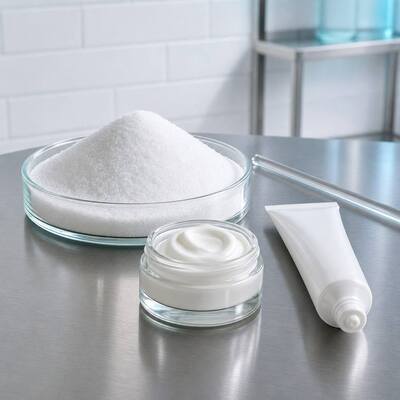
As a non-volatile polyol, sorbitol absorbs and retains moisture, preventing products from drying out, cracking, or losing texture during storage. This function is critical in baked goods, confectionery, toothpaste, and cosmetic creams.
Bulking Agent, Stabilizer, and Crystallization Inhibitor
Sorbitol contributes body and mouthfeel without excessive sweetness. It inhibits sugar crystallization in syrups and confections, maintaining smooth texture and appearance. JECFA lists its functional uses as sweetener, humectant, sequestrant, texturizer, stabilizer, and bulking agent.
Distributor and trader stock orders. A buyer holding stock across several customers wants a price that is stable across a container and a document set that works for more than one destination. FOB terms with a fixed validity window let that buyer price the ocean leg separately through a forwarder of their own choosing.
Buyers with their own freight contracts. Where a purchasing team already holds a service contract with a carrier, taking the goods FOB keeps the freight under their control and removes the supplier's freight margin from the landed comparison. This is the usual arrangement for importers moving several containers a month.
Contract manufacturing and co-packing. A confectionery or beverage co-packer sourcing against a customer's bill of materials needs a per-tonne figure that can be dropped into a cost sheet. Quoting FOB per metric tonne, with palletisation and mesh cut stated, makes that figure usable without a second round of correspondence.
Trial and mixed shipments. A first order is often one pallet alongside other ingredients. The same quotation structure applies to LCL and mixed loading, with the port charges stated separately so the buyer can see what the consolidation actually costs.
Annual supply agreements. For volume commitments, the quotation can be split into a fixed conversion component and a feedstock-linked component, so both sides can see which part of the price is subject to review.
Nothing about the commercial terms changes the release testing. Assay by HPLC, moisture by Karl Fischer, mesh by sieve analysis, heavy metals and arsenic against the specification limit, and microbiological counts on the finished powder are all completed before a batch is allocated to a shipment. The certificate is issued against the batch actually loaded, not against a stock specification, which matters when a contract runs across several production campaigns.
Loading is supervised against the booking: bag count, pallet count, seal number and container number are recorded and matched to the packing list before the container leaves for the port, so a shortfall or a substitution is caught at the plant rather than at destination.
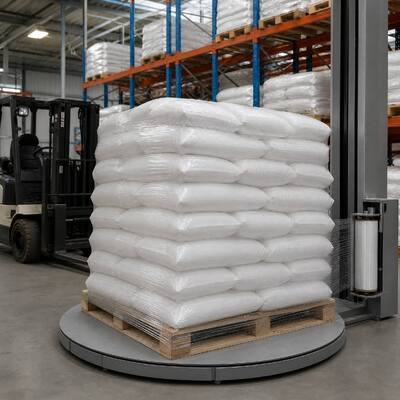
Goods are quoted in 25kg PP woven bags with PE inner liners, either floor loaded or palletised and stretch-wrapped, and the quotation states which basis applies because the two carry different payloads. A 20ft container takes roughly 17 tonnes on pallets against 22 tonnes floor loaded, and a 40ft container takes proportionally more; the exact figure is confirmed per order against the bag weight and the port's handling rules. Loading ports are nominated in the quotation, typically a main east coast port, with the inland leg running no further than that port. Shipping marks, neutral bags and buyer-labelled bags are available, and booking documents are issued before dispatch.
Warehouse the bags under cover, on pallets, below 35°C and away from strong odours, with the liner closed on any part-used bag. For FOB shipments the goods are held at the plant or a port warehouse until the vessel is confirmed, and the storage conditions at both points are the same; a container that sits on the dock in the sun before loading is the usual cause of condensation damage, so loading is scheduled against the vessel call rather than against the cut-off. Stored that way, unopened bags carry a 24-month free-flow life.
99% Purity, JECFA-Backed
The ≥99% assay exceeds JECFA minimum requirements, with full batch COA documentation covering moisture, reducing sugars, heavy metals, and nickel to support your quality audits and regulatory filings.
25 kg PP Bag Standard, Bulk Supply Ready
The 25 kg PP bag format suits both trial runs and production-scale purchasing. Jumbo bag options and FCL-loading capacity support volume buyers and contract supply arrangements.
Documented Safety Profile
JECFA ADI “not specified” provides confidence for food and pharmaceutical applications, supported by comprehensive specification limits for moisture, sugars, and heavy metals.
Contact us with your target quantity and destination port for a firm FOB quotation.