 |
| Place of Origin: | China |
| Brand Name: | Golden Grain |
| Certification: | ISO9001, COA,SDS |
| Model Number: | GLMA-01771 |
| Minimum Order Quantity: | 100kg |
|---|---|
| Price: | USD850-USD950/MT FOB QINGDAO, CHINA |
| Packaging Details: | 25kg/Bag with Paper Drum and PE Inner |
| Delivery Time: | 7 - 10 working days |
| Payment Terms: | L/C, T/T, D/P, D/A |
| Supply Ability: | 1000MT per month |
| Origin: | China | Bulkdensity: | 0.6 - 0.8 G/cm³ |
|---|---|---|---|
| Storage Condition: | Store In A Cool, Dry Place | Phvalue: | 5.0 - 7.0 (10% Solution) |
| Active Ingredient: | Sorbitol | Standard: | BP, USP, EP, FCC |
| Moisture Content: | ≤ 0.5% | Flashpoint: | Non-flammable |
| Cas No: | 50-70-4 | Molecular Formula: | C₆H₁₄O₆ |
| Type: | Pharmaceutical Grade, BP, USP, EP, FCC | Taste: | Sweet |
| Applications: | Food Additive, Cosmetic Ingredient |
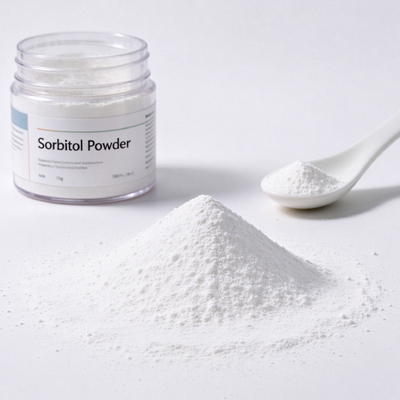
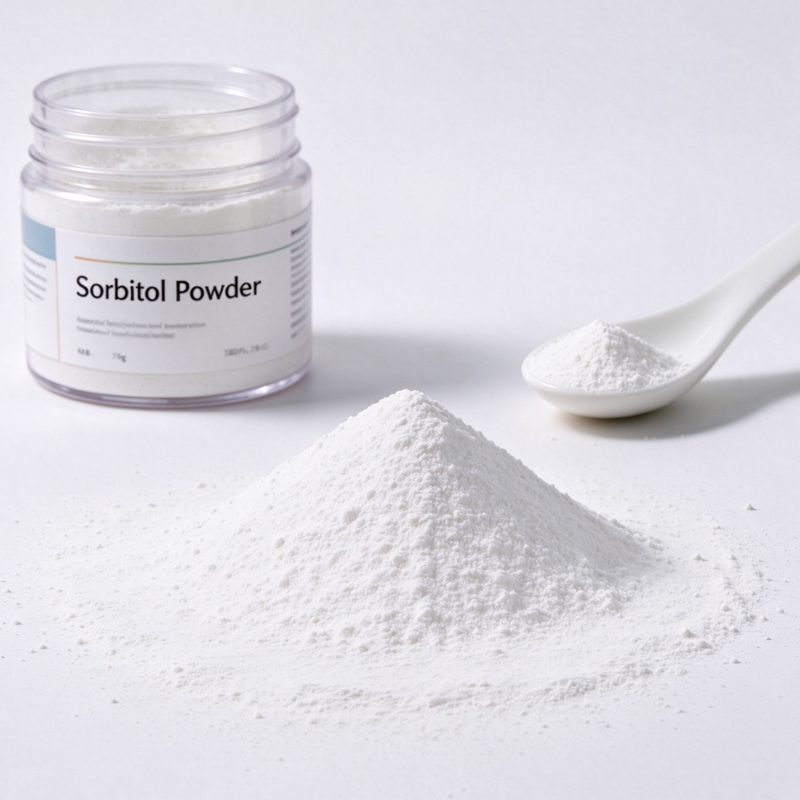
Our Sorbitol Powder is a food-grade polyol (D-Glucitol, CAS 50-70-4, INS No. 420(i)) manufactured by catalytic hydrogenation of glucose. It is a white, hygroscopic, crystalline powder with a faint sweet taste, approximately 50–60% as sweet as sucrose. This grade is specifically positioned as a sugar substitute for low-calorie and reduced-sugar formulations, where it delivers bulk, sweetness, and moisture control without the caloric load of sucrose.
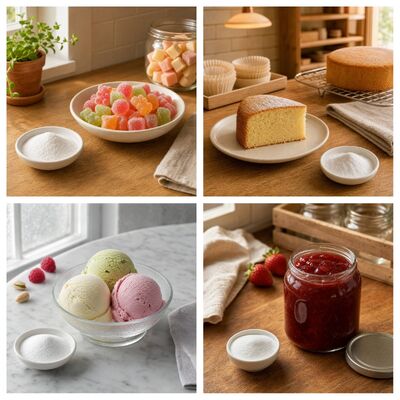
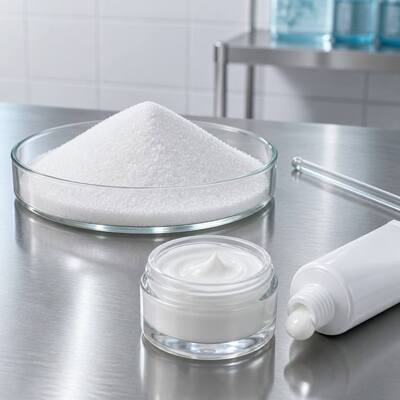
Sorbitol is one of the most widely used polyols in the food industry. Its major food applications include sugar-free candies, cough drops, mints, and sugarless chewing gums, where it functions as a non-cariogenic sweetener and imparts a cooling sensation due to its negative heat of solution. It is also extensively used in toothpaste as a humectant and plasticizer, and in sugar-free bakery products, fillings, frostings, and frozen desserts to replace sugar while controlling moisture and inhibiting crystallization.
As a sugar substitute, sorbitol is suitable for diabetic-friendly products because it does not raise blood glucose concentrations or require insulin for metabolism. It is not digested by mouth bacteria, making it tooth-friendly and non-cariogenic. The product meets JECFA specifications: total glycitols not less than 97.0% and D-sorbitol not less than 91.0% on the anhydrous basis. Typical purity for this grade is ≥99%, with moisture ≤1.0% (Karl Fischer), reducing sugars ≤0.3%, total sugars ≤1.0%, lead ≤1 mg/kg, and nickel ≤2 mg/kg.

| Parameter | Specification |
|---|---|
| Product name | Sorbitol Powder, food grade |
| Chemical name | D-Glucitol |
| CAS number | 50-70-4 |
| E number | E420 |
| Appearance | White crystalline powder, free flowing |
| Assay (dry basis) | 99.0% min |
| Mesh | 80-120 |
| Moisture | 0.5% max |
| Relative sweetness | 0.55-0.6 against sucrose at 10% solids |
| Energy | 2.4 kcal/g |
Typical specification. The certificate of analysis issued for each shipment is the governing document.
| Test item | Typical result | Method |
|---|---|---|
| Assay (D-Glucitol) | 99.2% | HPLC |
| Appearance | White crystalline powder | Visual |
| Mesh distribution (80-120) | 96% pass | Sieve analysis |
| Moisture | 0.16% | Karl Fischer |
| Reducing sugars | 0.05% | Titrimetric |
| Residue on ignition | 0.02% | Gravimetric |
| Total heavy metals (as Pb) | < 5 mg/kg | Colorimetric |
| Arsenic (as As) | < 2 mg/kg | AAS |
| Total plate count | < 1000 cfu/g | Plate count |
| Yeast and mould | < 100 cfu/g | Plate count |
A certificate of analysis is issued for every batch, and a safety data sheet is available on request.
Calorie Reduction Without Sacrificing Bulk
Sorbitol replaces sugar on a roughly gram-for-gram basis in many formulations, maintaining the bulk and mouthfeel that sucrose provides while reducing calories. Unlike high-intensity sweeteners that require bulking agents to compensate for missing volume, sorbitol functions as both sweetener and bulking agent simultaneously.
Low Glycemic Response
Sorbitol is metabolized independently of insulin and produces a lower glycemic response than sucrose, making it suitable for diabetic-friendly and low-glycemic product development.
Tooth-Friendly
Sorbitol is not fermented by oral bacteria and does not lower plaque pH, supporting “tooth-friendly” and “non-cariogenic” claims on sugar-free products.
Cooling Sensation
The negative heat of solution of sorbitol creates a distinct cooling effect on the palate, which is particularly valued in chewing gum, mints, and breath-freshening confectionery.
Humectancy and Shelf-Life Extension
Sorbitol retains moisture and prevents products from drying out, extending shelf life in baked goods, confectionery, and pharmaceutical syrups. It also inhibits sugar crystallization in syrups and confections
Reduced-sugar beverages. Sorbitol supplies the solids that a high-intensity sweetener leaves out, so the drink holds body and carries flavour through the finish. Typical use sits at 2-6% in a still drink, adjusted against the acid level, since sorbitol reads sweeter as pH falls.
Sugar-free confectionery. In chewing gum and soft candy sorbitol provides the bulk that gives the piece its chew and its piece weight, while contributing about 60% of the sweetness. The rest is made up with a high-potency sweetener, and the cooling effect is usually an asset in mint and fruit profiles.
Tabletop sweetener blends. A sachet needs the volume of a teaspoon of sugar to measure like one. Sorbitol at 80-120 mesh blends evenly with a high-potency sweetener, dissolves without grit and fills the sachet at a weight the consumer recognises.
Baked goods with reduced sugar. Replacing part of the sugar with sorbitol keeps the crumb moist and the volume up, but the loss of browning has to be corrected in the bake profile or with a small residual sugar addition.
Ice cream and frozen desserts. Sorbitol depresses the freezing point less than sucrose at equal solids, which gives a firmer, slower-melting product, and it suppresses ice crystal growth during storage.
Sweetness equivalence is a formulation property, not a batch property, so the release testing focuses on what changes it: assay, moisture, particle size and the reducing sugar content that would shift flavour on storage. Assay is confirmed by HPLC and moisture by Karl Fischer on every batch, and the powder is tasted against a retained reference from the approved sample before the batch is released for food use.
The reference sample is what protects a buyer across deliveries. A sensory panel compares the new batch against the retained reference in a plain aqueous solution at fixed solids, so a drift in the sweetness profile shows up before the powder reaches a customer's pilot line rather than after a production run.
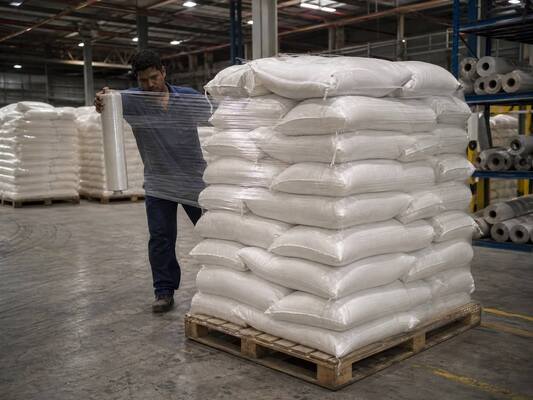
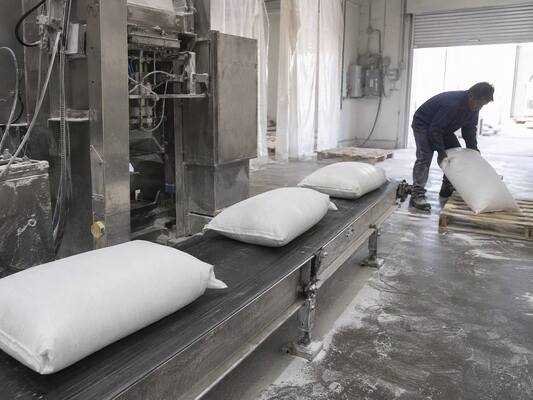
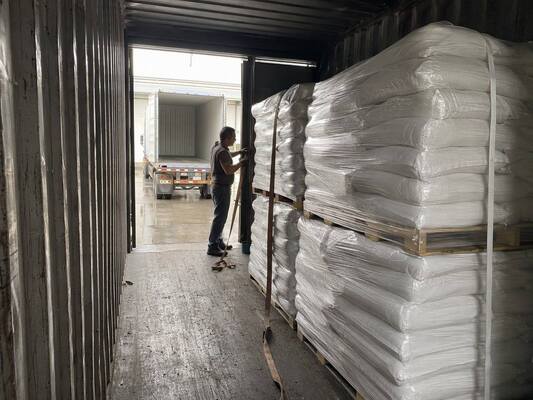
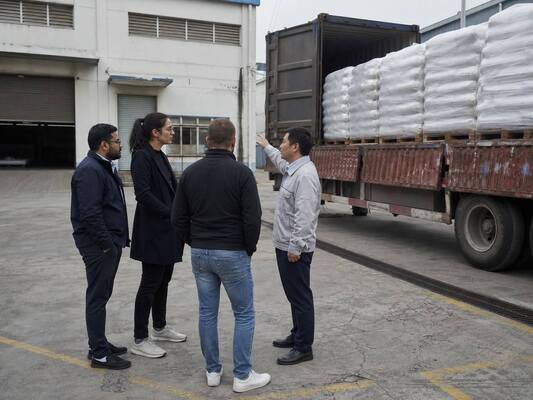
Standard packing is a 25kg PP woven bag with an inner PE liner, heat-sealed, palletised and stretch-wrapped on request. Neutral or buyer-labelled bags are available for bulk orders, and small-pack formats for tabletop or sachet production can be quoted separately. Container loading is confirmed per order against the destination port and the palletisation chosen. Full container, LCL and mixed shipments are handled, and the certificate of analysis and packing list are issued before dispatch.
Keep the powder in a dry, ventilated store below 35°C and below 65% relative humidity, on pallets, off the floor and away from aromatic goods, since sorbitol takes up foreign odours that would show in a bland beverage or a white confection. Reseal part-used bags and keep the liner folded closed. Sealed bags keep their flow, and the sweetness profile, for 24 months.
Sugar Substitute Grade——formulated and positioned for low-calorie, reduced-sugar, and diabetic-friendly product development. The 25 kg PP bag format is suitable for both trial runs and bulk production, with custom jumbo bag options for high-volume manufacturers.
Consistent Purity——≥99% assay and tight control of moisture, reducing sugars, and heavy metals ensure predictable performance in sensitive formulations.
Bulk Supply Reliability——stable production capacity and flexible packaging support repeat orders, contract manufacturing, and private-label projects.
Contact us for samples, COA, and bulk pricing.