 |
| Place of Origin: | China |
| Brand Name: | Golden Grain |
| Certification: | ISO9001, COA,SDS |
| Model Number: | GLMA-013009 |
| Minimum Order Quantity: | 100kg |
|---|---|
| Price: | USD1.00-USD1.65/KG FOB QINGDAO, CHINA |
| Packaging Details: | 25kg/Bag with Paper Drum and PE Inner |
| Delivery Time: | 7 - 10 working days |
| Payment Terms: | L/C, T/T, D/P, D/A |
| Supply Ability: | 1000MT per month |
| Allergen Information: | GRAS, Non‑allergenic | Source: | Hydrogenation Of Maltose |
|---|---|---|---|
| Melting Point: | 148-152°C | Casnumber: | 585-88-6 |
| E Number: | E965 | Shelflife: | 2 Years When Stored Properly |
| Stability: | Stable Under Heat And Acidic Conditions | Productname: | Maltitol Powder |
| Appearance: | White Crystalline Powder | Hygroscopicity: | Low |
| Caloric Value: | 2.1 Kcal/g |
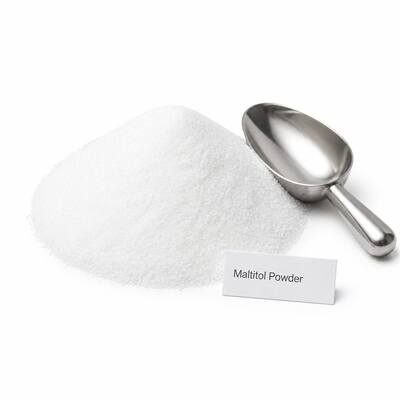
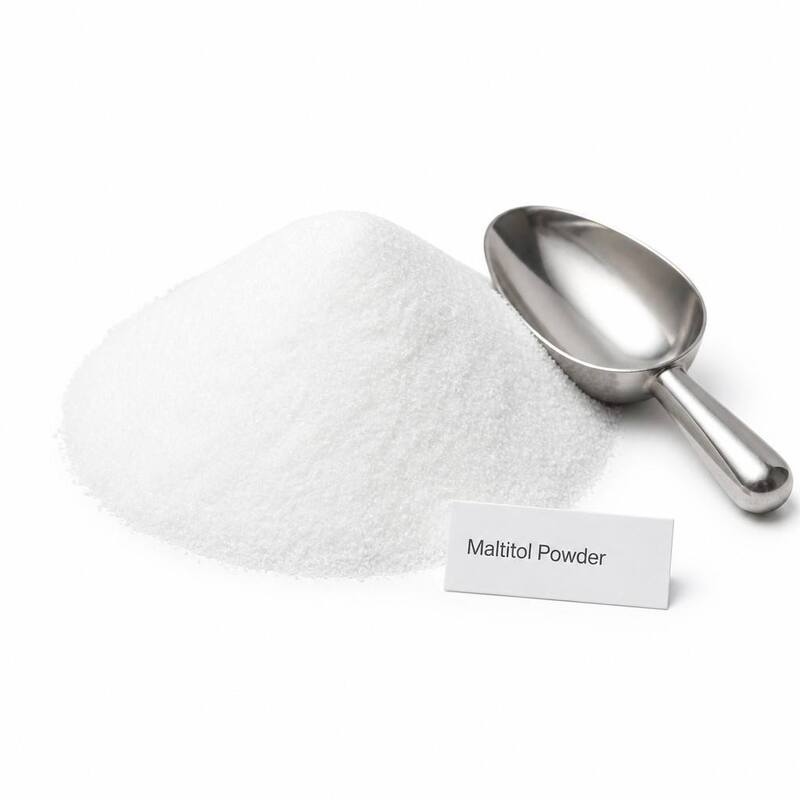
Maltitol Powder is a crystalline sugar alcohol (polyol) made by hydrogenating high-maltose glucose syrup. It delivers about 90% of sucrose sweetness with a clean taste and no bitter aftertaste, while providing the bulk and mouthfeel that high-intensity sweeteners cannot.
This Low Microbe grade is manufactured and controlled for buyers who need tighter microbiological limits than standard food-grade material. In practice, it is used in applications where microbial bioburden matters: nutraceutical chewables, lozenges, sachets, and stick packs, as well as sugar-free confectionery such as chewing gum, mints, and hard candy. It also suits pharmaceutical excipient applications where maltitol functions as a filler-binder in tablets and a sweetener in syrups.
For procurement teams and distributors, the key difference is documentation. This grade is released against microbiological specifications that are tighter than commodity food-grade maltitol, with results reported on the Certificate of Analysis for each lot. That means your quality team has the actual numbers—total plate count, yeast and molds, coliforms, and Salmonella—in hand without needing to request them separately.

| Parameter | Specification |
|---|---|
| Product name | Maltitol Powder |
| Chemical name | D-Maltitol |
| CAS number | 585-88-6 |
| E number | E965 |
| Appearance | White crystalline powder, free flowing |
| Assay (dry basis) | 99.0% min |
| Mesh | 30-80 |
| Total plate count | 100 cfu/g max |
| Yeast and mould / Enterobacteriaceae | 10 cfu/g max / absent in 1g |
| Moisture / Grade / Packaging | 0.4% max / Food Grade / 25kg PP woven bag with PE inner liner |
The certificate of analysis issued for each shipment is the governing document.
| Test item | Typical result | Method |
|---|---|---|
| Assay (D-Maltitol) | 99.3% | HPLC |
| Total plate count | 20 cfu/g | Plate count |
| Yeast and mould | < 10 cfu/g | Plate count |
| Enterobacteriaceae | Absent in 1g | Plate count |
| E. coli | Absent in 1g | Plate count |
| Salmonella | Absent in 25g | Enrichment |
| Moisture | 0.14% | Karl Fischer |
| Appearance | White powder, free flowing | Visual |
| Total heavy metals (as Pb) | < 5 mg/kg | Colorimetric |
| Mesh distribution (30-80) | 97% pass | Sieve analysis |
Low Microbial Count
Released against tighter microbiological limits than standard food-grade material. Typical specifications include total plate count ≤200 cfu/g, yeast and molds ≤50 cfu/g, and negative results for coliforms and Salmonella in 25 g. This supports shelf-life stability and consumer safety in nutraceutical and pharmaceutical applications.
Non-Cariogenic — Tooth-Friendly
Oral bacteria cannot ferment maltitol to produce caries-causing acids. Supports “tooth-friendly” and “does not promote tooth decay” claims on sugar-free gum, mints, and oral care products.
Sugar-Free & Reduced Calorie
Approximately 2.1–2.4 kcal/g versus 4 kcal/g for sucrose, enabling calorie reduction without sacrificing the bulk sugar provides.
Excipient-Grade Functionality
Valued in solid dosage forms for its compressibility and as a filler-binder. Performs well in chewable tablets, lozenges, and sachets, where sweetness and mouthfeel contribute to patient compliance.
Maltitol Powder Low Microbe is used in nutraceutical solid dosage forms—chewable tablets, lozenges, effervescent tablets, stick packs, sachets, and granules—where low bioburden is a quality requirement rather than a nice-to-have.
In medicated confectionery, maltitol serves as the bulk sweetener in sugar-free cough drops, throat lozenges, and vitamin gummies, where a clean taste and controlled microbial status are essential.
In pharmaceutical excipient use, maltitol functions as a filler-binder and coating agent in tablets and sugar coating processes. Its chemical stability and low hygroscopicity support formulation reproducibility.
In oral care nutraceuticals, maltitol contributes sweetness and texture in sugar-free dental health products where non-cariogenic properties are a core claim.
In sugar-free confectionery, this grade is also suitable for chewing gum, mints, and hard candy where buyers want the assurance of tighter microbial controls.
A powder that is reconstituted without a kill step brings its own count into the finished drink. Holding the sweetener to 100 cfu/g leaves the pasteurisation or the preservative system working on the flavour and dairy components rather than on the sugar alcohol.
In a dry mix that meets a live culture, a low-bioburden sweetener reduces the competition the culture faces during the first hours of fermentation, which shows up as a more predictable pH drop across the cycle.
These products are often opened repeatedly over days and mixed by hand, so the initial count is the main defence. A tight specification on the sweetener removes one variable from a shelf-life trial that already has many.
Cold-mixed fondants, fillings and coating emulsions never reach a temperature that would reduce a count. The raw material has to arrive clean, and the bag has to keep it clean through a production week.
Where a sweetener is dusted onto a ready-to-eat surface after the oven, it is the last ingredient the consumer meets and the one with no further heat treatment behind it.
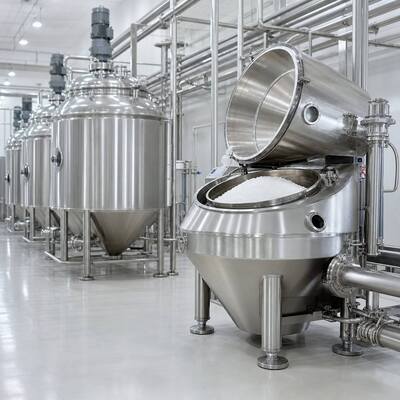
Microbial testing runs on the finished powder rather than on an intermediate, because drying and packing are the stages that can reintroduce a count. Total plate count, yeast and mould, Enterobacteriaceae, E. coli and Salmonella are run per lot against the limits in the specification, with the absence tests held for the full incubation period before a lot is released. Environmental monitoring sits alongside the product testing: settle plates and contact swabs at the filler, the screener and the bag mouth are taken on a fixed schedule.
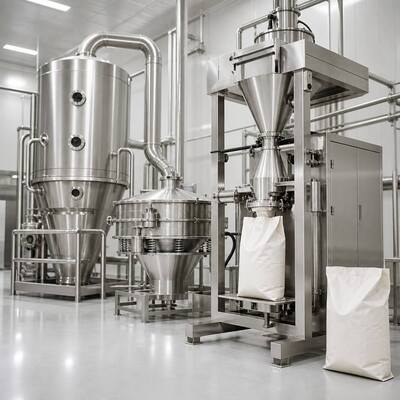
Air handling is treated as a release parameter. Differential pressure across the packing room is logged continuously, filter changes are recorded, and a shift in pressure triggers a re-clean before packing resumes. Bags are filled, sealed and code-marked in one pass, and the liner is not left open between filling and sealing. Retained samples stay sealed for re-test, and the lot code links the bag to its packing shift and its plate count records.
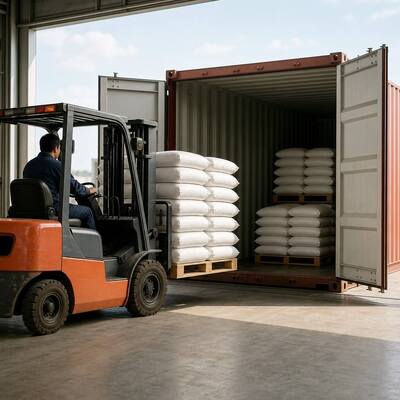
The 25kg PP woven bag carries a food-grade PE inner liner that is heat-sealed at the mouth, so the powder is enclosed from the filler to the moment your operator cuts the bag. Outer bags are printed with the lot code, the net weight and the packing date code, and pallets are stretch-wrapped to keep the bags closed against dust in a container. For buyers who need a smaller unit, the same product can be packed in sealed 1kg or 5kg liners inside a carton. Shipment documents include the certificate of analysis for each lot loaded.
Keep the bags closed, dry and off the floor in a ventilated store, away from raw agricultural materials and waste areas. Moisture is the practical enemy: a damp bag will support mould growth at the fold even though the powder itself is a poor substrate, so a bag that has taken water should be rejected rather than dried and used. Do not store opened bags next to ingredients with a high native count, and keep the liner clipped shut between withdrawals. Sealed original bags hold their specification for 24 months when kept under these conditions.
Counts released on the packed product. Plating is done after milling and bagging, not on bulk that still has to pass through a filler, so the figure on the certificate describes what you open.
Packing room held under positive pressure. Filtered supply air and logged differential pressure keep the filling zone cleaner than the surrounding plant, and a pressure fault stops packing until the room is re-cleaned.
Environmental monitoring alongside product testing. Contact swabs and settle plates at the filler and the bag mouth catch a trend before it reaches a finished lot.
Sealed liner as standard. The inner PE liner is heat-sealed at the mouth, which is the simplest and most reliable barrier between a clean powder and a container journey.
Absence tests held to full incubation. Salmonella and E. coli results are not released early, so a shipment never leaves on a provisional reading.
Traceable to the packing shift. Bag codes link back to the shift records, the plate counts and the retained sample, which shortens any investigation at your end.