Product Overview
Maltitol Powder is a crystalline sugar alcohol, D-Maltitol, CAS 585-88-6, E965, supplied at a 30-80 mesh cut for bakery use. In a bakery the sweetener does more than sweeten: it feeds the yeast, holds water in the crumb, colours the crust and sets the structure of a cake batter. Maltitol is not fermentable by baker's yeast and is non-reducing, so two of those four jobs have to be handled elsewhere in the formula, and that is the whole design problem.
Because yeast cannot metabolise maltitol, a dough built on it rises on the flour's own sugars and on any enzymatic release from damaged starch. Bakeries compensate with a small dose of glucose or an enzyme preparation, and they watch proof time rather than assuming the schedule from a sucrose formula. Once the dough is in the oven, the absence of reducing sugar also means less Maillard browning, so crust colour comes from the residual sugars, the milk solids and the oven profile, sometimes with a brush or a wash to help.
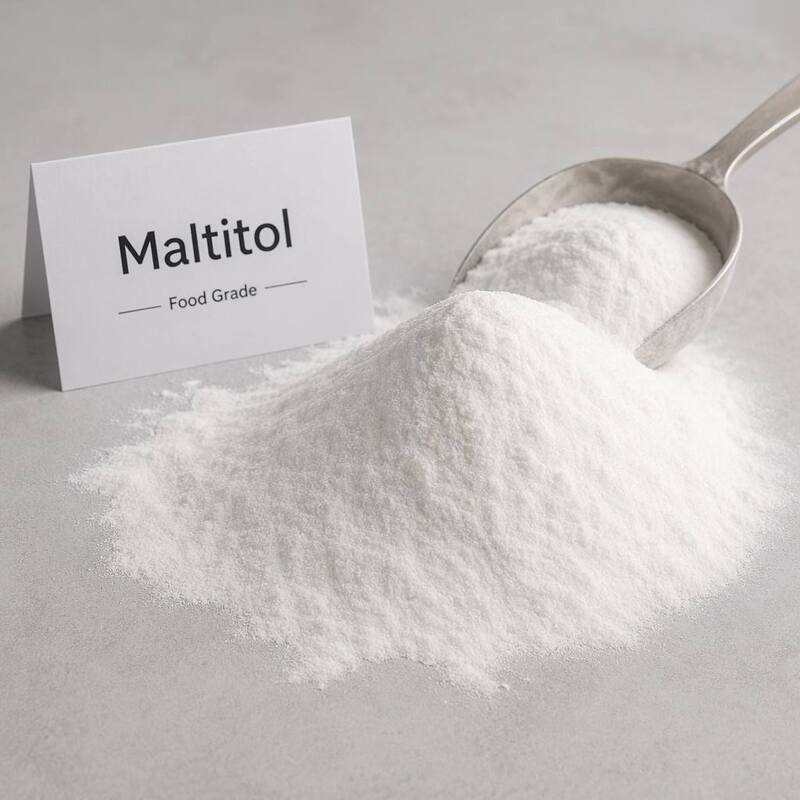
What maltitol does well is water and structure. It holds moisture in the crumb and slows the firming that makes a sliced loaf feel stale, and in a cake batter it raises the specific gravity tolerance so the crumb sets with a finer, more even cell structure. Baked volume generally holds or improves slightly, because the batter or dough carries more dissolved solids at the same added water. The powder is free flowing and non-caking, so it blends into a premix or a dry ingredient stream without lumping, and it does not pull water from flour during storage. At 30-80 mesh it disperses quickly in a batter and dissolves fully in a boil-out filling.

Technical Specification
| Parameter | Specification |
|---|
| Product name | Maltitol Powder |
| Chemical name | 4-O-alpha-D-glucopyranosyl-D-glucitol (D-Maltitol) |
| CAS number / E number | 585-88-6 / E965 |
| Molecular formula | C12H24O11, MW 344.31 |
| Appearance | White crystalline powder, free flowing |
| Assay (dry basis) | 99.0% min |
| Mesh / particle size | 30-80 mesh, 90% min within cut |
| Moisture | 0.5% max |
| Grade | Food Grade |
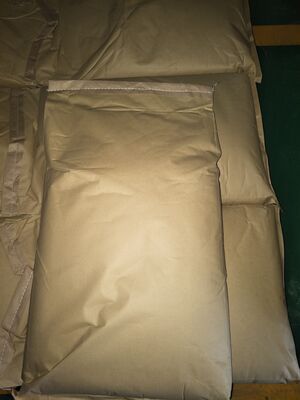
| Packaging | 25kg PP woven bag with PE inner liner |
Typical specification. The certificate of analysis issued for each shipment is the governing document.
Typical Certificate of Analysis
| Test item | Typical result | Method |
|---|
| Assay (D-Maltitol, dry basis) | 99.2% | HPLC |
| Appearance | White crystalline powder, free flowing | Visual |
| Mesh distribution (30-80) | 94% within cut | Sieve analysis |
| Moisture | 0.19% | Karl Fischer |
| Reducing sugars | 0.07% | Titrimetric |
| Residue on ignition | 0.02% | Gravimetric |
| Total heavy metals (as Pb) | < 5 mg/kg | Colorimetric |
| Arsenic (as As) | < 1 mg/kg | AAS |
| Total plate count | < 500 cfu/g | Plate count |
| Yeast and mould | < 50 cfu/g | Plate count |
| E. coli | Absent | Plate count |
A certificate of analysis is issued for every batch, and a safety data sheet accompanies the documents on request.
Applications
Sliced bread and soft rolls
Added at 3-6% on flour weight, maltitol holds water in the crumb through cooling and the first days on shelf. Proof time is adjusted for the slower gas production, and the crust colour is set through the bake profile rather than through sugar browning.
Cake and sponge
In a batter the powder dissolves in the liquid phase and raises the solids without adding reducing sugar, so the crumb sets fine and even and the cut face stays moist. The sugar-to-fat ratio in the creaming stage is re-balanced for the lower sweetness.
Fillings, creams and icings
A boil-out filling built on maltitol holds its shape at room temperature and does not weep into the sponge. The powder dissolves clear, so a fruit or cream filling keeps a clean colour without the grainy edge that coarse sugar alcohols leave.
Frozen and part-baked dough
Maltitol limits the water migration that damages crumb structure through a freeze-thaw cycle. Part-baked rolls come back with a softer centre after the finish bake, and the dough does not collapse at the core.
Soft cookies and muffin batters
The powder blends into a dry premix without caking, so a bakery running several SKUs can hold one sweetener in stock and dose it across a range of batters without changing the silo or the scoop.
Quality Control
Bakery customers are sensitive to two things above all: moisture and consistency of sweetness. Both are tested on every lot, moisture by Karl Fischer and assay by HPLC, with the sieve result confirming the 30-80 mesh band. Colour is checked against a white reference so a lot with a yellow cast is caught before it reaches a light-coloured sponge. Heavy metals, arsenic and microbiological counts are run against the limits in the specification table.
Each bag carries a lot code matching the pallet label and the certificate of analysis. If a bakery sees a change in proof time or crust colour, the retained sample from that lot can be compared with the previous delivery before the formula is blamed.
Packaging & Shipping
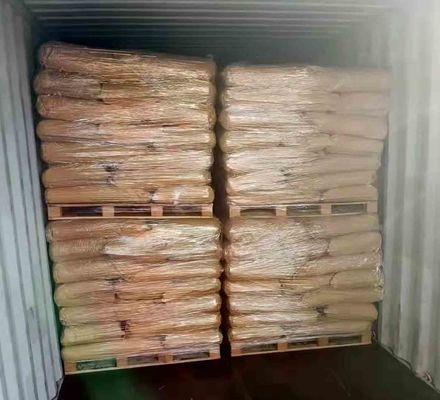
The powder is filled into 25kg PP woven bags with a sealed PE inner liner, then palletised and stretch-wrapped for container loading. Bags can be printed to your own artwork where a bulk contract calls for it. Loading is planned per order against the destination port and the pallet configuration, with full container, LCL and mixed shipments available. The packing list and certificate of analysis are issued before dispatch.
Storage & Handling
Keep bags in a dry, cool store, off the floor and away from ovens, proofer cabinets and any wall that condenses. An opened bag should be closed between weighings; bakery rooms are humid and the powder will cake at the surface if left exposed. Store away from spices, yeast and other strong-smelling ingredients. In sealed original packaging the powder stays within specification for 24 months.
Why Choose Us
- Bakery-aware support. Our technical team can review proof time, enzymatic release and crust colour when a sucrose formula is converted, rather than leaving the adjustment to trial and error.
- Stable moisture lot to lot. Karl Fischer testing at bagging keeps the water load in a dough or batter predictable, which is what keeps absorption figures meaningful.
- Free-flowing through the premix. The powder does not cake in a silo or a premix blender, so dosing stays accurate across a shift.
- Direct plant supply. Crystallisation, milling and packing happen on one site, so the specification approved on a sample is the one shipped in bulk.
- Traceable bags. Lot codes run from the bag to the pallet label and the COA, with retained samples held for re-test.
- Packing to suit the bakery. 25kg PP woven bags with PE liner as standard, palletised on request, with neutral print for distributors and wholesalers.
- Export documents in order. COA, packing list and booking papers are prepared before the container leaves, cutting delay at the port of arrival.