 |
| Place of Origin: | China |
| Brand Name: | Golden Grain |
| Certification: | ISO, HALAL, KOSHER, HACCP |
| Model Number: | GMAL-1423 |
| Minimum Order Quantity: | 100kg |
|---|---|
| Price: | USD1.00-USD1.65/KG FOB QINGDAO, CHINA |
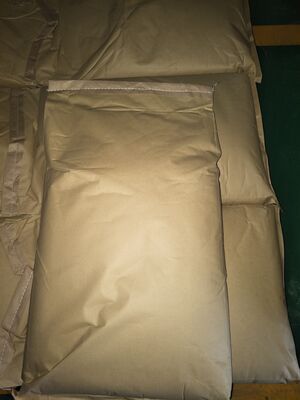
| Packaging Details: | 25kg/bag with kraft and PE INNER |
| Delivery Time: | 7 - 10 working days |
| Payment Terms: | L/C, T/T, D/P |
| Supply Ability: | 1000MT per month |
| Cas No: | 585-88-6 | Safety: | Generally Recognized As Safe (GRAS) |
|---|---|---|---|
| Tasteprofile: | Sweet With Cooling Effect | Shelflife: | 2 Years When Stored Properly |
| Usage: | Sugar Substitute In Food And Beverages | Origin: | China |
| Ins: | 965 | Safetystatus: | Generally Recognized As Safe (GRAS) By FDA |
| Meltingpoint: | 148-152°C | Solubility: | Soluble In Water |
| Caloricvalue: | 2.1 Kcal/g | Glycemicindex: | 35 |
Maltitol Powder is a crystalline sugar alcohol, D-Maltitol, CAS 585-88-6, E965, offered as a food grade material for products positioned as diabetic friendly or reduced sugar. The interest here is not sweetness alone but the way the body handles the molecule: maltitol is absorbed slowly and incompletely in the small intestine, so the rise in blood glucose after a portion is smaller and flatter than the rise after the same weight of sucrose.
That difference comes from the structure. The alpha-1,4 bond between the two glucose units is broken in part by digestive enzymes, and the fraction that reaches the large intestine is fermented by the gut flora rather than absorbed as glucose. The result is a lower glycemic response, a lower insulin demand and a calorific value of roughly 2.1 to 2.4 kcal per gram against 4 for sucrose, which is why maltitol appears in sugar free chocolate, candy, biscuits and table sweeteners aimed at people managing their sugar intake.
Formulating with it is not a straight swap, and the pages for chocolate, hard candy, bakery and biscuit describe the process adjustments in detail. The common thread is that maltitol is a crystallising polyol with about 90% of the sweetness of sucrose, so a recipe keeps its bulk and most of its sweetness while the sugar figure on the label drops. Two practical points belong on any specification sheet. First, polyols are fermented in the colon and a large portion taken at once can cause laxative effects, so portions are kept moderate and the label carries the usual polyol declaration. Second, a diabetic friendly product is a food, not a treatment, and the wording on pack has to follow the rules of the market where it is sold.

| Parameter | Specification |
|---|---|
| Product name | Maltitol Powder |
| Chemical name | 4-O-alpha-D-glucopyranosyl-D-glucitol (D-Maltitol) |
| CAS number / E number | 585-88-6 / E965 |
| Molecular formula | C12H24O11, MW 344.31 |
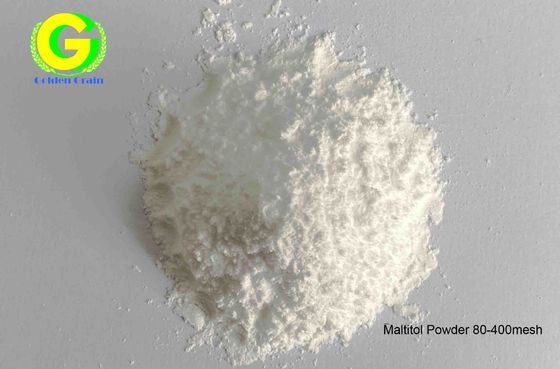
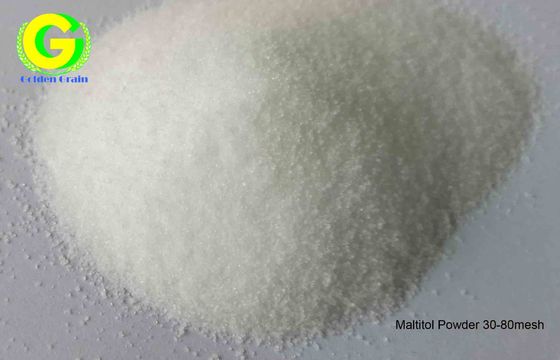
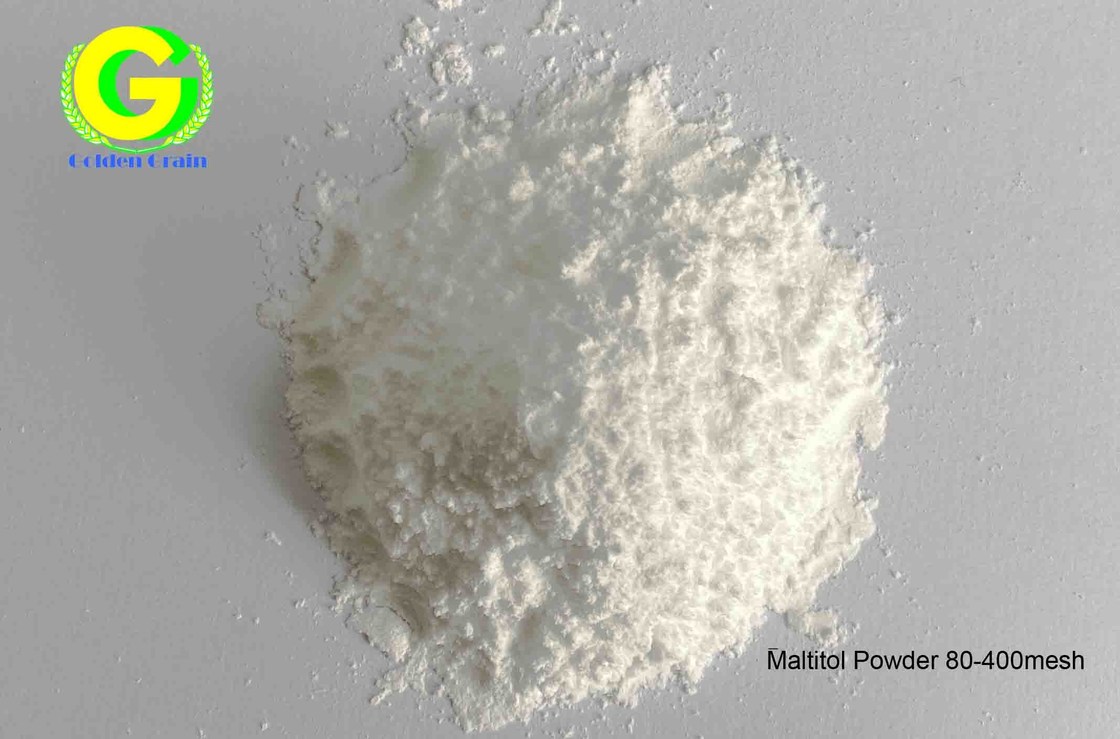
| Appearance | White crystalline powder, free flowing |
| Assay (dry basis) | 99.0% min |
| Mesh / particle size | 30-80 mesh, 90% min within cut |
| Moisture | 0.5% max |
| Grade | Food Grade |
| Packaging | 25kg PP woven bag with PE inner liner |
Typical specification. The certificate of analysis issued for each shipment is the governing document.
| Test item | Typical result | Method |
|---|---|---|
| Assay (D-Maltitol, dry basis) | 99.3% | HPLC |
| Appearance | White crystalline powder | Visual |
| Mesh distribution (30-80) | 94% within cut | Sieve analysis |
| Moisture | 0.15% | Karl Fischer |
| Reducing sugars | 0.04% | Titrimetric |
| Residue on ignition | 0.02% | Gravimetric |
| Total heavy metals (as Pb) | < 5 mg/kg | Colorimetric |
| Arsenic (as As) | < 1 mg/kg | AAS |
| Total plate count | < 500 cfu/g | Plate count |
| Yeast and mould | < 50 cfu/g | Plate count |
| E. coli | Absent | Plate count |
A certificate of analysis is issued with every lot, and a safety data sheet is available on request.
Maltitol carries the bulk of a no-added-sugar bar with a sweetness close enough to sucrose that the cocoa note stays in front. The tempering curve is re-set for the polyol phase, and the bar snaps and melts without a waxy mouthfeel.
A boiled sweet or a compressed mint built on maltitol keeps the sweetness and the crunch without the sugar. Low hygroscopicity in the finished glass means the piece does not turn sticky in the wrapper.
In a biscuit the powder controls spread and colour alongside its sweetening role, and a bakery can cut the sugar figure while keeping the bite and the bake colour close to the original.
Maltitol is blended with a high-intensity sweetener to build a spoon-for-spoon replacement that measures like sugar and dissolves in coffee or tea without a bitter tail.
Where a reduced sugar preserve or a flavoured yogurt is wanted, maltitol adds body and sweetness without the sugar, and it holds water so the product does not dry at the surface.
Each lot is tested for assay by HPLC, moisture by Karl Fischer and particle size by sieve analysis before release. Reducing sugars are kept low so the material does not brown in a bake or a boil, and colour is checked against a white reference. Heavy metals, arsenic and microbiological counts are run against the limits in the specification table, and no lot leaves the plant without a completed certificate.
The lot code printed on the bag is repeated on the pallet label and the certificate, so a food manufacturer can trace a delivery back to its crystallisation run. Retained samples are kept for re-test on request.
Standard packing is a 25kg PP woven bag with a food-grade PE inner liner, heat-sealed against moisture and palletised for loading. Buyer-branded or plain bags can be supplied for larger contracts. Loading is confirmed per order against the destination port, with full container, LCL and mixed shipments all arranged. Booking documents, the packing list and the certificate of analysis are issued before dispatch.
Store in a dry, cool, ventilated warehouse, away from sunlight and from odours. Close opened bags between weighings, keep pallets off the floor and clear of any wall that condenses, and do not stack heavy loads against the bag face. In unopened original packaging the powder holds its specification for 24 months.