 |
| Place of Origin: | China |
| Brand Name: | Golden Grain |
| Certification: | ISO, HALAL, KOSHER, HACCP |
| Model Number: | GMAL-133 |
| Minimum Order Quantity: | 100kg |
|---|---|
| Price: | USD850-USD950/MT FOB QINGDAO, CHINA |
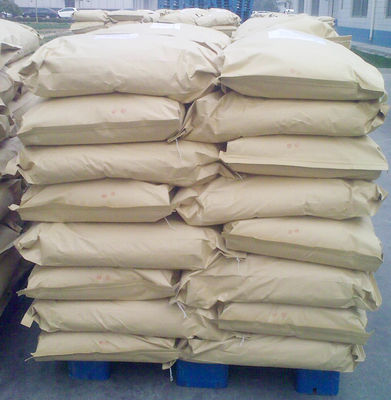
| Packaging Details: | 25kg/bag with kraft and PE INNER |
| Delivery Time: | 7 - 10 working days |
| Payment Terms: | L/C, T/T, D/P, D/A |
| Supply Ability: | 1200MT per month |
| Meltingpoint: | 95-100°C | Storageconditions: | Store In A Cool, Dry Place |
|---|---|---|---|
| Taste: | Sweet | Type: | Pharmaceutical Grade, BP, USP, EP |
| Productname: | Sorbitol Powder | Purity: | 99% Min |
| Solubility: | Soluble In Water | Molecularweight: | 182.17 G/mol |
| Chemicalname: | D-Glucitol | Molecularformula: | C6H14O6 |
| Food Additive: | Humectant |
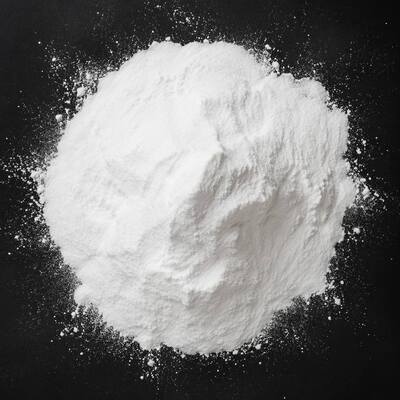
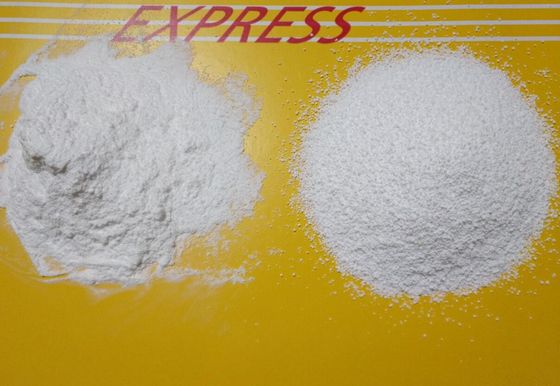
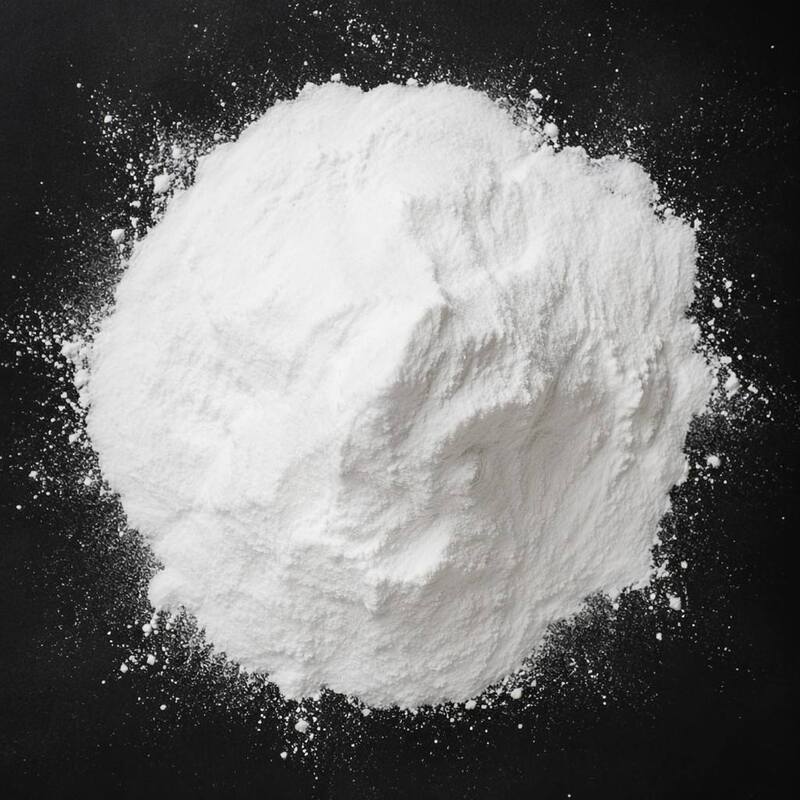
Our Sorbitol Powder (D-Glucitol, CAS 50-70-4, E420) is a white, crystalline powder with a mild sweet taste, about 60% as sweet as regular sugar. It is a sugar alcohol made from glucose and is widely used in bread baking to keep loaves soft, fresh, and appealing. This grade is supplied in 80–120 mesh fine powder form, packed in 25kg PP bags, and available for bulk supply.
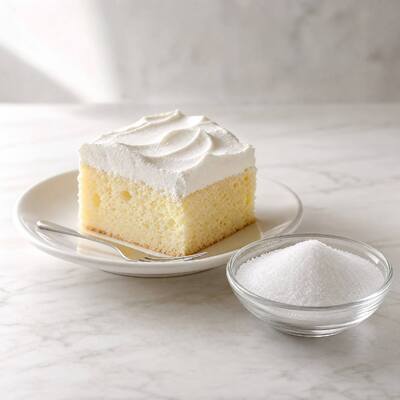
In bread, sorbitol does something that sugar alone cannot do well: it holds onto moisture. Bread that stays soft for days after baking—rather than turning dry and crumbly—often has sorbitol to thank. It helps the loaf retain water, slowing down the staling process and keeping the crumb tender. Studies on polyols in bread making have shown that incorporating sorbitol increases bake absorption and bread weight, while affecting texture and shelf life . For commercial bakers, this means a longer window of freshness and a product that still feels good when it reaches the customer.
Sorbitol also works as a sweetener, contributing a clean, mild sweetness at about 60% the intensity of sugar . Because it is less sweet, it allows bakers to adjust overall sweetness without losing the bulk that sugar provides to dough. Sorbitol is also known to act as a plasticizer in baking, helping maintain dough flexibility and slowing the staling process .
The 80–120 mesh fine powder disperses evenly into bread dough, ensuring uniform moisture distribution and sweetness throughout the batch. Fine particles integrate smoothly without creating uneven spots in the finished loaf.

| Parameter | Specification |
|---|---|
| Product name | Sorbitol Powder, D-Glucitol |
| CAS number / E number | 50-70-4 / E420 |
| Molecular formula / weight | C6H14O6 / 182.17 |
| Appearance | White crystalline powder, free flowing, odourless |
| Assay (dry basis) | 99.0% min |
| Particle size | 80-120 mesh, 95% min passing |
| Moisture (loss on drying) | 0.5% max |
| Reducing sugars | 0.2% max |
| Total heavy metals (as Pb) | 5 mg/kg max |
| Grade / standard | Food Grade, FCC |
The certificate of analysis issued for each shipment is the governing document.
| Test item | Typical result | Method |
|---|---|---|
| Assay (D-Glucitol) | 99.3% | HPLC |
| Appearance | White crystalline powder | Visual |
| Particle size, 80-120 mesh | 96.5% pass | Sieve analysis |
| Moisture | 0.16% | Karl Fischer |
| Reducing sugars | 0.04% | Titrimetric |
| Residue on ignition | 0.02% | Gravimetric |
| Total heavy metals | < 5 mg/kg | Colorimetric |
| Arsenic | < 2 mg/kg | AAS |
| Total plate count | < 1000 cfu/g | Plate count |
| Yeast and mould | < 100 cfu/g | Plate count |
A certificate of analysis and a safety data sheet accompany every shipment; retained samples are kept for re-test.
Keeps Bread Soft and Fresh
Sorbitol holds onto moisture, preventing bread from drying out and going stale too quickly. It helps the loaf stay soft and tender for longer after baking.
Mild, Clean Sweetness
Sorbitol provides about 60% of the sweetness of sugar, with a clean taste. It allows bakers to control sweetness levels without losing the bulk that sugar contributes to dough structure.
Slows Staling
Sorbitol acts as a plasticizer in baking, helping maintain dough flexibility and slowing the staling process. This means bread stays fresher and more appealing over its shelf life.
Improves Dough Handling
Incorporating sorbitol has been shown to increase bake absorption and bread weight, which can support better dough handling and yield in commercial baking
Added at 2-5% on flour weight, sorbitol slows the firming that begins once the loaf leaves the oven and holds slice softness through the first days in the bag. In high-speed plants the practical gain is a more consistent crumb at the end of the distribution window, without the wet, sticky surface that a heavy glycerin loading can leave on a sliced loaf.
Where dough is sheeted and gauged down, sorbitol keeps the sheet pliable at lower added water, so the sheet does not tear at the reduction rolls and the baked volume holds. In laminated products the same effect keeps the layers separated through proofing rather than fusing at the edges.
Freeze-thaw cycling damages the gluten network as ice crystals grow and recrystallise. Sorbitol lowers the free water available to that growth and protects crumb structure at the core, where a straight sugar formula tends to collapse and leave a dense, gummy centre after bake-off.
Flatbread fails by cracking at the fold once it has cooled and equilibrated. Moisture held by sorbitol keeps the sheet flexible for longer after packing, which reduces breakage in the bag and at the customer's counter, and it limits the dry, leathery edge that appears on stacked product.
In brioche, milk bread and sweet roll formulas the fat and sugar load already restricts gluten development. Sorbitol contributes body and moisture without adding another crystallising sugar, so the crumb stays tender and the product does not dry out at the cut face after slicing.
Typical addition sits at 2-5% on flour weight, adjusted against dough water, fat level and the shelf life being targeted; loadings above roughly 6% can slow crust colour development and are usually balanced with residual sugar.
Each production batch is sampled at the reactor, at the crystalliser and at the packing line. Assay is confirmed by HPLC, moisture by Karl Fischer, and particle size by sieve analysis before release. Heavy metals, arsenic and microbiological counts are run against the specification limits, and packed bags pass a metal detector before palletising.
Batch coding runs through the bag, the pallet label and the certificate of analysis, so a bag received in a warehouse can be traced back to the crystallisation run that produced it. Retained samples from each batch are held for re-test on request.
Standard packing is a 25kg PP woven bag with an inner PE liner, heat-sealed against moisture pickup during transit. Bags can be palletised and shrink-wrapped on request, and neutral or buyer-labelled printing is available for bulk orders. Container loading is confirmed per order against the destination port and the palletisation chosen. Full container, LCL and mixed shipments are all handled, with booking documents, packing list and certificate of analysis issued before dispatch.
Store in a cool, dry, well-ventilated warehouse away from direct sunlight, with bags kept off the floor, away from condensing walls and away from strong odours, since the powder picks up foreign smells readily. Avoid prolonged storage above 40°C. In unopened original packaging under these conditions the powder stays free flowing for 24 months; once a bag is opened, reseal it and bring the balance into production within a short window.
Made for Bakery Bread
The 80–120 mesh fine powder disperses evenly into dough, and sorbitol’s moisture-retaining properties help keep bread soft and fresh. Its mild sweetness supports reduced-sugar and sugar-free bread formulations.
Proven in Bread Research
Studies on polyols in bread making have documented sorbitol’s effects on bake absorption, bread weight, texture, and shelf life, giving formulators a reliable basis for use .
Food Grade Quality
Meets food-grade standards, with batch-specific Certificate of Analysis documentation available with every shipment.
25 kg PP Bag, Bulk Supply Ready
Standard 25 kg PP bag packaging suits trial runs and production-scale purchasing. Bulk supply capacity supports repeat orders and contract volumes.
Production and packing under one roof. The powder is crystallised, dried, sieved and bagged at our own plant, so the mesh cut and moisture level approved on the sample are the ones that arrive at your dock, with no trading layer in between.
Food Grade documentation as standard. Every shipment travels with a certificate of analysis covering assay, moisture, particle size, heavy metals, arsenic and microbiological counts, plus a safety data sheet. Specifications can be issued against your incoming-goods template on request.
Particle size held batch to batch. Bakery premix lines are sensitive to fines and to oversize grit. Sieve analysis is run on every batch rather than on a composite, so the 80-120 mesh distribution does not drift between deliveries.
Packing matched to your intake. 25kg PP woven bags with PE liner as standard, palletised and shrink-wrapped on request, with neutral or buyer-labelled printing for bulk volumes.
Export handling from booking to documents. Full container, LCL and mixed loads are consolidated at the port, with booking confirmation, packing list and COA issued ahead of dispatch so customs clearance is not held up by paperwork.
Formulation support at trial stage. If a bread, bun or frozen dough formula needs the addition rate reconciled against water, fat and bake colour, our technical team will work through the numbers with your production side before the first order is fixed.