 |
| Place of Origin: | China |
| Brand Name: | Golden Grain |
| Certification: | ISO, HALAL, KOSHER, HACCP |
| Model Number: | GSOR-914 |
| Minimum Order Quantity: | 1300kg |
|---|---|
| Price: | USD470-USD500/MT FOB QINGDAO, CHINA |
| Packaging Details: | 250kg/drum, 270kg/drum, 275kg/drum with new plastic drum, 1300kg IBC drum, flexible bag |
| Delivery Time: | 7 - 10 working days |
| Payment Terms: | L/C, T/T, D/P, D/A |
| Supply Ability: | 40000MT per month |
| Storage Condition: | Store In A Cool, Dry Place | Purity: | ≥ 70% |
|---|---|---|---|
| Activeingredient: | Sorbitol | Cas: | 50-70-4 |
| Application: | Used As A Humectant, Sweetener, And Pharmaceutical Excipient | Shelflife: | 2 Years |
| Molecular Weight: | 182.17 G/mol | Odor: | Odorless |
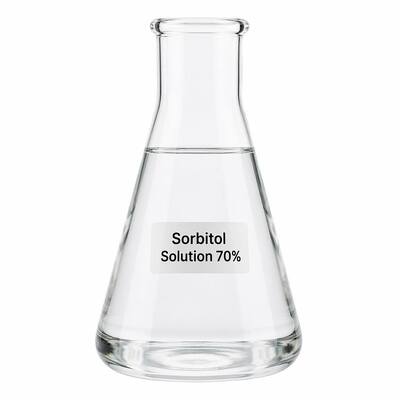
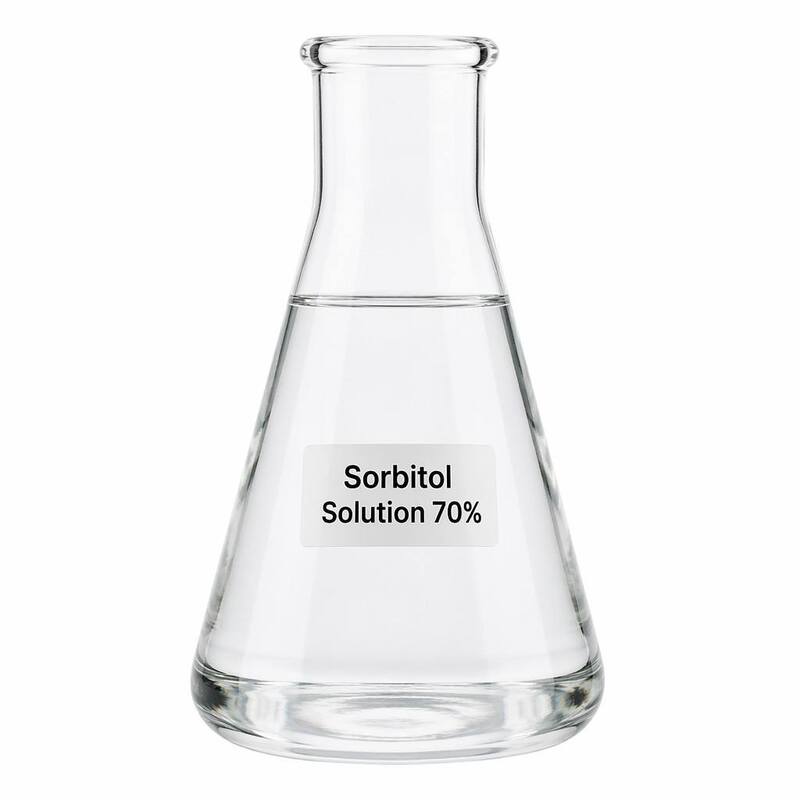
| Physicalstate: | Liquid | Productname: | Sorbitol Solution 70% |
| Freezingpoint: | Approximately -4°C | Flashpoint: | Non-flammable |
| Density: | 1.28 G/cm³ |
Our Sorbitol Solution 70% is a clear, colorless, odorless syrupy liquid manufactured to food-grade standards, specifically suited for bakery filling applications. Chemically identified as D-Glucitol (E420, INS 420(ii), CAS 50-70-4), it is a plant-derived sugar alcohol polyol that functions as a humectant, stabilizer, and bulk sweetener. Sorbitol Solution 70% is a clear, colourless D-Glucitol syrup at 70% dry substance. Bakery fillings are its natural home, because a filling is judged on two things that are both water problems: how it feels in the mouth, and how long it takes to make the sponge around it soggy. Water activity is the governing number. A cream or fruit filling sitting at high aw will push moisture into a sponge layer or a biscuit base, and the migration shows up as a soft, dark ring under the filling and a filling that skins and dries at the exposed edge. Sorbitol binds water in the filling's continuous phase, which lowers aw at a given solids level, so the filling can stay soft and glossy without handing that water to the cake. Because it is non-crystallizing, it also stops the graininess that appears in high-solids fillings when sucrose starts to seed during storage or after a freeze-thaw cycle. In the plant the syrup behaves well in a depositor. It is pumpable at ambient temperature, mixes into a fat or water phase without lumping, and keeps the filling viscosity stable through a shift, so piece weights hold and the filling does not tail at the nozzle. Its sweetness is lower than sucrose and its finish is clean, which means a filling can carry fruit acid or dairy notes without being pushed into a candy profile. Typical specification. The certificate of analysis issued for each shipment is the governing document. The certificate of analysis is issued per lot against the drum number, and a safety data sheet is supplied with the shipping set. Keeps Fillings Soft and Moist Reduces Oil Leakage and Spreading Survives the Bake Lowers Water Activity for Better Shelf Life Non-Crystallizing = Smooth Texture Mild Sweetness, Doesn‘t Overpower Cream filling for sandwich cakes. Sorbitol holds the filling soft and glossy while lowering aw, which slows the moisture ring that forms where filling meets sponge. Fruit and jam filling. Added at 10-20% of the filling mass, it reduces sucrose crystallisation and keeps a clear, spreadable gel after the bake. Biscuit and wafer cream. Low aw protects the wafer from losing its snap, and the syrup keeps the cream from squeezing out at the edge during packing. Topping and glaze. The syrup gives a clean gloss and a slow drying surface, so a decorated bun does not crack or flake after a day in the display case. Chilled and frozen filled products. The humectant system limits ice crystal growth and syneresis, so a filled product thawed for sale does not release water into the sponge. Typical use is 8-20% of the filling mass, adjusted against the target aw and the solids already carried by the fruit or dairy phase.Product Overview
This is a non-crystallizing grade. In bakery fillings, crystallization is a real problem — sugar crystals forming in the filling can create a gritty texture and make the product look unappealing. Non-crystallizing sorbitol resists this, keeping your filling smooth and consistent throughout its shelf life.
It is produced from non-GMO corn starch through catalytic hydrogenation of glucose syrup — a process entirely plant-based with no animal-derived inputs.
Technical Specification
Parameter
Specification
Product name
Sorbitol Solution 70%
Chemical name / CAS number
D-Glucitol / 50-70-4
E number
E420
Appearance
Clear, colourless, odourless viscous liquid
Assay (D-Glucitol, dry basis)
70.0% min
Dry substance / water
69.0-71.0% / 29.0-31.0%
pH (25 °C)
5.0-7.5
Density (20 °C)
1.285-1.315 g/cm³
Reducing sugars
0.2% max
Grade
Food Grade
Typical Certificate of Analysis
Test item
Typical result
Method
Assay (D-Glucitol)
70.5%
HPLC
Appearance
Clear, colourless
Visual
Dry substance
70.3%
Refractometric
Water content
29.7%
Karl Fischer
pH (25 °C)
6.3
pH meter
Density (20 °C)
1.301 g/cm³
Pycnometer
Reducing sugars
0.05%
Titrimetric
Total heavy metals (as Pb)
< 5 mg/kg
Colorimetric
Arsenic (as As)
< 2 mg/kg
AAS
Total plate count
< 100 cfu/g
Plate count
Yeast and mould
< 10 cfu/g
Plate count
Why Bakery Filling Manufacturers Choose This Product
Bakery fillings dry out over time, especially after baking or during storage. Sorbitol retains and stabilizes moisture, helping fillings stay soft and creamy instead of becoming dry or crusty. Industry references note that sorbitol helps preserve dough plasticity and controls water activity (Aw), which directly affects shelf life and texture.
One of the biggest challenges in bakery fillings is oil separation — the fat phase leaking out during storage or baking. Patent literature specifically describes sorbitol-containing filling compositions that exhibit “little or no oil leakage” and “little or no spreading” when used in baked dough products. This means your filling stays where it belongs, even through the baking process.
Bakery fillings often go through high temperatures during baking. A “bake-stable” filling needs to hold up from room temperature through the 150°C–250°C range without breaking down. Sorbitol-based filling compositions are specifically formulated for this kind of thermal stability.
Water activity (Aw) is a key driver of microbial growth and quality loss in fillings. Studies on humectant use in fillings show that sorbitol at higher substitution levels can reduce Aw significantly — one study found Aw reduced to 0.81–0.83 when sorbitol replaced 50–70% of sucrose in a filling formulation. Lower Aw means better microbial stability and longer shelf life.
The “non-crystallizing” designation is critical for fillings. Standard sorbitol can form crystals under certain storage conditions. This grade is produced to resist crystallization, keeping your filling smooth and free of grittiness. Supplier technical data confirms this grade is specifically labeled “Non Crystallising”.
Sorbitol provides approximately 50–60% of the sweetness of sucrose with a clean, cooling taste. For fillings where you want sweetness without dominating the flavor profile — fruit fillings, cream fillings, chocolate fillings — this allows you to control sugar levels while maintaining bulk and mouthfeel.Applications
Because a filling is a water-activity product, the useful acceptance tests go beyond assay. Dry substance is confirmed refractometrically, water by Karl Fischer, and the two are cross-checked against the batch sheet so the aw calculation your development team runs is based on real delivered solids. Colour and clarity are read against a fresh reference, since a filling shows any tint from the syrup directly through a thin glaze.
Each lot is also held for a crystallisation resistance check at 18 °C over 48 hours, which is the practical way to know that a filling stored in a cool room will not grain before it is used. Reducing sugars, heavy metals, arsenic and microbiological counts are released against specification, and the retained sample is filed with the drum number so a finished batch of filled product can be traced back through the plant.
Quality is built into every stage of production, from raw material intake to finished drum release.
Raw Material Control
Starch raw materials (non-GMO corn) sourced from approved suppliers with vendor qualification records.
Incoming lots tested for identity, moisture, and microbiological safety before release to production.
Supplier certificates of analysis retained and cross-referenced with internal batch records.
In-Process Control
Hydrogenation: Temperature, pressure, and reaction time controlled within validated ranges to ensure complete conversion and minimize residual reducing sugars.
Catalyst removal: Nickel catalyst removed through filtration and ion exchange. Residual nickel monitored as a critical safety parameter.
Purification & concentration: Ion exchange and evaporation controlled to achieve target dry substance content and clarity.
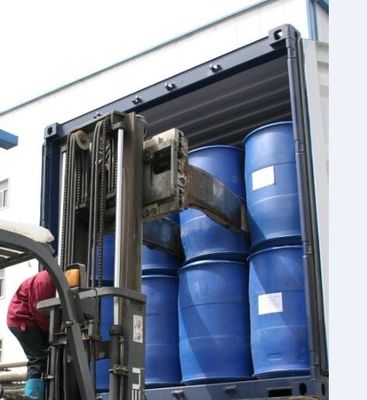
Syrup ships in 250 kg blue tight-head drums with food-grade lining, sealed bungs and a label carrying product, grade, net weight and lot number. Four drums are stacked per pallet and shrink-wrapped, with 80 drums to a 20 ft container; a 1000 kg food-grade IBC is available for lines that use more than a drum per shift. Drums can be supplied with a bung adapter for a drum pump, and neutral or buyer-branded labelling is applied before loading.
Store the drums upright between 15 °C and 30 °C, out of sunlight and away from ovens, proving cabinets and steam lines. Heat darkens the syrup and shortens its useful life in a light-coloured cream, while cold raises viscosity and can seed crystals at the wall. Close bungs immediately after dispensing, because the syrup draws moisture from a humid bakery atmosphere and a diluted lot will shift the aw of the finished filling. Never store drums next to flavour concentrates or cleaning chemicals.
Delivered solids you can calculate with. Dry substance and water are reported per lot, so the aw of a new filling can be modelled before the first production run rather than adjusted on the line.
Non-crystallizing in cold storage. Each lot passes an 18 °C, 48 hour resistance check, which is what keeps a chilled filling from turning grainy between deliveries.
Clean colour for light fillings. Colour is read against a fresh reference on every release, because a cream filling has nowhere to hide a yellow cast.
Pump and depositor friendly. Consistent viscosity drum to drum means steady piece weights and no tailing at the nozzle.
Drum and IBC formats. 250 kg sealed drums for smaller bakeries, 1000 kg food-grade IBC tanks for plants running filling around the clock.
Paperwork that clears customs. Certificate of analysis, safety data sheet and packing list are issued before dispatch, with container loading confirmed per destination port