 |
| Place of Origin: | China |
| Brand Name: | Golden Grain |
| Certification: | ISO, HALAL, KOSHER, HACCP |
| Model Number: | GMAL-343 |
| Minimum Order Quantity: | 100kg |
|---|---|
| Price: | USD1.00-USD1.65/KG FOB QINGDAO, CHINA |
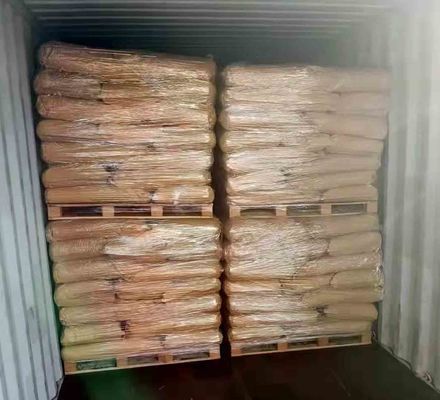
| Packaging Details: | 25kg/bag with kraft and PE INNER |
| Delivery Time: | 7 - 10 working days |
| Payment Terms: | L/C, T/T, D/P, D/A |
| Supply Ability: | 1200MT per month |
| Sweetnesslevel: | Approximately 75-90% Of Sucrose | Storageconditions: | Cool, Dry Place Away From Direct Sunlight |
|---|---|---|---|
| Shelflife: | 2 Years When Stored Properly | Uses: | Sugar Substitute In Sugar-free And Reduced-calorie Foods |
| Food Additive: | Sweetener | Source: | Hydrogenation Of Maltose Derived From Starch |
| Glycemicindex: | 35 | Productname: | Maltitol Powder |
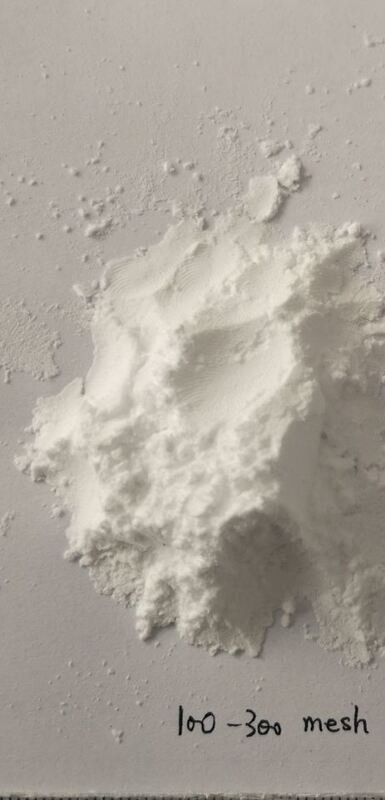
| Ins: | 965 | Appearance: | White Crystalline Powder |
| Safety: | Generally Recognized As Safe (GRAS) | Cas No: | 585-88-6 |
| Molecularweight: | 344.31 G/mol | Commonapplications: | Confectionery, Baked Goods, Chocolates, Chewing Gum |
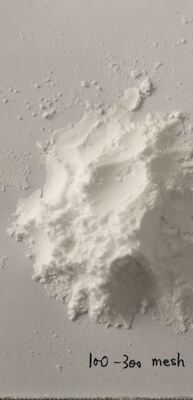
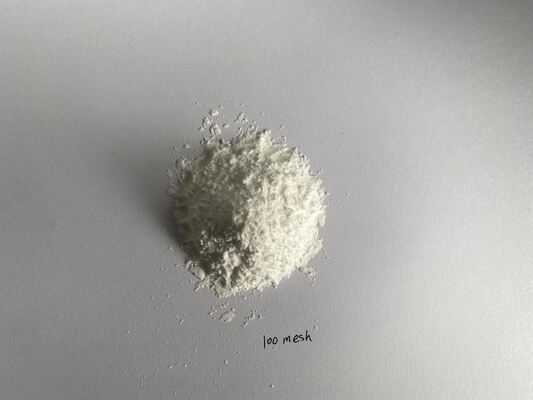
| Particle Size: | 80-400mesh |
Maltitol Powder is a crystalline sugar alcohol (polyol) made by hydrogenating high-maltose glucose syrup. It delivers about 90% of sucrose sweetness with a clean taste and no bitter aftertaste, while providing the bulk and mouthfeel that high-intensity sweeteners cannot.
This grade is selected for its heat stability in baked and cooked applications. Maltitol is chemically relatively stable at high temperatures and does not participate in Maillard browning reactions, which means baked goods retain their intended color during processing rather than darkening or developing off-notes. In practice, it is used as a bulk sugar replacement in sugar-free chocolate and compound coatings, reduced-sugar cookies, biscuits, sponge cakes, cereal bars, sugar-free hard candy, chewing gum, and mints. It also serves as a sweetener and excipient in nutraceutical chewable tablets and lozenges.
For formulators working with heat-processed products, maltitol offers a practical advantage: it behaves much like sugar during baking—providing bulk, retaining moisture, and controlling crystallization—but stays stable through the oven or cooker without the browning that sucrose undergoes. This makes it a straightforward choice for no-added-sugar baked goods and sugar-free coatings where visual appearance and flavor consistency matter.
| Parameter | Specification |
|---|---|
| Product name | Maltitol Powder |
| Chemical name | D-Maltitol |
| CAS number | 585-88-6 |
| E number | E965 |
| Appearance | White crystalline powder, free flowing |
| Assay (dry basis) | 99.0% min |
| Melting range | 148-151 degrees C |
| Mesh | 30-80 |
| Moisture | 0.5% max |
| Grade / Packaging | Food Grade / 25kg PP woven bag with PE inner liner |
The certificate of analysis issued for each shipment is the governing document.
| Test item | Typical result | Method |
|---|---|---|
| Assay (D-Maltitol) | 99.3% | HPLC |
| Melting range | 149-151 degrees C | Capillary method |
| Loss on drying at 105 degrees C | 0.15% | Gravimetric |
| Colour of 50% solution | Clear, colourless | Visual |
| Appearance | White powder, free flowing | Visual |
| Mesh distribution (30-80) | 97% pass | Sieve analysis |
| Reducing sugars | 0.04% | Titrimetric |
| Residue on ignition | 0.02% | Gravimetric |
| Total plate count | < 500 cfu/g | Plate count |
| Yeast and mould | < 50 cfu/g | Plate count |
Heat Stable — No Maillard Browning
Maltitol is chemically stable at typical food-processing temperatures and does not participate in Maillard reactions, preserving intended color in baked goods and preventing unwanted darkening.
Sugar-Free & Reduced Calorie
Approximately 2.1 kcal/g versus 4 kcal/g for sucrose, enabling calorie reduction without sacrificing the bulk sugar provides.
Tooth-Friendly
Oral bacteria cannot ferment maltitol to produce caries-causing acids. Supports “tooth-friendly” and “does not promote tooth decay” claims on sugar-free gum and confectionery.
Near Sucrose-Like Functionality
Provides bulk like sugar, retains moisture, and controls crystallization in coatings. Reformulation stays straightforward for heat-processed applications.
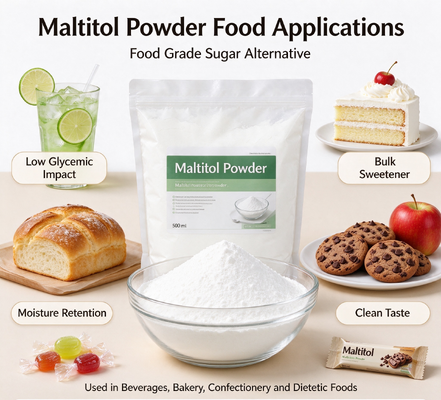
Maltitol Powder is used in sugar-free chocolate and compound coatings, where heat stability helps maintain smooth texture and stable gloss during processing and storage.
In bakery applications, maltitol functions as a humectant and bulking agent in reduced-sugar cookies, biscuits, sponge cakes, and cereal bars. Because it does not brown during baking, products retain their intended color and avoid unwanted darkening.
In sugar-free confectionery—hard candy, chewing gum, mints, and soft candy—heat stability supports consistent processing without degradation at typical cooking temperatures.
In nutraceutical applications, maltitol serves as a sweetener and excipient in chewable tablets, lozenges, and sachets where heat exposure during processing is a consideration.
A maltitol cook runs up to the usual candy temperature and the syrup stays clear, so a transparent drop keeps its water-clear look instead of drifting to amber. Flavour added at the end survives without a burned sugar background.
In a rotary moulded or wire-cut dough, the sweetener sits through the full bake and does not drive surface browning. The biscuit colour then follows the flour and the fat, which makes the shade easier to hold from one run to the next.
A binder that stays chemically quiet through the oven keeps the syrup from darkening at the edges of a tray, where the heat load is highest, and the bar keeps an even colour across its width.
Where a beverage base is heat-treated in a tunnel or a hot fill, a non-reducing sweetener avoids the colour pickup that shows as a dull shift in a clear drink.
Cooked fruit systems are sensitive to browning because of the natural sugars already present. Adding a stable polyol instead of a reducing syrup keeps the fruit colour closer to the raw material.
Heat behaviour is verified on the finished powder by melting range and by a colour check on a prepared solution, since colour is the first thing a high-temperature process reveals. Loss on drying is run at 105 degrees C to confirm the crystal carries no excess moisture that would flash off in an extruder or a candy cook and disturb the solids balance. Assay by HPLC and reducing sugars by titration together confirm that the material is genuinely non-reducing rather than partly hydrolysed.
Because a Maillard-type colour change is driven by reducing sugars, the reducing sugar limit is treated as a stability parameter and not merely as a purity figure. Drying temperature and residence time are recorded per lot, and any excursion is flagged against the colour result before release. The retained sample from each lot is held so a customer's bake trial can be compared against the delivered material under the same conditions.
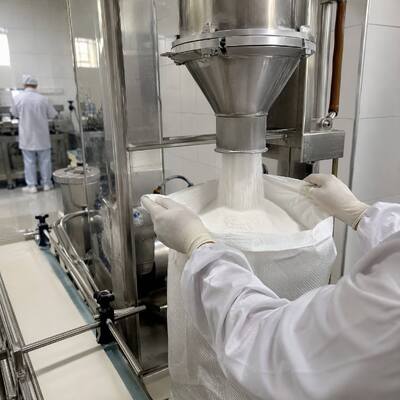
The powder is filled into 25kg PP woven bags with a food-grade PE inner liner, heat-sealed and marked with the lot code, net weight and storage instruction. Bags are palletised 40 to a tonne and stretch-wrapped, or loaded loose where the receiving warehouse prefers to handle sacks individually. Moisture pickup in transit is the main risk to a heat-stable grade, because a damp powder will lose its free flow and can show colour on baking, so the liner seal is checked at the filler. Documents, packing list and certificate of analysis accompany each shipment.
Store the bags in a dry, ventilated warehouse below 40 degrees C and out of direct sunlight, off the floor and clear of walls that sweat. The product is stable at ambient temperature, but a bag stored against a hot roof will soften and compact, and a compacted bag is difficult to feed. Keep the liner closed between uses, do not stack heavy pallets on a part-used bag, and rotate stock on a first-in, first-out basis. In unopened original packing the grade holds its specification for 24 months.
Heat-stable grade: Suitable for baked goods, chocolate coatings, and cooked confectionery where color retention matters
Batch consistency: Every lot tested and released against agreed specification before shipment
Export-ready packaging: 25 kg PP bags designed for sea freight stability
Flexible volumes: From trial orders to full container loads
Technical support: Guidance on maltitol use in heat-processed sugar-free applications