 |
| Place of Origin: | China |
| Brand Name: | Golden Grain |
| Certification: | ISO, HALAL, KOSHER, HACCP |
| Model Number: | GMAL-1526 |
| Minimum Order Quantity: | 100kg |
|---|---|
| Price: | USD1.00-USD1.65/KG FOB QINGDAO, CHINA |
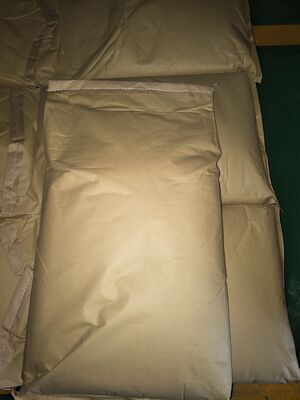
| Packaging Details: | 25kg/bag with kraft and PE INNER |
| Delivery Time: | 7 - 10 working days |
| Payment Terms: | L/C, T/T, D/P, D/A |
| Supply Ability: | 1000MT per month |
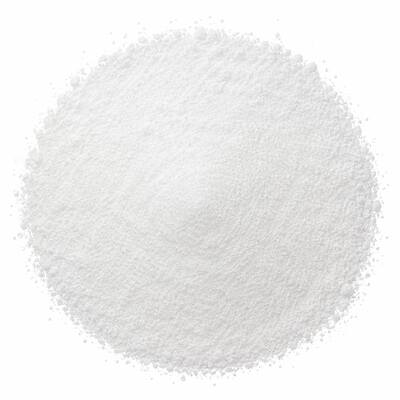
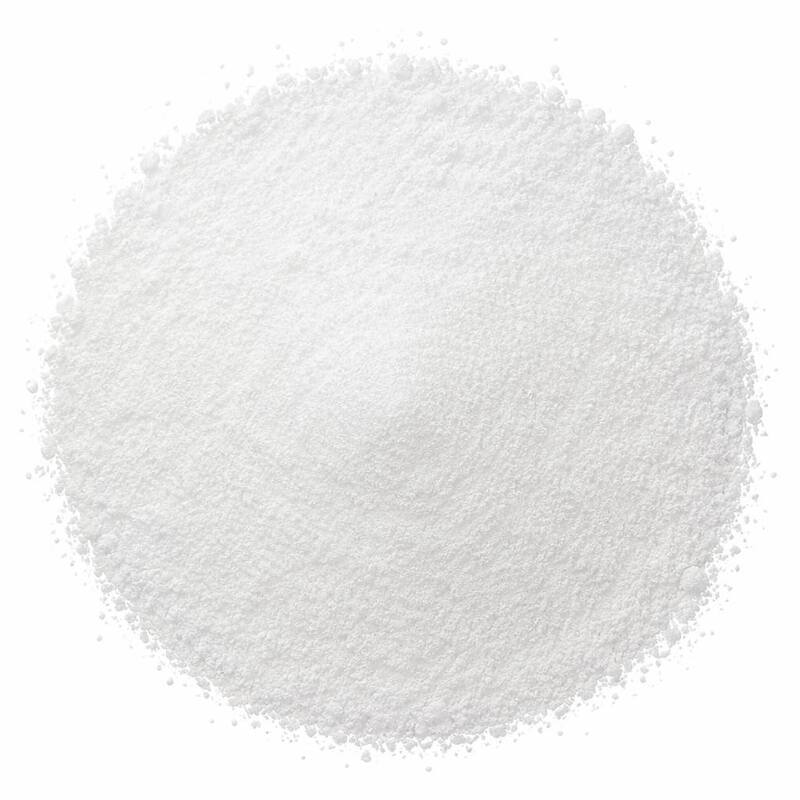
| Uses: | Sugar Substitute In Sugar-free And Reduced-sugar Products | Appearance: | White Crystalline Powder |
|---|---|---|---|
| Caloricvalue: | 2.1 Kcal/g | Stability: | Stable Under Normal Storage Conditions |
| Particle Size: | 80-400mesh | Safety: | Generally Recognized As Safe (GRAS) By FDA |
| Taste: | Sweet, Similar To Sucrose | Apperance: | White Crystailline Or Powder |
| Origin: | China |
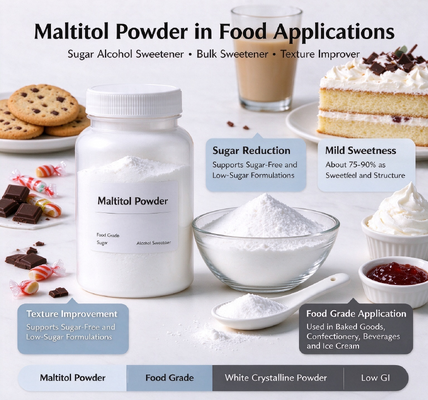
Maltitol Powder is a crystalline sugar alcohol (polyol) made by hydrogenating high-maltose glucose syrup. It delivers about 90% of sucrose sweetness with a clean taste and no bitter aftertaste, while providing the bulk and mouthfeel that high-intensity sweeteners cannot.
This grade is supplied at a 20–40 mesh granulation, which is a coarser particle size than standard maltitol powder. Coarser crystals flow more freely and are less prone to caking during storage and handling, making this grade practical for dry blending and applications where dusting or fine powder dispersion is a concern. In practice, it is used in sugar-free chewing gum, where a coarser granulation can contribute to a pleasant crunch or texture in the gum piece; in sugar-free chocolate and compound coatings, where particle size affects mouthfeel and refining behavior; and in dry mixes and powdered preparations where flowability matters during filling and dosing.
Maltitol is a tooth-friendly sweetener. Oral bacteria cannot ferment it to produce the acids that cause tooth decay, which is why it appears in sugar-free gum, mints, and dental-health positioned products. It also carries about half the calories of sugar and does not participate in Maillard browning, so baked goods retain their intended color.

| Parameter | Specification |
|---|---|
| Product name | Maltitol Powder |
| Chemical name | D-Maltitol (4-O-alpha-D-glucopyranosyl-D-glucitol) |
| CAS number | 585-88-6 |
| E number | E965 |
| Appearance | White crystalline granules, free flowing, no visible foreign matter |
| Assay (dry basis) | 99.0% min |
| Mesh | 20-40 (95% min through 20 mesh, 10% max through 40 mesh) |
| Moisture | 0.5% max |
| Grade | Food Grade |
| Packaging | 25kg PP woven bag with PE inner liner |
The certificate of analysis issued for each shipment is the governing document.
| Test item | Typical result | Method |
|---|---|---|
| Assay (D-Maltitol) | 99.3% | HPLC |
| Appearance | White granules, free flowing | Visual |
| Passing 20 mesh | 98.6% | Sieve analysis |
| Passing 40 mesh | 4.2% | Sieve analysis |
| Moisture | 0.16% | Karl Fischer |
| Reducing sugars | 0.04% | Titrimetric |
| Residue on ignition | 0.02% | Gravimetric |
| Total heavy metals (as Pb) | < 5 mg/kg | Colorimetric |
| Total plate count | < 500 cfu/g | Plate count |
| Yeast and mould | < 50 cfu/g | Plate count |
| E. coli | Absent | Plate count |
20–40 Mesh Coarser Granulation
The coarser particle size supports good flowability and reduces caking tendency compared with finer powders. Suitable for dry blending, chewing gum, and applications where a defined granulation matters.
Tooth-Friendly
Maltitol is non-cariogenic and supports “tooth-friendly” and “does not promote tooth decay” claims on sugar-free gum, mints, and confectionery .
Sugar-Free & Reduced Calorie
Approximately 2.1–2.4 kcal/g versus 4 kcal/g for sucrose, enabling calorie reduction without sacrificing the bulk sugar provides .
Near Sucrose-Like Functionality
Provides bulk like sugar, retains moisture, and controls crystallization in coatings. Reformulation stays straightforward across confectionery and bakery applications.
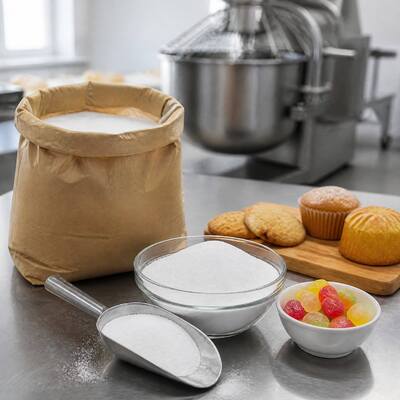
Maltitol Powder 20–40 Mesh is used in sugar-free chewing gum, where its coarser granulation contributes to texture and crunch, and where its tooth-friendly profile aligns directly with consumer expectations for sugar-free gum .
In sugar-free chocolate and compound coatings, maltitol replaces sucrose one-to-one. Particle size influences mouthfeel and refining behavior, making a defined granulation valuable for reproducible production .
In sugar-free hard candy, mints, and soft confectionery, maltitol provides bulk and sweetness without the cooling effect that some other polyols introduce .
In dry mixes and powdered preparations, the coarser granulation supports flowability during filling and dosing, reducing dust and handling issues associated with finer powders.
In bakery applications, maltitol functions as a humectant and bulking agent in reduced-sugar cookies, biscuits, and cereal bars, keeping products soft and extending shelf life while preserving intended color.
Granular maltitol disperses into the refiner feed without the dusting that a fine cut produces over the conche. Because the particles are already uniform, refining energy stays predictable and the finished coating holds a tight particle size distribution, which is what keeps the surface gloss and the snap consistent.
Gum base is charged as coarse crumb, and a sweetener of matching granule size blends into it without separating in the mixer. The 20-40 mesh cut also feeds the extruder at a steady rate, so piece weight varies less across a run.
In a sachet or a spoonable instant mix, granule size controls how the product flows out of the pouch and whether it dissolves without a lump at the bottom of the cup. The coarse cut pours cleanly and stays matched to the other dry components through filling and transit.
For direct compression and rolled lozenge lines, a granular feed with a narrow cut flows into the die cavity at a repeatable fill weight. Low fines also reduce the dust that migrates to the punch faces and causes sticking.
In dry coating drums the granule adheres without a fine haze settling on the equipment, and the panel stays visibly white on the finished piece.
Where a formula calls for rapid cold-water dissolution rather than dry handling, the 30-400 mesh grade of the same product covers that requirement without a change of specification elsewhere.
Every lot is screened on a stacked sieve set before release, and the passing and retained fractions are recorded against the 20 and 40 mesh limits rather than against a single average figure. A cut that averages correctly can still carry an excess of fines, so the retained-on-40 fraction is checked as a separate value. Assay is confirmed by HPLC, moisture by Karl Fischer, and the granule is inspected for colour and foreign matter under a light box.
A magnet and a metal detector sit on the packing line downstream of the screener, and the reject is checked at the start and end of each packing shift. Retained samples from each lot are kept for re-test, and the lot code on the bag, the pallet label and the certificate of analysis are the same string, so a bag in a warehouse can be traced back to the crystallisation that produced it.
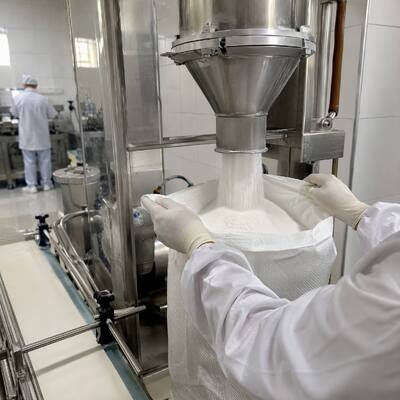
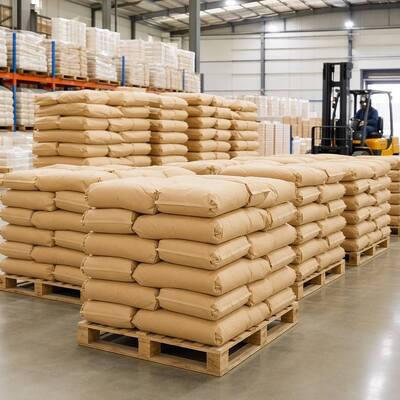
Standard packing is a 25kg PP woven bag with a food-grade PE inner liner, heat-sealed at the mouth so the granule does not pick up moisture in transit. Bags are stacked 40 to a pallet for a one tonne net pallet, stretch-wrapped and corner-boarded, or loaded loose for hand-stacked containers. Neutral bags, buyer-printed bags and private-label marking are available on bulk orders, and every shipment leaves with a packing list and a certificate of analysis matched to the lot codes on the bags.
Keep the bags in a cool, dry, ventilated warehouse, off the floor and away from walls that condense, with the mouth closed between withdrawals. Maltitol is not a moisture magnet at this granule size, but a bag left open in a humid room will still pick up surface moisture and start to bridge at the fold. Avoid stacking above five bags high, since the granule compacts under sustained load and a compacted bag feeds poorly. Under dry conditions in unopened original packing, the powder holds its cut and free flow for 24 months.
Cut checked on both screens. The 20-40 mesh description is verified as a passing fraction and a retained fraction, not as a single average, so the granule you receive behaves the same way in a feeder from one delivery to the next.
Produced and packed at one plant. Crystallisation, drying, screening and bagging run on the same site, which means the cut approved in a sample is the cut that fills the bag, with no re-packing step in between.
Documentation that matches the bag. Lot codes on the bag, the pallet label and the certificate of analysis are identical, and a safety data sheet is available on request for your import file.
Low-dust handling by design. The small fines fraction keeps weighing rooms cleaner and reduces the dust load on extraction filters, which matters on lines where maltitol is weighed by hand.
Packing to suit the receiving end. Palletised or loose, neutral or printed bags, with pallet configuration confirmed against the destination and the unloading equipment at your warehouse.
Grade options under one specification. If a formula later needs a finer powder for dissolution, the same product is available in a 30-400 mesh cut with the same assay and impurity limits.